
The Supreme Court Tariff Ruling: Implications for Global Supply Chains and U.S. Trade Policy Resilience
The U.S. Supreme Court's impending decision on the legality of President Donald Trump's tariffs under the International Emergency Economic Powers Act (IEEPA) represents a pivotal moment for global trade dynamics and corporate strategy. With over $150 billion in duties at stake, the ruling will not only test the boundaries of executive power but also reshape supply chains, corporate hedging practices, and the tools available to enforce trade policy. For investors, the outcome will redefine risk profiles across import-reliant sectors and trade-enabling assets, demanding a nuanced understanding of both short-term volatility and long-term structural shifts.
Legal Basis and Potential Outcomes
The core legal question centers on whether Congress appropriately delegated authority to the president under IEEPA-a statute designed for sanctions, not broad tariff imposition. During oral arguments, justices expressed skepticism about the executive's expansive use of emergency powers, signaling potential invalidation of the tariffs. If the Court rules against the administration, importers could face a complex refund process, with companies like Costco and Danby Appliances already preparing for legal battles. Meanwhile, the administration has hinted at alternative legal pathways, including Sections 232, 301, and 338 of trade statutes, which offer narrower but enforceable tools for maintaining tariffs.
Supply Chain Reconfiguration and Sector-Specific Adaptations
A negative ruling would accelerate supply chain reconfiguration, particularly in sectors heavily exposed to import costs. The automotive industry, for instance, has already shifted 78% of its sourcing strategies toward domestic production to mitigate tariff risks. Similarly, retailers are diversifying Asian supply chains and increasing buffer inventory to hedge against volatility. In contrast, the technology sector has shown relative complacency, with 35% of firms reporting no changes to sourcing strategies.
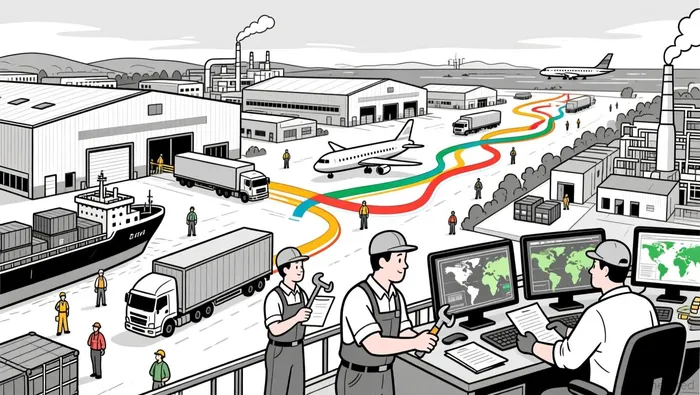
For import-dependent industries like chemicals and pesticides, regulatory compliance could become more fragmented if executive tariff authority is curtailed. Companies in these sectors must prepare for layered sourcing networks and increased scrutiny of input costs. The shift toward regional fulfillment over global consolidation- highlighted by KPMG as a "broader pivot to resilience over speed"-will likely persist regardless of the Court's outcome.
Corporate Hedging Strategies and Investor Implications
Corporate hedging strategies are evolving in tandem with regulatory uncertainty. Importers are renegotiating supplier contracts, leveraging AI-driven platforms to identify domestic suppliers, and even selling refund claims to hedge funds at discounted rates. Retailers, meanwhile, are prioritizing nearshoring and diversification, with 87% increasing buffer inventory to absorb potential shocks.
For investors, the ruling's ambiguity creates both risks and opportunities. Defensive sectors like utilities and consumer staples- less exposed to tariff volatility-are gaining favor. Conversely, cyclical industries such as electronics and auto parts face squeezed margins unless they successfully reshore or automate production. The chemical sector, in particular, could see significant revaluation if alternative trade tools like Section 232 (focused on national security) are deployed.
Alternative Trade Enforcement Tools and Policy Resilience
If IEEPA-based tariffs are invalidated, the administration's reliance on alternative statutes will shape trade policy resilience. Section 232, which allows tariffs for national security, has already been applied to steel and aluminum and could extend to trucks and buses. Section 301, requiring targeted investigations of unfair trade practices, offers a more procedural but less flexible framework. Meanwhile, Section 122-a temporary 15% tariff tool with a 150-day limit- provides a stopgap but lacks long-term durability.
These tools, while narrower in scope, could sustain a modified tariff regime. However, their sector-specific applications may deepen industry fragmentation, favoring firms with agile supply chains and regulatory expertise. For example, aerospace and aviation companies, which have secured zero-for-zero tariff agreements in some markets, may benefit from continued trade negotiations.
Conclusion: Navigating Uncertainty in a Post-Ruling Landscape
The Supreme Court's decision will act as a catalyst for structural change in global trade. A negative ruling could trigger a $150 billion refund process, ease import costs for retailers, and force the administration to pivot to alternative enforcement tools. For investors, the key lies in identifying sectors poised to adapt-such as domestic manufacturing and defensive equities-while hedging against prolonged uncertainty.
As Bloomberg notes, the ruling's aftermath will likely see a "reshuffling of trade dynamics," with companies accelerating nearshoring and investors recalibrating portfolios. The coming months will test corporate resilience and policy agility, offering both challenges and opportunities for those prepared to navigate the evolving landscape.





Comentarios
Aún no hay comentarios