
Supreme Court Tariff Ruling and Its Impact on Market Sentiment and Trump's Economic Agenda
The U.S. Supreme Court's impending decision on the legality of President Donald Trump's tariffs under the International Emergency Economic Powers Act (IEEPA) represents a pivotal moment for American trade policy, market dynamics, and presidential authority. This ruling will not only determine the fate of over $200 billion in collected tariffs but also reshape the legal and economic landscape for trade-dependent sectors. As investors navigate this uncertainty, the interplay between judicial scrutiny, sector-specific vulnerabilities, and political maneuvering demands a nuanced analysis of risks and opportunities.
Legal Implications: A Constitutional Crossroads
The Court's review of Trump v. V.O.S. Selections, Inc. centers on whether IEEPA authorizes the president to impose broad, sweeping tariffs-a question that tests the boundaries of executive power under Article I of the Constitution. Lower courts, including the U.S. Court of Appeals for the Federal Circuit, have already ruled that IEEPA does not explicitly grant such authority, emphasizing that tariff-setting is a congressional prerogative. The majority opinion in these cases has underscored the "major questions doctrine," requiring clear congressional authorization for policies of vast economic significance. Conversely, dissenting judges argue that IEEPA's broad language empowers the president to act decisively in national emergencies, a stance aligned with the administration's "America First" rhetoric.
If the Supreme Court sides with the petitioners, it could invalidate the IEEPA-based tariffs and trigger a complex refund process, with importers navigating mechanisms like 19 U.S.C. § 1514 protests or post-summary corrections. This outcome would reinforce congressional authority over trade policy but could also destabilize the Treasury's revenue streams, which have relied on tariff proceeds to offset a growing budget deficit.
Economic Impact on Key Sectors
The ruling's fallout will be most acutely felt in manufacturing, agriculture, and energy-sectors deeply intertwined with global supply chains.
1. Manufacturing: A Double-Edged Sword
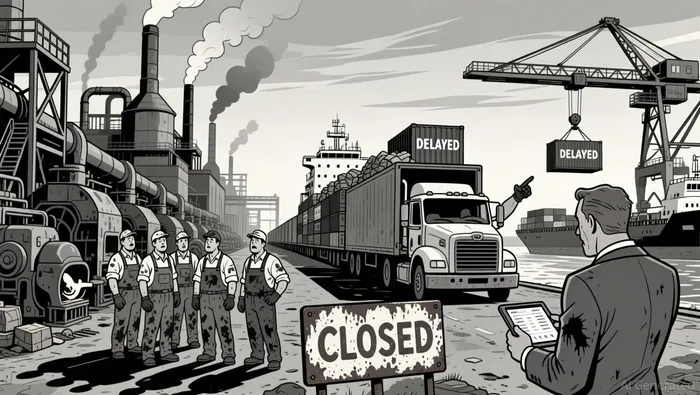
The Trump administration's tariffs, which raised the average effective tariff rate to 15.8% in 2025-the highest since 1943-have imposed significant costs on manufacturers. According to the Tax Foundation, these policies have increased household expenses by $1,100 annually and reduced U.S. GDP by 0.5%. While tariffs were intended to protect domestic industries, they have also disrupted supply chains, raised input costs, and stifled investment. For instance, the manufacturing PMI fell to 47.9 in December 2025, signaling a contraction in the sector. If the tariffs are invalidated, manufacturers may face short-term relief but could also lose a key tool for reshoring production, particularly in industries like steel and aluminum.
2. Agriculture: A Sector in Peril
Agriculture has borne the brunt of retaliatory tariffs from trading partners like China, which imposed duties on U.S. soybeans, corn, and wheat. These measures, combined with domestic tariffs on imported fertilizers and equipment, have put $21 billion in agricultural exports at risk. The Trump administration's $12 billion aid package for farmers has been criticized as insufficient to offset these losses. A ruling against the IEEPA tariffs could exacerbate financial strain on the sector, though it might also create opportunities for trade normalization with key markets.
3. Energy: Uncertainty and Strategic Shifts
The energy sector, particularly renewable energy and critical minerals, faces heightened uncertainty due to supply chain disruptions caused by erratic tariff policies. The Court of International Trade has already ruled that IEEPA tariffs undermine democratic accountability by granting excessive executive discretion. If the Supreme Court invalidates these tariffs, energy firms may need to pivot toward alternative trade tools like Section 232 or Section 301, which allow for more targeted measures. However, this transition could delay investments in infrastructure and grid modernization, as businesses await policy clarity.
Market Sentiment and Political Dynamics
The legal and economic uncertainty surrounding the tariffs has fueled volatility in financial markets. J.P. Morgan Global Research notes that the tariffs have contributed to a surge in the Economic Policy Uncertainty Index, deterring long-term investment and complicating corporate planning. The Federal Reserve's inflation-fighting efforts are further complicated by the fact that tariffs initially lower inflation but eventually drive it higher as supply chains adjust.
Politically, the ruling could redefine the balance of power between the executive and legislative branches. A decision limiting presidential authority would align with a broader judicial trend of curbing agency overreach, as seen in Loper Bright Enterprises v. Raimondo (2024). Conversely, a ruling in favor of the administration would embolden future presidents to leverage emergency powers for trade policy, potentially escalating global trade tensions.
Investment Strategies and Corporate Adaptations
Faced with this uncertainty, corporations have adopted a range of strategies to mitigate risks. Supply chain diversification has become a priority, with companies shifting production to countries like Vietnam and Mexico to avoid high tariffs. The use of foreign-trade zones (FTZs) has also surged, allowing businesses to defer duties and repackage goods to optimize tariff efficiency. Additionally, firms are leveraging free-trade agreements like the USMCA to secure exemptions and reduce exposure to retaliatory measures.
Legislative responses are also emerging. If the IEEPA tariffs are invalidated, the administration may pivot to Section 122 of the Trade Act of 1974, which allows for temporary 15% tariffs for 150 days. This legal flexibility underscores the administration's commitment to maintaining a protectionist stance, even in the face of judicial challenges.
Conclusion: Navigating the New Normal
The Supreme Court's decision on IEEPA tariffs will have far-reaching implications for U.S. trade policy, market sentiment, and investment strategies. While the ruling could limit presidential overreach and restore congressional authority, it also risks destabilizing the economy by removing a key revenue source and creating uncertainty for businesses. Investors must remain agile, prioritizing sectors with strong domestic demand and diversifying supply chains to mitigate exposure to volatile trade policies. As the legal and political landscape continues to evolve, the ability to adapt to shifting rules of the game will be the defining factor in long-term success.







Comentarios
Aún no hay comentarios