
The Supreme Court’s Stay on Venezuelan Deportations: A Crucial Crossroads for U.S. Labor Markets and Investors
The U.S. Supreme Court’s temporary block of deportations under the Alien Enemies Act (AEA)—a 1798 wartime law invoked for the first time in a non-military context—has thrust labor markets and industries reliant on immigrant workers into a high-stakes limbo. While the ruling halted mass deportations of Venezuelan migrants accused of gang ties, it also underscored the fragility of sectors dependent on undocumented labor and the legal uncertainty clouding immigration policy. For investors, this decision marks a pivotal moment to reassess risks and opportunities in agriculture, construction, and federal grant-dependent industries.
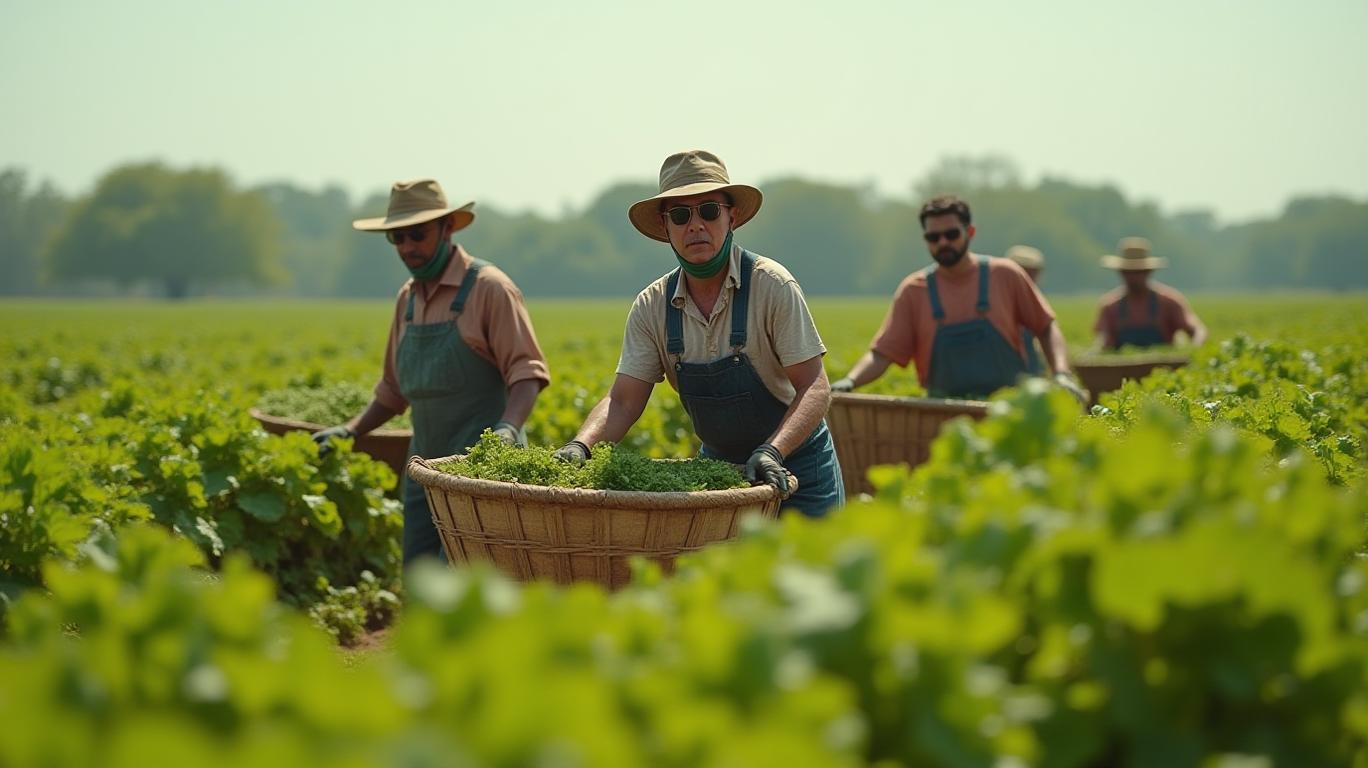
Labor Shortages Threaten Key Industries
The AEA’s controversial application—and the Court’s nuanced response—spotlight vulnerabilities in industries where undocumented workers form the backbone of labor forces:
Agriculture (41% undocumented labor):
A loss of 225,000 migrant workers could drive food prices up by 9% by 2028, per the analysis. Fresh produce sectors, such as strawberries, apples, and melons, face the steepest risks, as robotic harvesters remain years from widespread adoption.Construction (34% foreign-born workforce):
A 10% output decline looms in states like Texas and Florida, where 1.5 million Venezuelan migrants contribute to housing and infrastructure projects. Investors in construction firms should monitor capital expenditures on automation, such as modular building tech, to offset labor gaps.Manufacturing and Logistics (1.7 million undocumented workers):
Supply chain bottlenecks could worsen as industries struggle to replace workers in warehousing, automotive assembly, and food processing.
Policy Uncertainty and Regulatory Risks
The Court’s divided decision—denying a blanket stay but emphasizing due process—leaves room for future enforcement. Key risks include:
- Federal funding instability: Sectors like climate tech and universities, which rely on grants now stripped of judicial protections, face costly litigation to recover funds.
- Self-deportation measures: Daily fines and Social Security revocations target migrants, accelerating labor shortages.
The Automation and H-2A Workarounds
Firms are pivoting to mitigate risks:
- Mechanization: Agribusinesses are investing in robotic harvesters and precision agriculture tools, though adoption lags in crops requiring dexterity.
- H-2A guest workers: The program’s certified workers have surged from 85,000 to 378,000 since 2012, but smaller farms struggle with compliance costs.
Regional Economic Stakes
Texas faces a 10% GDP contraction risk if migrant labor exits construction and agriculture—a stark warning for energy and real estate investors. Meanwhile, California’s produce prices have already risen due to labor shortages, foreshadowing nationwide inflation.
Conclusion: Navigating the Crossroads
The Supreme Court’s ruling is a microcosm of the broader economic crossroads created by immigration policy. Investors must weigh the following:
- Short-term risks: Labor shortages could push consumer prices up 9.1% by 2028, per the analysis, with agriculture and construction stocks under pressure.
- Long-term opportunities: Sectors aligned with automation (e.g., robotics, modular construction) and H-2A-friendly firms may thrive.
- Policy advocacy: Industries reliant on grants or labor must lobby for reforms, such as the stalled Farm Workforce Modernization Act, to stabilize operations.
The stakes are clear: Without labor or policy solutions, sectors like agriculture could see irreversible consolidation, inflation could spiral, and regions like Texas may face economic contraction. For now, the stay offers a temporary reprieve—but the path forward depends on resolving the legal and logistical chaos surrounding the AEA’s misuse.
In this climate, investors must prioritize resilience: diversify labor sourcing, bet on automation innovators, and brace for volatility until the Court and Congress settle the rules of the game.







Comentarios
Aún no hay comentarios