
Supreme Court Showdown Over Deportations: Risks and Opportunities in Legal and Political Uncertainty
The U.S. Supreme Court’s recent rulings on the Trump administration’s use of the 1798 Alien Enemies Act (AEA) to deport Venezuelan migrants have exposed a simmering clash between judicial authority and executive overreach. While the legal battles center on due process and constitutional limits, investors should take note of the implications for sectors tied to immigration enforcement, legal services, and political risk.
A Legal Standoff with Market Implications
The administration’s aggressive application of the AEA—a wartime statute last used during World War II—has led to repeated court interventions. In April 2025, the Supreme Court issued an emergency stay to blockXYZ-- deportations of Venezuelan detainees, citing inadequate notice and due process. Despite this, the administration allegedly proceeded with plans to deport hundreds of migrants to El Salvador, where they faced life-threatening conditions in prisons.
The judiciary’s pushback has been marked by threats of contempt proceedings and split rulings. Federal Judge James Boasberg’s finding that the administration violated court orders, coupled with the Supreme Court’s emphasis on procedural safeguards, underscores a growing judicial skepticism toward executive overreach. This tension creates uncertainty for industries tied to immigration policy.
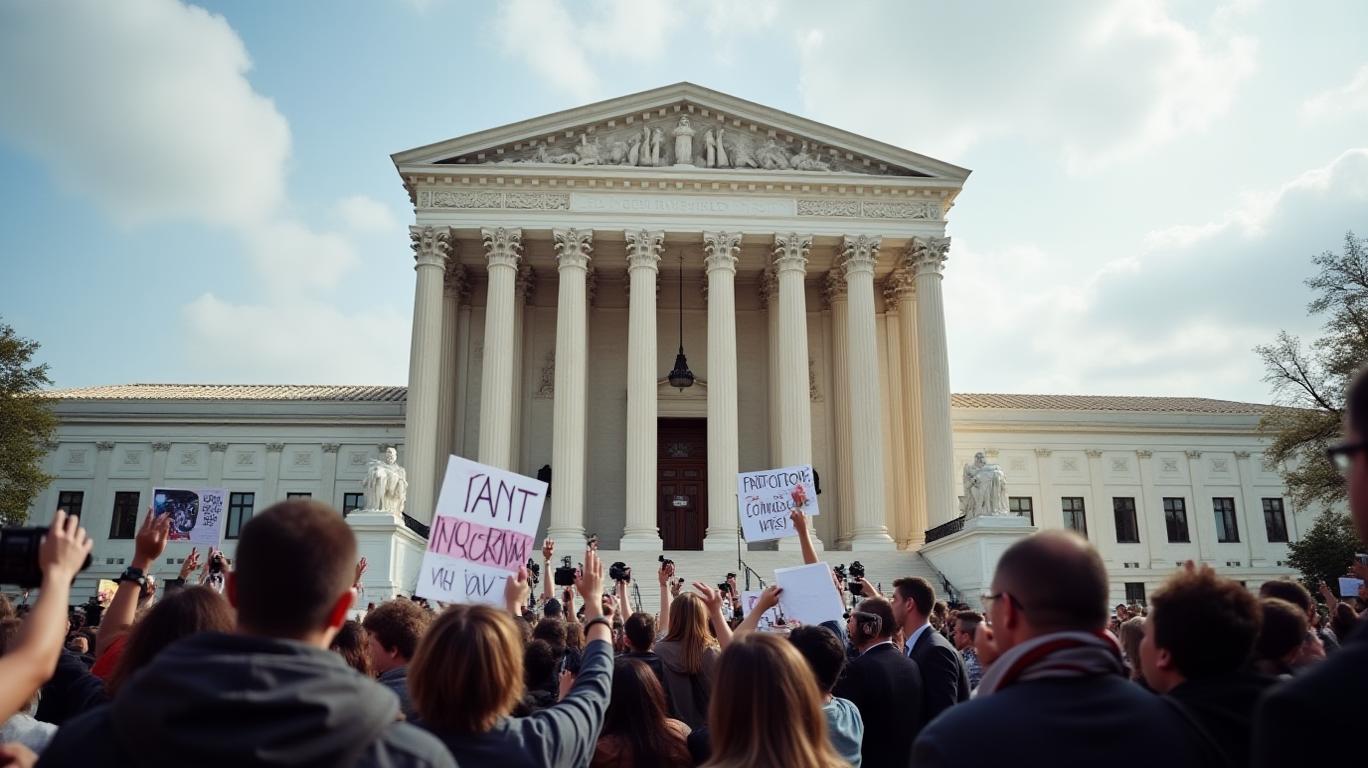
Sector-Specific Risks and Opportunities
1. Private Prisons and Corrections:
The administration’s reliance on El Salvador’s prisons to house deportees has drawn comparisons to the U.S. private prison system. While companies like CoreCivic (CXW) and GEO Group (GEO) dominate domestic detention, their stocks could face reputational risks if the AEA’s use expands. Conversely, if courts restrict deportations, demand for domestic detention services might decline.
2. Legal Services:
Law firms specializing in immigration and civil rights litigation (e.g., Akin Gump or boutique firms) stand to benefit from prolonged legal battles. The ACLU’s role in challenging the administration’s actions highlights the demand for specialized legal services.
3. Political Risk and Volatility:
The judiciary’s threats of contempt and the administration’s defiance could escalate into a constitutional crisis. Such instability often impacts markets through heightened uncertainty. Historically, periods of political tension correlate with increased volatility in sectors reliant on policy stability, such as defense contractors or public services.
Data-Driven Analysis of Market Reactions
The stock market’s reaction to similar legal showdowns offers clues. During the 2017 travel ban litigation, the S&P 500 dipped slightly amid uncertainty but rebounded once judicial clarity emerged. However, prolonged legal battles could weigh on sectors tied to immigration control.
Conclusion: Navigating the Legal Crossroads
The Supreme Court’s rulings signal a clear limit to executive power, but the administration’s repeated defiance raises concerns about enforcement. For investors:
- Short-Term Risks: Private prison stocks may face headwinds if deportations stall.
- Long-Term Opportunities: Legal services firms could see sustained demand as cases proliferate.
- Systemic Risks: A constitutional crisis could amplify market volatility, favoring defensive sectors.
The data shows that while legal battles create short-term uncertainty, they also create asymmetric opportunities. Investors should monitor judicial decisions closely—particularly the Supreme Court’s stance on the AEA’s applicability to non-wartime scenarios—and favor companies insulated from political fallout.
In sum, this legal showdown is more than a political spectacle; it’s a stress test for markets in an era of heightened executive-judicial friction. The outcome will shape not only immigration policy but also the investment landscape for years to come.







Comentarios
Aún no hay comentarios