
Supreme Court Rulings and Market Volatility: Navigating the 2025-2026 Term's Regulatory Crossroads
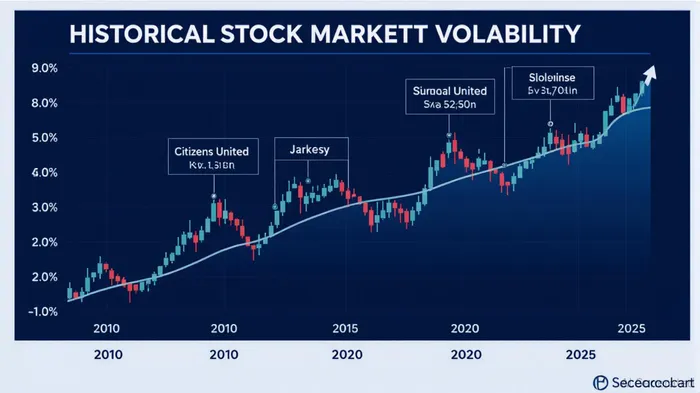
The U.S. Supreme Court's 2025-2026 term promises to redefine the boundaries of executive power, corporate liability, and regulatory oversight—factors that could reverberate through financial markets and corporate risk management strategies. As investors brace for potential shifts in legal frameworks, three pivotal cases stand out for their capacity to reshape regulatory landscapes and investor sentiment.
Executive Power and Trade Policy: The Trump Tariff Challenge
The first major test comes in the form of a case examining the legality of former President Donald Trump's global tariffs under the International Emergency Economic Powers Act (IEEPA). According to a report by Reuters, the Court will determine whether these tariffs exceeded executive authority, setting a precedent for future administrations' trade policies [1]. A ruling limiting executive discretion could reduce uncertainty in multinational supply chains, potentially stabilizing markets reliant on global trade. Conversely, a decision upholding broad executive power might embolden future leaders to impose protectionist measures, increasing volatility for export-dependent sectors like manufacturing and agriculture.
Campaign Finance and Political Risk: National Republican Senatorial Committee v. FEC
The Court's revisitation of campaign finance rules in National Republican Senatorial Committee v. Federal Election Commission could further erode regulatory constraints on political spending. This case challenges the 2001 limits on coordinated expenditures, a move that aligns with the Court's recent trend of prioritizing political speech over campaign finance restrictions [2]. If the Court strikes down these limits, corporations and wealthy donors may face heightened scrutiny from investors and regulators, as political spending becomes a more prominent risk factor. Sectors with high political engagement—such as energy, healthcare, and technology—could see increased stock price swings tied to lobbying activities and regulatory outcomes.
Tech Liability and Digital Governance: Cox Communications v. SonySONY-- Music
The third case, Cox Communications v. Sony Music Entertainment, addresses the liability of internet service providers (ISPs) for user-driven copyright infringement. This decision could redefine the legal protections afforded to tech platforms under the Digital Millennium Copyright Act (DMCA) [2]. A ruling holding ISPs more accountable might force companies like ComcastCMCSA-- or AT&T to invest heavily in content moderation systems, raising operational costs and shareholder expectations. Conversely, a pro-tech outcome could reinforce the status quo, allowing platforms to continue operating with minimal liability—a boon for growth-oriented investors but a potential red flag for regulators concerned about intellectual property enforcement.
Historical Precedents: Lessons from Past Rulings
To contextualize these cases, historical rulings offer instructive parallels. For instance, the 2024 decision in SEC v. Jarkesy, which curtailed the SEC's administrative enforcement powers, has already forced the agency to shift litigation to federal courts [3]. This shift has prolonged enforcement timelines and increased compliance costs for corporations, a trend likely to intensify if the Court continues to limit agency authority. Similarly, the 2023 ruling in Macquarie Infrastructure Corp. v. Moab Partners LP narrowed the scope of securities fraud claims, reducing the likelihood of class-action lawsuits tied to omissions in financial disclosures [3]. These precedents suggest a judiciary increasingly skeptical of regulatory overreach—a dynamic that could further insulate corporations from litigation risks but also reduce investor confidence in market transparency.
Investment Implications and Strategic Considerations
For investors, the 2025-2026 term underscores the need for sector-specific risk assessments. Multinational corporations should monitor the tariff case closely, as a restrictive ruling could incentivize nearshoring and diversification of supply chains. Tech firms, meanwhile, must prepare for potential regulatory shifts in the Cox case, with capital allocation strategies needing to account for heightened liability scenarios. Campaign finance rulings may also influence ESG (Environmental, Social, and Governance) investing, as political spending becomes a more explicit factor in corporate governance evaluations.
In the broader market, the Court's proclivity for limiting regulatory authority suggests a potential reduction in litigation-driven volatility. However, this trend could be offset by increased uncertainty in areas like trade policy and digital governance, where the Court's decisions may lack clear precedents.
Conclusion
The Supreme Court's 2025-2026 term represents a critical juncture for regulatory and corporate risk profiles. By redefining the scope of executive power, campaign finance, and tech liability, the Court's rulings will not only shape legal frameworks but also influence investor behavior and market dynamics. As the term unfolds, stakeholders must remain agile, leveraging legal insights to navigate an evolving landscape of opportunities and risks.







Comentarios
Aún no hay comentarios