
Supreme Court Ruling Could Weigh on Fed's Policy Independence
Supreme Court Case on Fed Independence and Trump's Firing Power
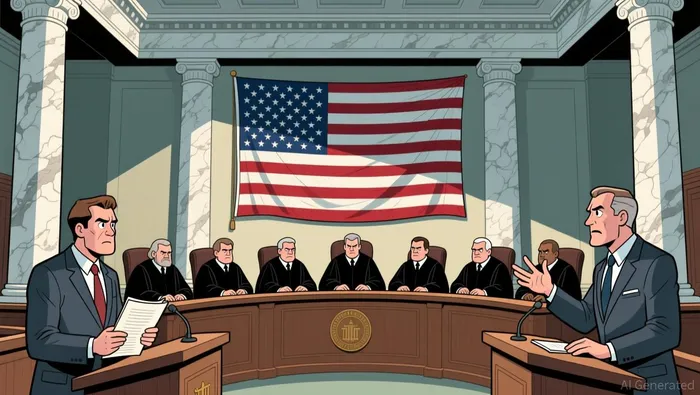
Supreme Court Justice Brett Kavanaugh expressed concern Monday about the potential impact on the Federal Reserve's independence amid a case involving President Donald Trump's ability to fire members of the Federal Trade Commission and similar agencies according to Bloomberg. During the hearing, Kavanaugh questioned whether a broad interpretation of Trump's firing power could undermine the central bank's role as a politically insulated institution. The conservative-led court is expected to side with Trump in overturning a 90-year-old precedent that restricts presidential removal authority over independent agencies.
The Supreme Court's decision, if it expands the president's ability to remove officials, could have wide-ranging implications for regulatory bodies that have traditionally operated beyond direct White House control according to Bloomberg. The hearing focused on Trump's firing of FTC member Rebecca Slaughter, though the broader implications for the Fed loomed large as the court also faces a separate case involving Fed Governor Lisa Cook. Slaughter's case tests whether Trump has the authority to fire officials at independent regulatory agencies without cause.
While the court seemed poised to favor the administration, some nuances in the hearing suggested the Fed might be treated differently according to Bloomberg. The justices were reminded that the Fed has long been regarded as a unique entity in the federal government, with specific legal protections against arbitrary removal. The solicitor general, John Sauer, clarified that the administration is not challenging the Fed's "for cause" removal shield, though the broader ruling could still influence how the court views the central bank's independence.
Why the Standoff Happened
Trump's campaign to remove officials from independent agencies has sparked a legal and constitutional debate over the balance of power between the executive branch and regulatory bodies according to The Wall Street Journal. The president has targeted members of the FTC, the National Labor Relations Board, and the Consumer Product Safety Commission, arguing that these officials failed to carry out their duties effectively. Critics say the moves are politically motivated, aimed at reshaping regulatory priorities to align with Trump's agenda.
The court's ruling will determine whether Trump's removal of agency officials violates a 1935 Supreme Court decision that upheld the independence of the FTC according to The Wall Street Journal. The administration is seeking to overturn that precedent, arguing it undermines the president's constitutional authority to control the executive branch. Legal scholars describe the dispute as a test of the so-called unitary executive theory, which posits that the president should have broad authority to direct federal agencies.
How Markets Reacted
Investors and market analysts are closely watching the outcome of the case, particularly as it relates to the Federal Reserve's future independence according to FXStreet. Rabobank predicts the Fed will cut interest rates by 25 basis points in its upcoming meeting, but uncertainty remains over how the court's ruling could affect the central bank's policy-making process. A ruling favoring Trump could embolden future presidents to exert more influence over the Fed, potentially shaking investor confidence in the stability of U.S. monetary policy.
The White House has already drawn attention for its aggressive reshaping of economic policy, with Trump's National Economic Council chief, Kevin Hassett, advocating for more rate cuts and changes to the Fed's governance structure according to Seeking Alpha. Hassett has supported Treasury Secretary Scott Bessent's proposal to require regional Fed presidents to reside in their districts for at least three years, a move that could alter the central bank's decision-making dynamics.
Risks to the Outlook
If the Supreme Court rules in favor of Trump, it could erode the long-standing protections that have allowed the Fed to make decisions based on economic data rather than political pressures according to Bloomberg. Former Fed officials have warned that allowing the president to fire Fed governors without cause could destabilize the central bank's credibility and lead to erratic monetary policy. The current case involving Lisa Cook highlights the risks of politicizing the Fed's board, as Trump has attempted to replace her with an ally who shares his economic views.
The administration's argument that judges lack the authority to reinstate wrongfully fired officials has also raised concerns according to Bloomberg. Kavanaugh criticized the stance, calling it an "end-run" around legal safeguards that protect the independence of regulatory bodies. The court's decision on whether judges can step in to prevent politically motivated removals could shape future executive actions and the role of the judiciary in safeguarding institutional independence.
What This Means for Investors
The outcome of the Supreme Court case will have lasting implications for financial markets and investor sentiment according to Business Insider. A ruling that expands the president's authority over independent agencies could lead to regulatory uncertainty, affecting sectors ranging from finance to consumer goods. The Federal Reserve's independence is particularly crucial, as it underpins the predictability of monetary policy and the stability of global markets.
Analysts note that while the immediate impact of the court's decision may be limited, the broader precedent could shape how future administrations manage regulatory agencies. Investors are advised to monitor how the ruling affects the Fed's policy outlook and the potential for increased executive control over the regulatory landscape.







Comentarios
Aún no hay comentarios