
The Supreme Court's Role in Reshaping Tech Sector Regulation: Implications for Investors
The Supreme Court's Role in Reshaping Tech Sector Regulation: Implications for Investors
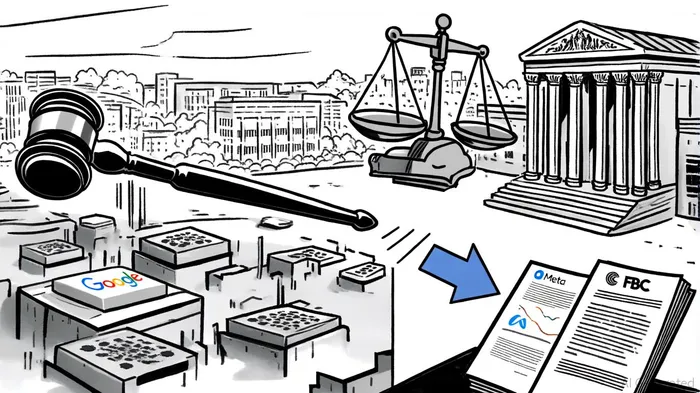
The U.S. Supreme Court's recent rulings have fundamentally altered the regulatory framework governing digital marketplaces, creating a landscape of both risk and opportunity for investors. By dismantling the Chevron doctrine and redefining the boundaries of agency authority, the Court has shifted the locus of regulatory power from specialized agencies like the Federal Trade Commission (FTC) and Federal Communications Commission (FCC) to generalist courts. This shift has introduced significant uncertainty into the tech sector, where rapid innovation often outpaces the ability of regulators to adapt. According to a CEPA analysis, the erosion of agency deference has led to prolonged litigation delays and fragmented enforcement, complicating efforts to address emerging challenges like artificial intelligence (AI) governance and data privacy.
Regulatory Uncertainty and Antitrust Dynamics
The Court's decisions have emboldened tech firms to challenge regulatory actions, particularly in antitrust cases. For instance, the refusal to block a U.S. District Court order compelling GoogleGOOGL-- to open its Android app store to competitors signals a judicial willingness to curb monopolistic practices, as reported by AP News. This ruling aligns with broader antitrust trends, including landmark lawsuits against AppleAAPL-- and MetaMETA--, which have spurred an 80% surge in global venture capital (VC) funding for AI startups in 2024, according to the National Law Review. However, the same rulings that enable antitrust enforcement also create ambiguity. As noted in a Wired analysis, the overturning of Chevron has allowed tech companies to exploit judicial inconsistencies, leading to a 40% increase in antitrust litigation costs for Big Tech firms in 2024.
Investors must weigh these dual forces: while regulatory pressure could force structural changes (e.g., potential breakups of dominant platforms), it also drives innovation through forced competition. For example, Google and Amazon have redirected capital toward direct investments in AI startups-accounting for 66% of the $27 billion raised in 2024-rather than acquiring them outright to avoid antitrust penalties, as described in a Medium analysis. This strategy mitigates regulatory risk while securing access to cutting-edge technologies.
Venture Capital and Market Volatility
The venture capital landscape reflects this recalibration. In 2025, AI startups captured 22% of global VC funding in Q1 alone, with a record $40 billion deal boosting first-quarter investments, according to an EY report. Yet, the focus has shifted from speculative bets to sustainable growth, as investors prioritize startups with robust compliance frameworks amid regulatory fragmentation. A SCBC Law post highlights that 70% of VC firms now conduct AI-specific compliance audits before funding, a trend accelerated by the lack of a federal AI regulatory framework.
Stock market reactions further illustrate the duality of these developments. While tech giants like Meta and AlphabetGOOGL-- have seen mixed valuation trends-driven by both antitrust risks and AI-driven revenue streams-the broader Nasdaq Composite has outperformed traditional sectors by 12% year-to-date, reflecting investor confidence in long-term innovation. However, this confidence is tempered by volatility: the average settlement value in securities class actions reached $43 million in 2024, the highest since 2016, according to a Gibson Dunn update.
Global Divergence and Strategic Implications
The U.S. approach contrasts sharply with the European Union's proactive regulatory model, exemplified by the Digital Markets Act (DMA). This divergence creates both challenges and opportunities. U.S. firms face a patchwork of state-level AI laws, deterring cross-border investments, while EU-based competitors benefit from clearer compliance standards, as discussed in a GTLaw post. For investors, this means hedging against jurisdictional risks by diversifying portfolios across regions with more stable regulatory environments.
Conclusion
The Supreme Court's interventions have created a regulatory environment where tech sector risks and rewards are inextricably linked. For investors, the path forward requires a nuanced strategy: capitalizing on AI-driven innovation while mitigating exposure to litigation-heavy sectors. As the Court continues to shape the boundaries of agency authority, the ability to navigate this evolving landscape will define long-term success in the digital economy.





Comentarios
Aún no hay comentarios