
Supreme Court to Decide if Trump's Tariffs Overstep Executive Authority
The U.S. Supreme Court's upcoming ruling on the legality of President Donald Trump's sweeping "Liberation Day" tariffs could redefine the balance of power between the executive branch and Congress, with far-reaching implications for the economy and international trade. The case, Learning Resources Inc. v. Trump, centers on whether Trump overstepped constitutional authority by invoking the International Emergency Economic Powers Act (IEEPA) to impose tariffs as high as 50% on imports from nearly all countries, according to a Wall Street Journal editorial. Lower courts, including the U.S. Court of International Trade, have already ruled against the tariffs, arguing that IEEPA does not authorize the president to levy unbounded tariffs.
The legal challenge gained momentum after a blog post by George Mason University law professor Ilya Somin inspired a coalition of small businesses to sue, framing the tariffs as an unconstitutional exercise of presidential power, as noted in a Bloomberg Law post. 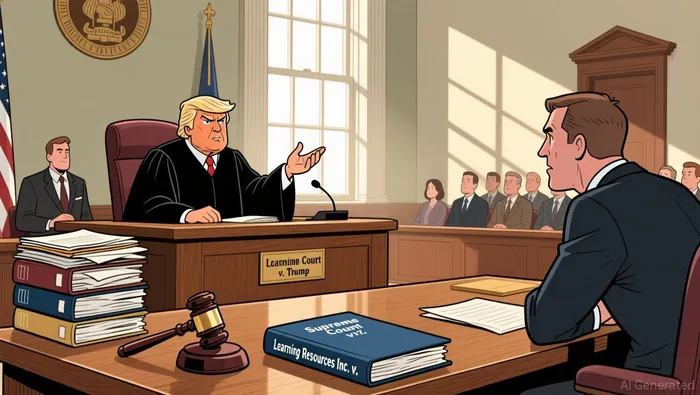 At the heart of the dispute is a constitutional question: While IEEPA allows the president to regulate commerce during emergencies, critics argue that tariffs—historically a congressional prerogative—cannot be imposed under this law without explicit legislative authorization, according to an Economic Times commentary.
The Trump administration defends the tariffs as necessary to address a "national emergency" posed by trade deficits, which it claims threaten U.S. industries and national security. Solicitor General D. John Sauer told the court that IEEPA grants the president authority to "regulate" imports, including through tariffs, during emergencies, the Business Times reported. However, justices expressed skepticism, with Chief Justice John Roberts noting that tariffs are "a tax" and that Congress holds exclusive power over taxation under Article I of the Constitution, according to a Times of India report.
Economists warn that the tariffs have already cost the average household $1,800 annually in higher prices, according to ABC News, while the Treasury has collected over $223 billion in tariff revenue since April, per Al Jazeera. If the Supreme Court strikes down the tariffs, businesses could be entitled to refunds, and trade agreements with countries like the U.K. and China may unravel, commentators have warned. Conversely, upholding the tariffs would embolden future presidents to unilaterally reshape trade policy, setting a precedent for expansive executive power, as argued in a Meyka blog post.
The court's 6-3 conservative majority has historically favored the Trump administration, but justices like Neil Gorsuch and Amy Coney Barrett raised concerns about the "one-way ratchet" of executive authority. A ruling against the tariffs could force Trump to rely on narrower legal tools, such as the Trade Act of 1974, which allows temporary, product-specific tariffs.
As the court deliberates, the case has drawn global attention, with countries like Singapore and India closely monitoring potential shifts in U.S. trade policy. The decision, expected by December, will not only determine the fate of Trump's tariffs but also shape the legal framework for future presidential actions in economic and foreign affairs.







Comentarios
Aún no hay comentarios