
U.S. Support for Argentina: Implications for Emerging Market Debt and Commodity Sectors
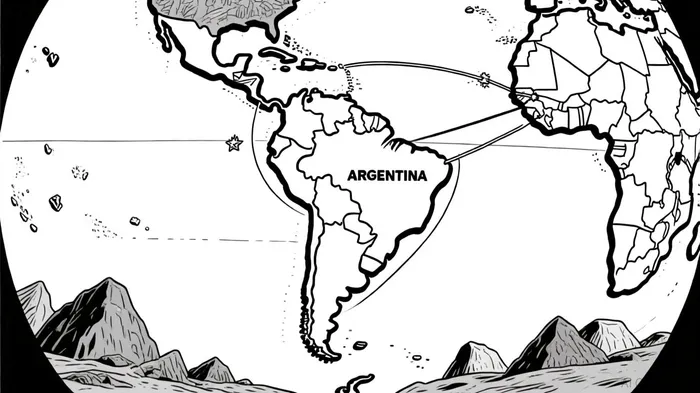
In the past year, Argentina's dramatic pivot toward the United States under President Javier Milei has reshaped its economic and geopolitical trajectory. This realignment—marked by aggressive fiscal reforms, defense cooperation, and a push for a U.S.-Argentina Free Trade Agreement (FTA)—has significant implications for emerging market debt and commodity sectors. While U.S. support offers a pathway to macroeconomic stability and foreign investment, it also raises critical questions about risk mitigation in a country with a history of sovereign debt defaults and political volatility.
Geopolitical Realignment and Strategic Alliances
Argentina's strategic shift toward the U.S. is not merely economic but deeply geopolitical. The Milei administration has prioritized aligning with Washington's priorities, from securing a $20 billion IMF deal to pursuing NATO membership and acquiring U.S. military hardware like F-16 fighter jets and Stryker armored vehicles [1]. This alignment is part of a broader effort to counterbalance China's influence in Latin America and reduce Argentina's reliance on Mercosur, a regional trade bloc that Milei has criticized for stifling economic flexibility [2].
The U.S.-Argentina Trade and Investment Framework Agreement (TIFA) has become a cornerstone of this partnership. During the June 2024 TIFA meeting, both nations emphasized collaboration on critical minerals, agriculture, and digital infrastructure, with Argentina positioning itself as a key supplier of lithium and copper for global supply chains [3]. This focus on strategic resources aligns with U.S. efforts to diversify away from China-dominated supply chains, creating a mutually beneficial dynamic. However, the path to a comprehensive FTA remains uncertain, as Argentina's exit from Mercosur would require navigating complex regional politics and potential resistance from domestic stakeholders [4].
Emerging Market Debt Dynamics
Argentina's sovereign debt market has shown early signs of stabilization, driven by Milei's austerity measures and U.S. backing. Fitch upgraded Argentina's credit rating to 'CCC' in 2024, while Moody's raised its rating to “Caa3” in January 2025—the first upgrade in five years [5]. These improvements reflect confidence in Argentina's fiscal discipline, including a record $18.9 billion trade surplus in 2024 and a sharp decline in inflation to 2.7% by October 2024 [6].
Yet, the country's debt challenges persist. Argentina faces $4.3 billion in debt repayments in both January and July 2025, and its international reserves remain constrained, with $18.3 billion tied up in a Chinese currency swap agreement [7]. While U.S. support—particularly through Treasury Secretary Scott Bessent's high-profile visit—has signaled a commitment to Argentina's economic reforms, investors remain wary of the country's history of defaults and the political risks associated with Milei's libertarian agenda [8].
Commodity Sector Opportunities and Risks
Argentina's commodity sector is poised for a transformation, driven by its strategic mineral resources and energy reforms. The country's lithium and copper deposits, coupled with its vast agricultural output, position it as a critical player in global supply chains for clean energy and technology. The removal of capital controls and expanded access to the oil and gas sector under Milei's administration have already attracted renewed interest from foreign investors [9].
However, macroeconomic instability and policy uncertainty continue to cloud the investment climate. The Argentine peso's sharp depreciation—from ARS 60 to USD in 2020 to over ARS 220 to USD by 2023—has created volatility in commodity pricing and eroded investor confidence [10]. Additionally, austerity measures and subsidy cuts have sparked social unrest, raising concerns about the sustainability of reforms and their impact on labor productivity [11].
Risk Mitigation and Strategic Considerations
For investors, the key to navigating Argentina's market lies in balancing its strategic potential with its inherent risks. U.S. support provides a degree of geopolitical insurance, particularly as Argentina seeks to reduce its exposure to China and re-engage with Western financial institutions. However, the success of this realignment hinges on Argentina's ability to maintain fiscal discipline, stabilize its currency, and implement structural reforms without triggering domestic backlash.
In the commodity sector, diversification and hedging strategies will be critical. While Argentina's critical minerals and energy resources offer long-term growth potential, short-term volatility necessitates cautious capital allocation. Investors should also monitor the progress of the U.S.-Argentina FTA, as its outcome could reshape trade dynamics and investor flows in the region.
Conclusion
Argentina's realignment with the U.S. represents a pivotal moment for emerging market investors. While the country's strategic assets and reform agenda present compelling opportunities, they must be weighed against historical risks and macroeconomic fragility. U.S. support offers a stabilizing force, but Argentina's path to sustainable growth will depend on its ability to balance external partnerships with domestic resilience. For now, the market remains a high-reward, high-risk proposition—one that demands careful analysis and strategic patience.







Comentarios
Aún no hay comentarios