
Supply Chain Vulnerability in Food Manufacturing: Implications for Consumer Goods Investors
Operational Risks: Contamination and Supplier Oversight
The recall was triggered by metal fragments traced to raw materials supplied to Great Lakes Cheese Co. The contamination, classified as a "downstream recall" by the FDA, originated in the supplier's production process, bypassing the manufacturer's quality control systems. This reveals a critical flaw in modern food supply chains: the reliance on third-party suppliers without sufficient oversight. The incident affected 31 U.S. states and Puerto Rico, with products sold under private-label brands such as Aldi's Happy Farms and Walmart's Great Value according to reports.
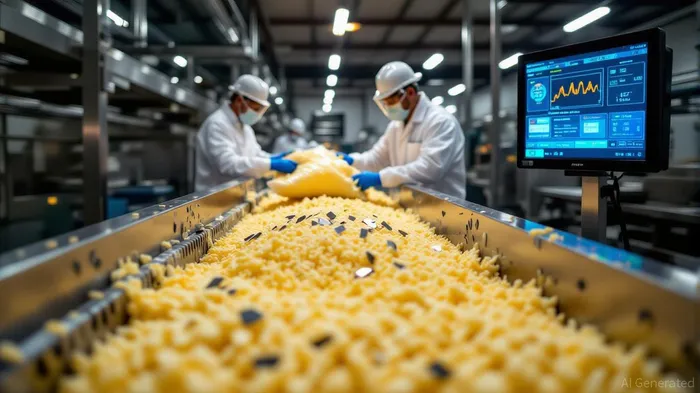 Such contamination risks are not isolated. The FDA's classification of the recall as Class II-indicating temporary or reversible health effects-reflects the agency's acknowledgment of the broader systemic issue: even minor lapses in supplier compliance can cascade into large-scale recalls. For investors, this signals the importance of evaluating a company's supplier vetting protocols and contingency plans. The cost of reputational damage, coupled with recall expenses and potential lawsuits, can erode margins and investor confidence.
Regulatory Exposure: Penalties and Compliance Costs
While the FDA has not yet imposed direct penalties for the cheese recall, the agency's enforcement actions in related environmental violations-such as a $475,000 penalty for a separate discharge incident at Great Lakes Cheese Co.-demonstrate its willingness to act against non-compliance. Regulatory scrutiny is likely to intensify post-recall, particularly under the Food Safety Modernization Act (FSMA), which mandates stricter traceability requirements for high-risk products.
The July 2028 enforcement of the FSMA's Food Traceability Final Rule, for instance, will require manufacturers to maintain real-time records of critical tracking events and provide data to the FDA within 24 hours according to industry analysis. Compliance with such rules will demand significant investment in technology and process redesign, increasing operational costs for companies that fail to adapt. For investors, this raises questions about a firm's ability to absorb these costs without compromising profitability.
Investor Implications: Market Reactions and Strategic Reforms
The recall's financial impact on Great Lakes Cheese Co. and its retail partners remains partially obscured by limited public data. However, historical precedents suggest that large-scale recalls often lead to short-term stock price volatility, particularly for firms where product safety is a core brand promise. While no lawsuits have been reported yet, the potential for litigation-especially if injuries are later linked to the contaminated products-adds another layer of risk.
Industry-wide, the incident has accelerated the adoption of contamination prevention technologies. Startups like Ecotrace are leveraging blockchain and IoT to enable rapid root-cause analysis, while innovations such as edible coatings for food products aim to mitigate microbial risks according to industry experts. These developments indicate a shift toward proactive risk management, but they also require capital-intensive investments that could strain smaller players.
Conclusion: A Call for Supply Chain Resilience
The 2025 shredded cheese recall serves as a cautionary tale for consumer goods investors. Operational risks in outsourced production and regulatory exposure under evolving food safety laws demand a reevaluation of investment strategies. Companies that prioritize supplier transparency, adopt advanced traceability technologies, and align with FSMA mandates will likely outperform peers in a landscape increasingly defined by recalls and consumer scrutiny. For investors, the lesson is clear: resilience in the food supply chain is no longer optional-it is a prerequisite for long-term value creation.







Comentarios
Aún no hay comentarios