
Supply Chain Vulnerability in Automotive Manufacturing: Assessing the Long-Term Risks of Supplier Concentration
Financial Risks: A Ticking Time Bomb
Supplier concentration amplifies financial exposure in multiple ways. According to a report by RapidRatings, at least 20% of automotive suppliers are currently in financial distress, with this figure projected to rise by 23% due to proposed U.S. tariffs on imports from China, Mexico, and Canada. Private suppliers, which form a significant portion of the automotive supply chain, are 27% more likely to face distress than their publicly traded counterparts. Sectors such as primary metal manufacturing, plastics, and transportation equipment are particularly at risk, with distress rates climbing from 22% to 39% in some cases.
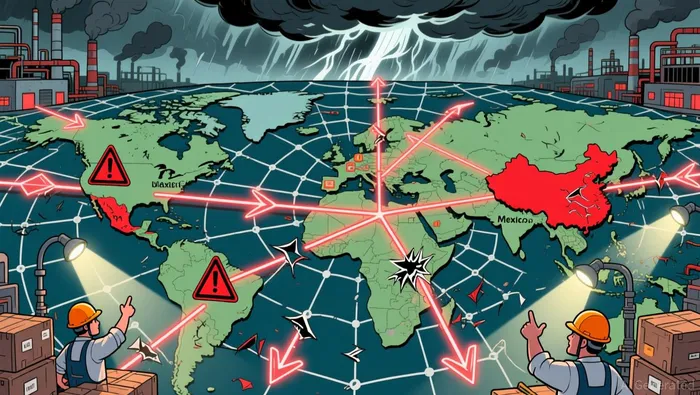 These vulnerabilities cascade through the industry. Production delays, quality defects, and operational outages become more frequent as key suppliers falter. For example, Hyundai recently warned U.S. dealers of potential price hikes stemming from 25% tariffs on imported vehicles and parts, illustrating how trade policy shifts can destabilize pricing strategies and erode profit margins.
Strategic Risks: Competing in a New Era
Beyond financial fragility, supplier concentration creates strategic disadvantages as the industry pivots toward electric vehicles (EVs) and software-defined vehicles (SDVs). Chinese automakers, which have invested heavily in EV engineering and infrastructure over the past 15 years, now offer vehicles priced 25% lower than traditional OEMs. This pricing advantage forces legacy automakers to slash costs while maintaining quality-a balancing act that strains operational flexibility.
The shift to SDVs further exacerbates these challenges. Chinese and tech-forward automakers are outpacing traditional OEMs in developing software-centric architectures. Meanwhile, legacy automakers grapple with complex product portfolios-often spanning 40 to 100 models based on multiple platforms-which complicate the transition to unified software systems. This technological lag requires significant capital investment and operational restructuring, diverting resources from other strategic priorities.
Mitigation Strategies: Diversification and Innovation
To counter these risks, automakers must adopt a dual strategy of supply chain diversification and technological reinvention. Diversification reduces reliance on single suppliers or regions, mitigating the impact of tariffs or geopolitical disruptions. For instance, supply chain finance (SCF) programs have proven effective in enhancing cash flow and reducing bankruptcy risks, particularly in the post-pandemic era.
On the innovation front, automakers must accelerate investments in EV and SDV capabilities. This includes partnerships with tech firms and startups to bridge the software gap. Additionally, scenario planning is critical to navigating regulatory uncertainties, such as the proposed Trump-era tariffs, which could impose 60% to 200% duties on imports.
Case Study: Hyundai's Tariff Dilemma
Hyundai's recent warning to U.S. dealers underscores the operational risks of supplier concentration. The company's reliance on imported parts leaves it exposed to trade policy volatility, forcing it to absorb or pass on costs in a highly competitive market. According to recent analysis, this case highlights the need for contingency planning and supplier diversification to buffer against sudden regulatory changes.
Conclusion
For investors, the automotive sector's supply chain vulnerabilities present both risks and opportunities. Companies that proactively diversify suppliers, invest in technology, and prioritize sustainability will likely outperform peers in the long term. Conversely, those clinging to outdated models risk being outcompeted by agile, tech-savvy rivals. As the industry navigates this inflection point, strategic foresight will be the key to resilience.







Comentarios
Aún no hay comentarios