
Supply Chain Risk Management in the Food and Beverage Sector: The Cost of Product Recalls on Brand Equity and Investor Sentiment
The food and beverage sector, a cornerstone of global commerce, faces an escalating challenge: supply chain vulnerabilities that trigger product recalls with cascading financial and reputational consequences. In 2024–2025, the industry witnessed a 232% surge in recalled units despite a 3.8% decline in recall events, underscoring a shift toward fewer but larger-scale incidents. These recalls, often linked to contamination, allergen mislabeling, or foreign material intrusion, exact a heavy toll on brand equity and investor confidence. This analysis examines how product recalls reshape market dynamics, using case studies of Rizo-Lopez Foods and DoleDOLE-- Fresh Vegetables to illustrate the interplay between supply chain failures, brand trust, and stock performance.
The Financial Toll of Recalls: A Case Study in Ripple Effects
Product recalls in the food sector are rarely isolated events. The 2024 Rizo-Lopez Foods recall of listeria-contaminated dairy products, for instance, triggered downstream recalls of salad kits and other products from retailers like Costco and Trader Joe's. The ripple effect amplified costs: a contaminated pound of cheese could lead to a $2,500 loss when used in 500 salads. According to a report by the Food Safety Network, the average direct cost of a recall is $10 million, but this figure often balloons when considering lost sales, legal settlements, and long-term brand damage. For Rizo-Lopez, the fallout was existential. A consent decree in October 2024 barred the company from manufacturing until it complied with federal regulations, effectively halting operations.
Brand Equity and Investor Sentiment: The Dole Example
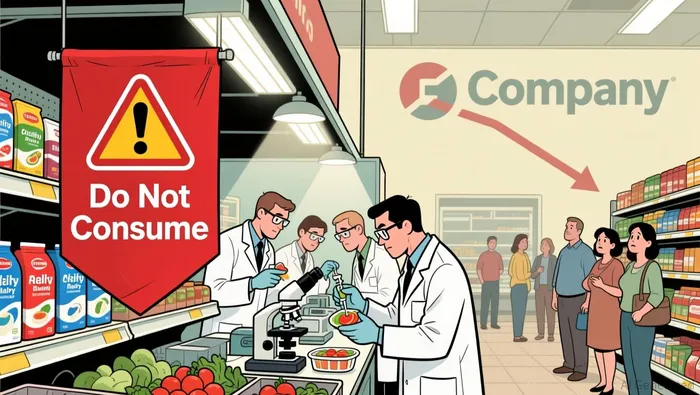 Dole Fresh Vegetables' 2024–2025 recalls, linked to cross-contamination risks from Rizo-Lopez dairy, exemplify how supply chain missteps erode consumer trust and investor confidence. In Q4 2024, Dole reported a $78.2 million non-cash write-down of its Fresh Vegetables division, contributing to a $31.6 million net loss. The company's stock price likely suffered as well, though specific data is not disclosed. By Q2 2025, Dole had sold the division to Harrow Capital Partners, a move framed as a strategic retreat from volatile markets. This decision highlights a broader trend: investors increasingly view recall-prone brands as high-risk assets. A 2025 survey by Brand Finance noted that 58% of consumers prioritize ingredient quality, making brand reputation a critical driver of market share.
Investor Reactions: The Role of Public Perception
The stock market's response to recalls is not uniform. Research on Chinese listed companies from 2002–2008 found that food industry recalls led to significant negative abnormal returns, with high Google Trends search volume correlating to sharper declines. Similarly, a 2025 study revealed that 55% of consumers switch brands temporarily after a recall, while 15% abandon the brand entirely. For Dole, repeated recalls-including a 2021 listeria-linked incident-likely compounded these effects, eroding long-term equity value. Investors, meanwhile, perceive recalls as indicators of poor risk management. The sale of Dole's Fresh Vegetables division for $90 million in 2025 suggests a recalibration of priorities, with capital flowing toward core operations and share repurchases.
Mitigating Risks: Technology and Proactive Strategies
Emerging technologies offer a lifeline for brands navigating recall risks. Blockchain-based traceability systems, like Ecotrace's, enable real-time tracking of ingredients, while FluiDect's rapid contamination detection tools minimize the scope of incidents. These innovations are critical as regulatory scrutiny intensifies. The FDA's Digital Food Traceability Rule, effective January 2026, mandates enhanced traceability for high-risk foods, further incentivizing tech adoption. For companies like Dole and Rizo-Lopez, such tools could have mitigated reputational damage by enabling faster, more targeted recalls.
Conclusion: The Imperative of Proactive Risk Management
The 2024–2025 recall trends underscore a stark reality: in the food and beverage sector, supply chain risks are not just operational challenges but existential threats. Brands that fail to invest in robust safety protocols and traceability systems face not only financial losses but also irreversible damage to consumer trust. For investors, the lesson is clear: portfolios must prioritize companies with agile risk management frameworks. As the industry evolves, the ability to preempt, detect, and respond to contamination risks will define market leaders-and separate them from those left scrambling to rebuild their reputations.







Comentarios
Aún no hay comentarios