
Supply Chain Resilience in Logistics: How Corporate Preparedness Drives Investor Confidence and Market Outperformance
In the volatile landscape of global supply chains, logistics companies have emerged as both victims and innovators of disruption. From labor shortages in trucking to geopolitical tariffs reshaping sourcing strategies, the past three years have forced firms to rethink resilience as a core competency. According to the McKinsey survey, 90% of supply chain executives now view disruptions as the "new normal," with labor-related bottlenecks and climate shocks driving a seismic shift in corporate strategy. For investors, the question is no longer whether resilience matters-it's how quickly companies can translate preparedness into measurable financial and reputational gains.
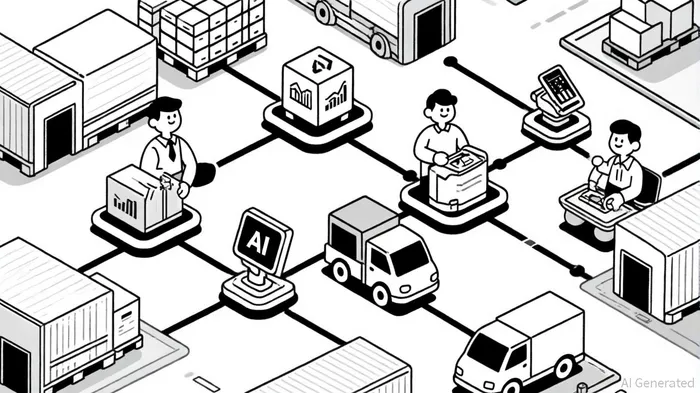
The New Normal of Disruption
The pandemic's legacy, compounded by 2025's U.S. tariffs on global imports and climate-driven floods in Europe, has shattered the myth of supply chain stability, according to a FreightAmigo case study. Labor disruptions, in particular, have become a persistent threat. The U.S. trucking industry alone faces an 80,000-driver shortage, projected to double by 2030, as detailed in a Global Banking and Finance analysis. Companies that once prioritized cost efficiency are now adopting a "cost of resilience" mindset, balancing agility with profitability. For example, industrial manufacturers have shifted production to Mexico to hedge against China's vulnerabilities, while retailers are stockpiling buffer inventories to absorb strike-related delays, a trend highlighted in a Deloitte analysis.
Strategies for Resilience: Dual-Sourcing and Digitization
Dual-sourcing and regionalization have become cornerstones of resilience. The McKinsey survey found that 73% of companies have diversified their supplier base, reducing delays by 30% during disruptions. Similarly, 60% of firms are regionalizing supply chains, a move that mitigates cross-border risks while aligning with nearshoring trends, as Deloitte has observed. However, these strategies require more than contractual diversification-they demand real-time visibility.
Digitization has emerged as the linchpin of modern resilience. Maersk's 2025 insights emphasize the role of AI-driven scenario planning and digital twins in predicting bottlenecks. For instance, during the 2023 British Columbia Lockout, companies using digital logistics platforms rerouted shipments in hours, minimizing revenue loss, as noted in the FreightAmigo case study. Such tools not only optimize operations but also provide investors with transparent metrics to assess risk management capabilities.
Labor Disruptions and the Role of Automation
Labor shortages have forced logistics firms to automate where possible. The U.S. trucking shortage has accelerated investments in autonomous vehicles and warehouse robotics, reducing reliance on manual labor, a trend reported in the Global Banking and Finance analysis. Project44's 2024 report highlights how automation at ports improved efficiency but also introduced new risks, such as cybersecurity vulnerabilities, a point echoed in Deloitte's work. Companies that balance automation with human-centric strategies-like upskilling programs-appear to outperform peers. For example, DHL's 2024 Resilience Index showed that firms combining automation with flexible workforce planning saw 25% faster recovery from disruptions.
Investor Confidence and Market Metrics
Investor confidence is increasingly tied to a company's ability to navigate disruptions. A 2025 study in Fundamental Research found that firms with resilient supply chains experienced 12% higher stock returns during crises compared to industry averages. ESG ratings also reflect this trend: companies with diversified supplier networks and sustainability-focused resilience strategies saw their ESG scores rise by 15% in 2024, according to a ResearchGate paper.
However, gaps remain. The McKinsey survey revealed that only 30% of boards fully understand supply chain risks, creating a disconnect between executive strategies and investor expectations. This knowledge gap is costly-companies lacking board-level resilience expertise faced 42% higher EBITDA losses during major disruptions, a pattern Maersk's analysis also highlights.
The Future of Resilient Supply Chains
As disruptions persist, the most successful logistics firms will be those that embed resilience into their DNA. This means:
1. Scenario Planning: Using AI to simulate labor strikes, tariffs, and climate events.
2. Dynamic Sourcing: Leveraging blockchain for supplier transparency and rapid contract renegotiation.
3. Human-Centric Automation: Deploying robotics while investing in workforce retraining.
For investors, the lesson is clear: resilience is no longer a defensive tactic but a growth lever. Firms that treat supply chain agility as a competitive advantage-rather than a cost center-will dominate in an era of perpetual uncertainty.







Comentarios
Aún no hay comentarios