
Supply Chain Resilience: The New Engine Driving Logistics Sector Valuations
The logistics sector is undergoing a seismic shift, and investors who recognize the power of supply chain resilience will find themselves at the forefront of a transformative trend. From nearshoring to AI-driven automation, companies are no longer just reacting to disruptions-they're engineering systems to thrive in uncertainty. Let's break it down.
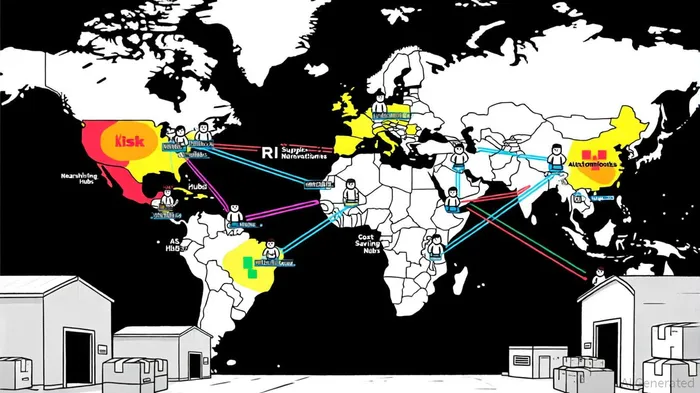
The Resilience Premium: Why Risk Diversification Matters
According to a Deloitte report, 86.2% of manufacturers have actively de-risked their supply chains since 2021, prioritizing resilience over cost arbitrage. This shift is reshaping valuations. For example, Mexico has overtaken China as the U.S.'s largest trading partner, with nearshoring driving a 17% year-over-year increase in inspection demand in Latin America, according to QIMA data. Why? Shorter lead times, reduced exposure to geopolitical tensions, and lower transportation costs are creating a "resilience premium" for logistics firms that adapt.
But resilience isn't just about geography. Supplier diversification is equally critical. A case study of the manufacturing sector found that companies with diversified supplier networks navigated disruptions 30% more effectively than those reliant on single sources. This isn't just theory-it's a hardwired advantage in today's volatile markets.
Operational Adaptability: The Power of Automation and AI
The financial returns on automation are staggering. Data from 80 U.S.-based firms between 2019 and 2023 shows a strong correlation between digital investment and improved margins, with AI-driven logistics cutting operational costs by 15% and boosting inventory turnover, according to a study. Take DB Schenker: By leveraging AI for demand forecasting, the company improved load factors by 15%, directly enhancing profitability, according to an MDPI paper.
Meanwhile, robotics and predictive analytics are revolutionizing warehouse operations: a ResearchGate study found that firms adopting AI-powered systems saw a 65% improvement in service levels and a 35% increase in inventory accuracy. These aren't incremental gains-they're valuation multipliers.
The Nearshoring Boom: A Win for Logistics Valuations
Nearshoring isn't just a buzzword-it's a $184 billion annual cost-saving opportunity for global businesses, according to a Gorapido analysis. Bain's 2024 survey revealed that 80% of chief operating officers plan to expand nearshoring over the next three years, driven by shorter transit times and lower transportation costs (reported by QIMA). For logistics firms, this means higher demand for regional warehousing and last-mile delivery solutions.
Consider the U.S. trucking industry: Despite a looming driver shortage of 80,000, nearshoring has offset some of these pressures by reducing transit distances and enabling faster hiring, that analysis found. This adaptability is a key reason why logistics valuations are stabilizing despite rising fuel and labor costs, according to Logistics Management.
Challenges and Opportunities: Where to Invest
While the sector is booming, challenges remain. Small and medium enterprises (SMEs) struggle with the upfront costs of AI and automation, the MDPI paper notes, and talent shortages in digitization projects persist, according to Deloitte. However, these gaps represent opportunities for investors. Firms that can scale affordable AI tools or partner with nearshoring hubs like Mexico are poised to dominate.
Conclusion: Resilience as a Competitive Advantage
The logistics sector's valuation story in 2025 is no longer about efficiency-it's about survival. Companies that integrate nearshoring, automation, and supplier diversification are not just mitigating risks; they're building moats around their margins. For investors, the message is clear: Supply chain resilience isn't a passing trend-it's the new standard.







Comentarios
Aún no hay comentarios