
Super Micro and AMD: Capturing the AI Infrastructure Surge with Apple's Ecosystem in Sight
The race to dominate AI infrastructure is intensifying, and Super Micro ComputerSMCI-- (NASDAQ: SMCI) and AMDAMD-- (NASDAQ: AMD) are positioning themselves as critical players in this transformative landscape. Their strategic moves—bolstered by partnerships and technological advancements—are now converging with Apple's (AAPL) growing AI ambitions, creating a compelling opportunity for investors. Here's why these companies could outperform in the coming quarters.
The AI Infrastructure Boom: A Gold Rush for Hardware Leaders
The global AI hardware market is projected to hit $100 billion by 2027, driven by the need for scalable data centers, edge computing, and specialized chips. Apple's push into AI—from its M3 Ultra chip to rumored AI servers—has only accelerated this demand. Companies like Super Micro and AMD are uniquely positioned to supply the backbone of this ecosystem.
Super Micro: Building the AI Factory of the Future
Super Micro's recent partnerships underscore its role as a turnkey provider of AI infrastructure:
Liquid-Cooled Data Centers for NVIDIA's Blackwell Architecture:
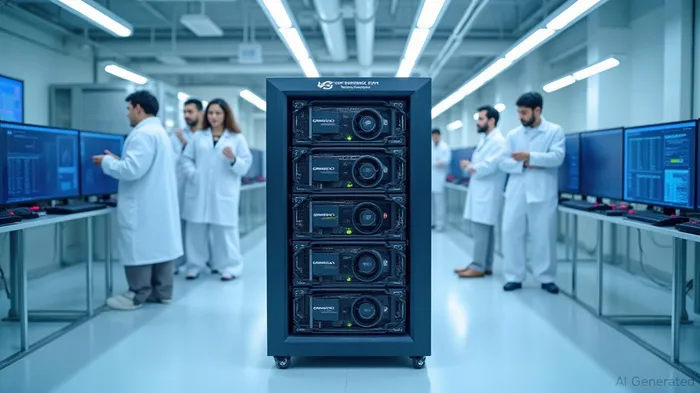
Super Micro's collaboration with NVIDIA includes over 30 validated systems for the Blackwell B200 GPU, featuring DLC-2 liquid cooling capable of removing 250kW per rack. This efficiency is critical as data centers grapple with rising energy costs and thermal limits.
The $20 Billion DataVolt Deal:
A landmark agreement with Saudi Arabia's DataVolt to build AI campuses using Super Micro's high-density GPU platforms and liquid cooling systems. This deal alone could drive recurring revenue streams and solidify its position in emerging markets.Edge AI with Ericsson:
Partnering with Ericsson to integrate 5G connectivity with Super Micro's edge servers, targeting industries like healthcare and manufacturing. This synergy merges compute power with low-latency networks, ideal for Apple's potential AI-driven services.
AMD: The Open-Ecosystem Challenger to NVIDIA's Dominance
AMD's Instinct MI350 series GPUs are a direct threat to NVIDIA's Blackwell lineup, offering 40% better price-performance for inference tasks and up to 288GB of HBM3e memory. Key advantages include:
- Open Standards: AMD's ROCm 7 software stack supports PyTorch and TensorFlow, attracting developers who prefer non-proprietary ecosystems.
- Helios Rack-Scale Systems: By 2030, AMD aims to reduce AI training energy use by 95% through its 72-GPU-per-rack Helios platform, aligning with Apple's sustainability goals.
- Partnerships with Hyperscalers: Oracle Cloud and Meta have already adopted AMD's GPUs, signaling enterprise trust in its tech.
Synergies with Apple's AI Ecosystem
While AppleAAPL-- hasn't explicitly partnered with Super Micro or AMD, the indirect synergies are profound:
Hardware Complementarity:
Apple's M3 Ultra chip, with its unified memory architecture, pairs well with Super Micro's data center servers and AMD's GPUs. This could create a hybrid ecosystem where Apple's consumer devices are trained on infrastructure supplied by these companies.Edge Computing for Apple's Services:
Super Micro's edge AI systems (via Ericsson) could power future Apple services like AI-driven retail analytics or healthcare tools, reducing reliance on centralized clouds.Cost Efficiency:
AMD's price-performance edge over NVIDIA and Super Micro's liquid cooling innovations align with Apple's focus on cost-effective, high-margin solutions.
Market Dynamics and Risks
- Competitive Landscape: NVIDIA remains dominant, but AMD and Super Micro are eating into its margins with open standards and lower costs.
- Execution Risks: The DataVolt deal's success hinges on timely delivery, while AMD must ramp up Helios production to meet demand.
- Regulatory Headwinds: Data localization laws in Saudi Arabia and the EU could complicate Super Micro's global scaling.
Investment Thesis
Both companies are well-positioned to benefit from the AI hardware boom, but their valuations offer different opportunities:
- Super Micro (SMCI):
- Upside: Analysts project a $70 price target (up 57% from current levels) if DataVolt and Ericsson collaborations hit targets.
Risks: Delays in Saudi Arabia's AI campus project or a slowdown in enterprise AI spending.
AMD (AMD):
- Upside: A $150 stock price (current: ~$100) is achievable if Helios gains traction and AMD captures 30% of the data center GPU market by 2026.
- Risks: NVIDIA's counterattacks with newer Blackwell chips and supply chain hiccups.
Final Take
Investors should consider long positions in both SMCI and AMD, particularly ahead of their Q3 2025 earnings reports. Super Micro's execution on the DataVolt deal and AMD's GPU shipments will be key catalysts. While risks exist, the AI infrastructure boom—and Apple's growing role in it—suggests these companies are primed to outperform.
Recommendation: Buy SMCISMCI-- and AMD with a 6-12 month horizon, targeting a 30-50% return. Monitor their Q3 results and any Apple-related AI partnerships for upside catalysts.
This analysis is for informational purposes only. Always conduct your own research or consult a financial advisor before making investment decisions.





Comentarios
Aún no hay comentarios