
Sunoco LP (SUN): Navigating Earnings Volatility and Strategic Expansion in a Dynamic Energy Sector
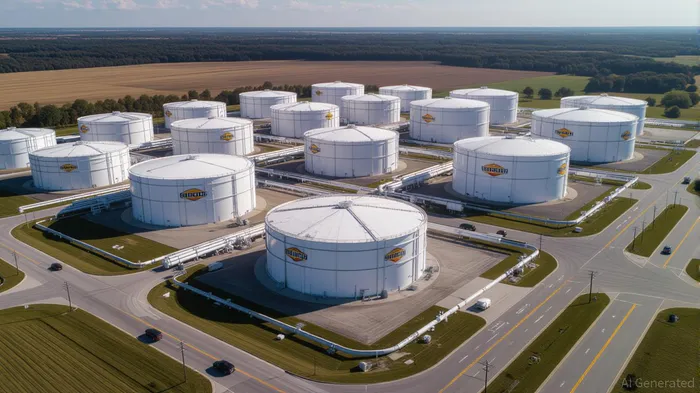
The energy landscape in 2025 is marked by volatility, shifting demand patterns, and the lingering effects of global supply chain adjustments. For Sunoco LPSUN-- (SUN), a midstream energy infrastructure company, the path to sustainable earnings and distribution growth hinges on its ability to balance operational resilience with strategic acquisitions. With Q2 2025 earnings due on August 6, 2025, investors are scrutinizing whether the company can rebound from a disappointing Q1 performance while executing its ambitious expansion plans.
Q1 2025: A Wake-Up Call
Sunoco's Q1 2025 results underscored the challenges of navigating a fragmented market. Revenue of $5.18 billion fell short of estimates by 7.17%, while earnings per share (EPS) of $1.21 missed expectations by 20.26%. The stock price dipped 1.52% post-announcement, reflecting investor concern. However, the underlying metrics—$458 million in Adjusted EBITDA and $310 million in Distributable Cash Flow—showcased operational strength, with both figures rising sharply from Q1 2024 levels. This dichotomy highlights a critical question: Was the miss a temporary blip or a sign of deeper structural headwinds?
The Fuel Distribution segment, which accounts for a significant portion of revenue, reported a 11.5-cent-per-gallon margin, a modest improvement but not enough to offset broader market pressures. Meanwhile, the Pipeline Systems and Terminals segments delivered robust Adjusted EBITDA of $172 million and $66 million, respectively, driven by stable throughput volumes. These results suggest that Sunoco's core infrastructure assets remain resilient, even as its retail and distribution arms face headwinds.
Strategic Acquisitions: A Double-Edged Sword
Sunoco's recent $9.1 billion acquisition of Parkland Corporation and the €500 million purchase of TanQuid represent a bold bet on geographic and operational diversification. These deals, expected to close in H2 2025, are projected to be immediately accretive to unitholders. Parkland's Canadian fuel distribution network and TanQuid's European terminal operations will expand Sunoco's footprint into high-growth markets, potentially insulating it from regional demand fluctuations.
However, the success of these acquisitions hinges on integration efficiency. Midstream companies often face challenges in harmonizing operations, particularly in cross-border deals. Sunoco's leverage ratio of 4.1x net debt to Adjusted EBITDA, while manageable, leaves little room for error. The company's recent $1 billion debt refinancing—issuing 6.250% senior notes to repay 5.750% debt—demonstrates disciplined capital management, but investors must monitor how these liabilities scale with new assets.
Distribution Growth: Can SunocoSUN-- Deliver?
Sunoco's 1.25% distribution increase in Q1 2025, bringing the annualized rate to $3.5904 per unit, aligns with its 5% growth target for 2025. Distributable Cash Flow of $310 million in Q1 suggests the company has the liquidity to sustain this pace. Yet, the downward revision of full-year 2025 earnings estimates—from $8.44 to $6.65 per share—raises concerns about long-term sustainability.
Analysts' average price target of $64.40 (18.75% upside) reflects optimism about Sunoco's strategic moves, but the GuruFocus GF Value of $34.20—a 36.94% downside—signals caution. The disparity underscores the market's uncertainty about Sunoco's ability to convert its aggressive growth strategy into consistent cash flows.
Market Dynamics: Opportunities and Risks
The energy sector in 2025 is shaped by two opposing forces: the decarbonization push and the persistence of fossil fuel demand. Sunoco's infrastructure-centric model—pipelines, terminals, and storage—positions it to benefit from the latter, as global energy transitions proceed unevenly. However, regulatory risks and the rise of renewable energy could erode long-term margins.
Sunoco's Q2 earnings will be a critical test. If the company can demonstrate that its Q1 underperformance was an anomaly—perhaps due to seasonal factors or temporary supply chain disruptions—investors may regain confidence. A rebound in Fuel Distribution margins or stronger-than-expected throughput in newly acquired assets could serve as catalysts.
Investment Implications
For income-focused investors, Sunoco's 5% distribution growth target remains attractive, but the 4.1x leverage ratio and soft Q1 results warrant caution. The company's strategic acquisitions could unlock value, but integration risks and market volatility pose near-term threats.
A balanced approach might involve entering a position ahead of the Q2 earnings report, using the 1.52% post-Q1 selloff as a potential entry point. However, investors should set stop-loss levels to mitigate downside risk, given the GF Value's stark warning.
In the broader context, Sunoco's story reflects the challenges of midstream energy companies in a transitional era. While its infrastructure assets offer stable cash flows, the path to sustainable growth requires navigating a complex web of market forces, regulatory shifts, and strategic execution.
As the August 6 earnings call approaches, all eyes will be on whether Sunoco can turn its Q1 stumble into a springboard for renewed momentum—or if the energy landscape's turbulence will test its resilience further.





Comentarios
Aún no hay comentarios