
SunCoke Energy's Strategic Expansion and Long-Term Contract Stability
Strategic Alignment and Operational Strength
The Haverhill facility is a cornerstone of SunCoke's domestic coke production strategy. Equipped with heat-recovery technology and strategically located near key steel production hubs, the plant plays a vital role in supporting Cleveland-Cliffs' blast furnace operations. The extension of this agreement reflects the mutual recognition of the facility's value in ensuring a reliable supply of high-quality coke, which is essential for maintaining the efficiency of domestic steelmaking. Analysts note that such long-term, take-or-pay contracts provide SunCoke with a buffer against market volatility, a trait increasingly important as the steel industry navigates global supply chain disruptions.
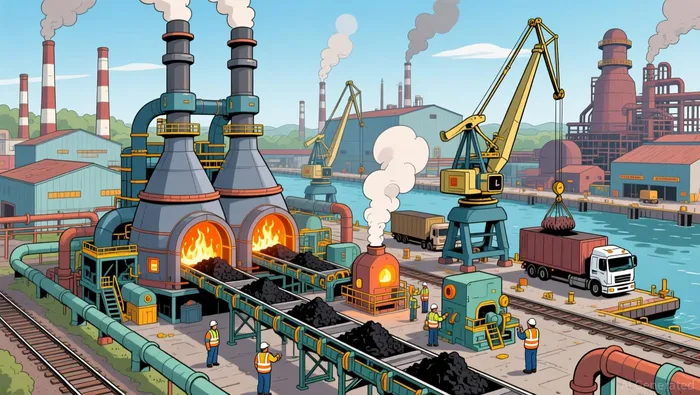
The partnership also aligns with broader industry trends. As U.S. steel producers prioritize domestic supply chains, SunCoke's ability to deliver consistent output from its Haverhill plant enhances its relevance in a sector undergoing structural shifts. This strategic alignment is further reinforced by SunCoke's emphasis on industrial services, including logistics and material handling, which add value beyond raw coke production.
Financial Stability and Investment Metrics
While the Haverhill contract extension is a positive development, SunCoke's recent financial performance reveals mixed signals. For Q3 2025, the company reported adjusted EBITDA of $44.0 million for its Domestic Coke segment, down from $58.1 million in the same period in 2024. This decline was attributed to lower volumes, reduced pricing, and a contract breach that deferred approximately 200,000 tons of coke sales. However, the Haverhill agreement, with its fixed-volume commitments, is expected to mitigate such risks in the coming years.
SunCoke's full-year 2025 guidance projects consolidated adjusted EBITDA between $220 million and $225 million, with domestic coke production anticipated to reach 3.9 million tons. These figures suggest a stable revenue outlook, albeit with margin pressures stemming from capital expenditures. The company has allocated approximately $70 million for capital investments in 2025, which could impact short-term profitability but is expected to enhance long-term operational efficiency.
Analysts highlight that the Haverhill contract's similarity to existing agreements-particularly its fixed pricing and volume terms-reduces exposure to market fluctuations. This stability is critical for a company like SunCoke, which relies heavily on industrial clients with predictable demand patterns. The renewed contract also complements SunCoke's recent acquisition of Phoenix Coke & Chemical, which is expected to diversify its revenue base and reduce dependency on a single facility.
Risks and Considerations
Despite the strategic and financial benefits, investors should remain cautious. The Q3 2025 results underscore vulnerabilities in SunCoke's business model, including sensitivity to pricing pressures and operational disruptions. The deferral of 200,000 tons of coke sales due to a customer contract breach illustrates the risks of relying on a limited number of large clients. Additionally, the company's capital expenditure plans, while necessary for long-term growth, may strain cash flow in the short term.
The broader steel industry also faces headwinds, including regulatory changes and competition from alternative materials. While SunCoke's Haverhill facility is well-positioned to meet current demand, its long-term viability will depend on the continued strength of the domestic steel sector and the company's ability to innovate in a low-carbon transition.
Conclusion
SunCoke Energy's 3-year Haverhill cokemaking agreement with Cleveland-CliffsCLF-- is a strategic win that reinforces its role as a critical supplier in the U.S. steel industry. By locking in long-term demand for its Haverhill facility, the company secures a stable revenue stream, which is essential for attracting investors seeking predictable returns. However, the recent financial challenges and capital-intensive nature of the business highlight the need for disciplined execution and diversification. For now, the agreement positions SunCoke as a resilient player in a sector where reliability and innovation are paramount.







Comentarios
Aún no hay comentarios