
The Sun Belt's Affordable Housing Boom: Why Mixed-Income Developments Are the New Safe Haven for Investors
The U.S. housing market is undergoing a seismic shift, driven by demographic realignments, economic pressures, and a growing preference for affordability and climate-friendly living. Nowhere is this more evident than in the Sun Belt, where cities like McKinney, Texas, are emerging as hubs for mixed-income housing development. With rising demand from retirees, remote workers, and cost-conscious families, this sector is proving resilient—even as broader markets face volatility. Here's why investors should pay attention—and how one project in McKinney is leading the way.
Demographic Tailwinds Fueling Demand
The Sun Belt's population surge is no secret. From 2023 to 2024, Texas added over 31 million residents, while Florida gained 467,000 people, with cities like Austin, Miami, and Ocala leading the charge. These migrants are fleeing high-tax coastal regions (e.g., California, New York) and seeking affordable housing, lower taxes, and warmer climates.
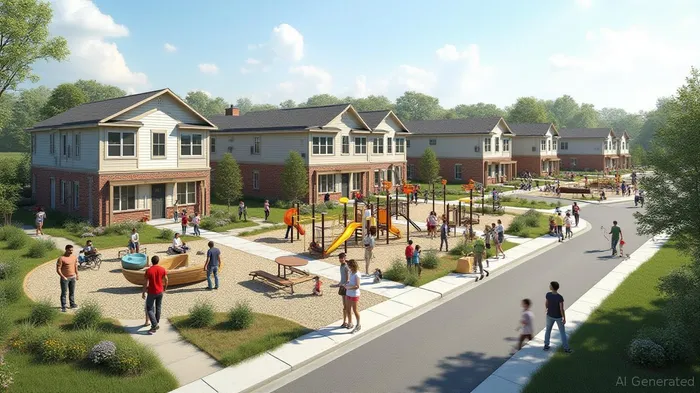
The McKinney case study underscores this trend. Located within the Dallas-Fort Worth metroplex, McKinney's population has grown 13.5% since 2020, reaching 224,043 residents in 2025. Its median household income of $120,273 (153% of the U.S. average) reflects a robust workforce in tech, healthcare, and manufacturing. Yet income inequality persists: the top 5% of earners make $544,057 annually, while the bottom quintile earns just $29,068. This gap creates a critical need for mixed-income housing to house both high-wage professionals and middle-class families.
Government Incentives: A Tailwind for Investors
Sun Belt cities aren't just growing—they're actively incentivizing affordable housing. McKinney exemplifies this through programs like the Low Income Housing Tax Credit (LIHTC), which funds 3,055 affordable units with income limits set at 60% of the area median. For example, a family of eight qualifies if they earn under $87,360—a threshold that balances affordability with McKinney's rising cost of living.
Local governments are also streamlining approvals. The McKinney Housing Finance Corporation works with the City Council to fast-track projects like Kalterra Capital Partners' development, which combines market-rate rentals with subsidized units. These policies reduce investor risk and provide tax breaks, making mixed-income housing a low-risk, high-reward bet.
The Kalterra McKinney Project: A Case Study in Resilience
Kalterra's McKinney development targets three income tiers:
1. Affordable units (≤60% AMI) for retirees and service workers.
2. Moderate-income units (60–120% AMI) for families and remote workers.
3. Market-rate units (120–150% AMI) for high earners in tech and healthcare.
This structure leverages McKinney's rental market stability. Median rents hit $2,298/month in 2025, with strong demand in neighborhoods like Stonebridge Ranch and Craig Ranch. show McKinney's rents rising steadily (3–4% annually), while coastal markets face stagnation or declines.
Why This Sector Is a Volatility Hedge
Mixed-income housing in the Sun Belt offers unmatched insulation from economic swings. Key advantages include:
- Diversified Tenants: Income brackets buffer against job losses in any single sector.
- Inelastic Demand: Housing is a necessity, even in recessions.
- Government Backstops: LIHTC and HOME grants reduce capital costs for developers.
Consider McKinney's demographics: 52.6% of residents hold bachelor's degrees, and the median age (36.7) suggests a workforce primed for long-term stability. Meanwhile, the city's 6.07% poverty rate and strong job markets (e.g., aerospace in nearby Plano) ensure a steady pipeline of renters.
Risks and Mitigation Strategies
No investment is risk-free. Sun Belt cities face challenges like rising construction costs and climate risks (e.g., hurricanes in Florida). However, McKinney's inland location and focus on mid-sized cities (vs. overpriced coastal hubs) mitigate these risks. Investors should also diversify across Sun Belt markets—such as Frisco or Garland, Texas—where similar dynamics apply.
Investment Thesis: Buy Now, Reap Later
The McKinney project—and the Sun Belt's mixed-income housing boom—represent a decadal opportunity. With federal and state support, demographic tailwinds, and stable rental demand, this sector is primed to outperform volatile equities or bonds. For investors:
- Allocate 5–10% of portfolios to real estate investment trusts (REITs) focused on affordable housing.
- Target Sun Belt hubs like McKinney, where rising populations and tax incentives create a “virtuous cycle” of growth.
- Avoid coastal markets where high costs and regulatory hurdles stifle development.
The writing is on the wall: as Americans flee high-cost living, the Sun Belt's mixed-income housing boom isn't a trend—it's a new normal. Kalterra's McKinney project isn't just a development; it's a blueprint for resilient investing in an uncertain world.
Ben Levisohn is a pseudonymous analyst specializing in real estate and demographic trends. His work focuses on identifying overlooked opportunities in evolving markets.







Comentarios
Aún no hay comentarios