
Sumitomo Corp's Share Buyback Strategy and Its Implications for Value Creation
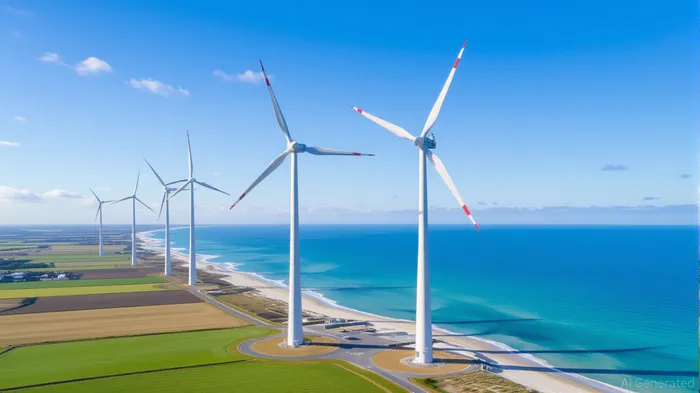
Sumitomo Corporation's recent 26 billion yen tender offer, part of its broader 80 billion yen equity buyback program, has sparked significant investor interest. Announced on May 1, 2025, the initiative aims to repurchase up to 2.9% of the company's shares at 3,380 yen per share, with the stated rationale of enhancing shareholder value and optimizing capital structure. However, as of June 30, 2025, no shares had been repurchased under the program, raising questions about execution timelines. This delay underscores the need to critically assess the strategic and financial logic behind the buyback, as well as its alignment with Sumitomo's long-term capital allocation priorities in clean energy and infrastructure.
Strategic Rationale: Balancing Shareholder Returns and Growth
Sumitomo's buyback strategy is deeply rooted in its Medium-Term Management Plan 2026, which targets a total shareholder payout ratio of 40% or higher through dividends and buybacks. The company's FY2024 financial performance—net profit of 560 billion yen and a 6% year-over-year increase—provides a solid foundation for such capital returns. By canceling repurchased shares rather than holding them as treasury stock, Sumitomo signals a commitment to long-term value creation, directly increasing earnings per share (EPS) for remaining shareholders.
Yet the 26 billion yen tender offer must be contextualized within the company's broader capital allocation framework. While the buyback focuses on immediate shareholder rewards, Sumitomo has simultaneously pledged £7.5 billion (approximately $10.2 billion) to UK clean energy and infrastructure projects by 2035. This includes investments in offshore wind, hydrogen production, and carbon capture and storage (CCS), aligning with the UK's Modern Industrial Strategy. The apparent duality—returning cash to shareholders while committing to large-scale clean energy ventures—raises a critical question: Is the buyback a strategic complement to growth, or a diversion of resources?
Financial Prudence and Risk Management
Sumitomo's ability to fund both the buyback and clean energy investments hinges on its robust financial position. A net debt-to-equity ratio of ~10% in FY2024 demonstrates ample liquidity, allowing the company to allocate capital without compromising growth. The buyback's 2.9% share reduction, while modest, reflects a disciplined approach to capital returns. Meanwhile, the UK clean energy investments—spanning projects like the Galloper and Five Estuaries wind farms—position Sumitomo to capitalize on decarbonization trends, which are expected to drive long-term revenue streams.
However, the delay in executing the buyback (0 shares repurchased as of June 30, 2025) suggests that management is prioritizing strategic investments over immediate share repurchases. This could indicate a cautious approach to market timing, ensuring the buyback is executed at optimal valuations. Investors should monitor the company's Q3 2025 earnings report for updates on buyback progress and guidance on how the program will be integrated with ongoing capital expenditures.
Clean Energy as a Strategic Anchor
Sumitomo's clean energy initiatives are not merely a response to ESG trends but a calculated bet on future profitability. The UK's commitment to becoming a global clean energy leader, coupled with Sumitomo's expertise in energy transformation, creates a compelling synergy. For instance, the company's collaboration with Tokamak Energy on fusion energy development and its expansion of corporate venture capital (Presidio Ventures) into the UK signal a forward-looking strategy. These investments, while capital-intensive, align with global decarbonization mandates and position Sumitomo to benefit from rising demand for clean energy infrastructure.
Investment Implications and Recommendations
The 26 billion yen tender offer, while part of a larger 80 billion yen program, represents a strategic tool for enhancing shareholder value. However, its success depends on execution efficiency and alignment with Sumitomo's clean energy ambitions. Investors should consider the following:
- Monitor Buyback Execution: The absence of repurchases as of June 30, 2025, could reflect market conditions or management's prioritization of growth projects. A timely resumption of the buyback will signal confidence in the company's financial flexibility.
- Assess Synergies with Clean Energy: The UK investments, though long-term, are critical to Sumitomo's competitive positioning. The company's ability to balance short-term returns with long-term growth will determine its valuation trajectory.
- Evaluate Valuation Metrics: At a forward P/E ratio of ~12x (as of July 2025), Sumitomo's stock appears attractively priced, particularly given its dual focus on shareholder returns and high-growth sectors.
Conclusion
Sumitomo Corporation's share buyback strategy, while modest in scale, is a well-calibrated element of its capital allocation framework. By pairing immediate shareholder returns with strategic investments in clean energy, the company is positioning itself to navigate both near-term market dynamics and long-term industry shifts. For income-focused investors, the buyback offers a tangible boost to EPS, while growth-oriented investors can look to Sumitomo's UK initiatives as a catalyst for future profitability. As the energy transition accelerates, Sumitomo's ability to execute on both fronts will be a key determinant of its success.







Comentarios
Aún no hay comentarios