
Sudan's Forgotten War: A Nation Ravaged
Generado por agente de IAHarrison Brooks
viernes, 21 de marzo de 2025, 10:39 pm ET2 min de lectura
The world has turned a blind eyeEYE-- to the devastating civil war in Sudan, a conflict that has left the country in ruins and its people in despair. As the international community focuses on other crises, Sudan's economy has shrunk by 40 percent in 2023, with predictions of a further 28 percent decline in 2024. The conflict has caused widespread destruction, displacing millions and leaving thousands dead. The industrial sector, once the backbone of Sudan's economy, has been severely damaged, and infrastructure like roads and supply chains have been decimated, impeding foreign trade and export. Bilateral trade with neighboring countries has slumped dramatically, and the financial system is on the brink of collapse.
The conflict has also catalysed the region’s illicit markets, with people turning to smuggling networks for essential goods. Food, fuel, and arms are the most smuggled items, with a marked increase in clandestine movements over the past eight months. The disruption of legal fuel supplies in Sudan since the civil war started has expanded trade values and volumes, while weapons trafficking has been boosted by the war, with a more decentralised arms trade emerging, primarily concentrated around the Chad-Sudan border.
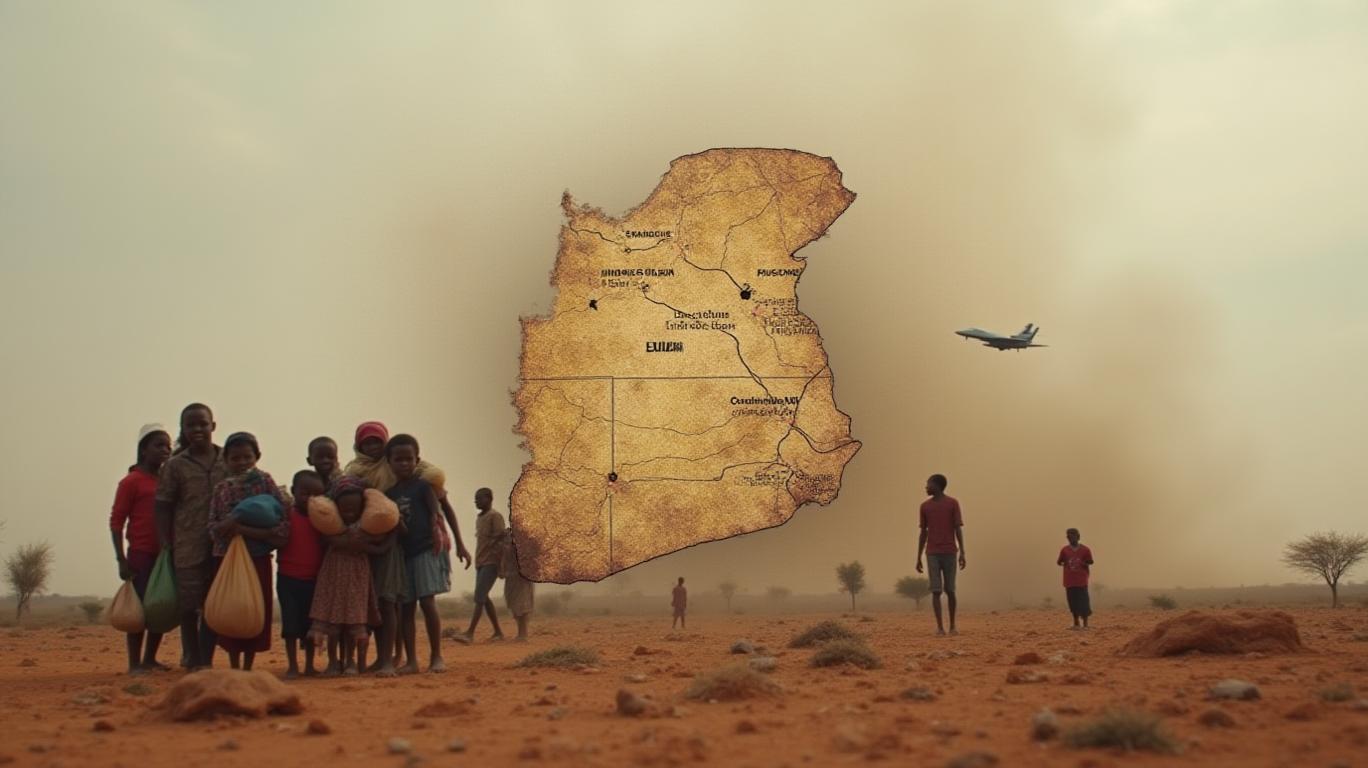
The key geopolitical factors influencing international attention and aid towards Sudan's conflict include the scale and intensity of the conflict, geopolitical interests, and the focus of international media and intervention. These factors can be leveraged to garner more support for conflict resolution and economic recovery in several ways.
Firstly, the scale and intensity of the conflict play a significant role in determining the level of international attention and aid. Larger and more intense conflicts tend to garner greater international attention due to the higher casualties, greater displacement of people, and more adverse economic consequences. For instance, the ongoing armed conflict in Sudan has exacted substantial humanitarian and economic tolls, yet other major conflicts have garnered greater international attention. This is evident in the fact that Sudan's conflict has caused great damage to infrastructure, public facilities, private homes and property throughout the country, with state revenue dipping by over 80 percent. The government is considering the possibility of establishing an alternative capital as the capital city Khartoum suffers the most serious damage. The industrial sector, which is the backbone of Sudan's economy, has been severely damaged by the conflict. Infrastructure like roads and supply chains have been damaged which impeded foreign trade and export. Bilateral trade between Sudan and neighboring countries such as Libya and Chad has slumped dramatically. But the financial system was worst hit which caused a liquidity crunch in banks and triggered systemic risks. This information can be used to highlight the severity of the conflict and the urgent need for international support.
Secondly, geopolitical interests influence the focus of international media and intervention. Some conflicts risk being overlooked due to geopolitical factors, as seen in the case of Sudan. To leverage this factor, it is important to emphasize the strategic importance of Sudan and its potential for economic recovery. Sudan is one of the largest and most geographically diverse states in Africa, with a strategic location, gold reserves, oil & gas fields, other mineral resources, a favourable climate, as well as excellent irrigation and soil conditions. This information can be used to highlight the potential benefits of investing in Sudan's economic recovery and the strategic importance of supporting conflict resolution efforts.
Thirdly, the focus of international media and intervention can be influenced by highlighting the humanitarian impact of the conflict. The ongoing conflict in Sudan has resulted in about 8.1 million people fleeing their homes, with about 6.3 million people displaced within Sudan and another 1.8 million people fleeing to neighboring countries. About 13,900 people have lost their lives in the conflict, according to UN figures. This information can be used to emphasize the urgent need for humanitarian aid and support for conflict resolution efforts.
In conclusion, by leveraging the scale and intensity of the conflict, the strategic importance of Sudan, and the humanitarian impact of the conflict, it is possible to garner more international attention and aid for conflict resolution and economic recovery in Sudan. This can be achieved by highlighting the severity of the conflict, the potential benefits of investing in Sudan's economic recovery, and the urgent need for humanitarian aid. The world must not turn a blind eye to Sudan's forgotten war, but instead, rally together to support the people of Sudan in their time of need.



Divulgación editorial y transparencia de la IA: Ainvest News utiliza tecnología avanzada de Modelos de Lenguaje Largo (LLM) para sintetizar y analizar datos de mercado en tiempo real. Para garantizar los más altos estándares de integridad, cada artículo se somete a un riguroso proceso de verificación con participación humana.
Mientras la IA asiste en el procesamiento de datos y la redacción inicial, un miembro editorial profesional de Ainvest revisa, verifica y aprueba de forma independiente todo el contenido para garantizar su precisión y cumplimiento con los estándares editoriales de Ainvest Fintech Inc. Esta supervisión humana está diseñada para mitigar las alucinaciones de la IA y garantizar el contexto financiero.
Advertencia sobre inversiones: Este contenido se proporciona únicamente con fines informativos y no constituye asesoramiento profesional de inversión, legal o financiero. Los mercados conllevan riesgos inherentes. Se recomienda a los usuarios que realicen una investigación independiente o consulten a un asesor financiero certificado antes de tomar cualquier decisión. Ainvest Fintech Inc. se exime de toda responsabilidad por las acciones tomadas con base en esta información. ¿Encontró un error? Reportar un problema




Comentarios
Aún no hay comentarios