
StubHub's 15% Pop: What Was Priced In and What's Next
The market's initial expectations for StubHubSTUB-- were set at its September IPO. The stock opened 7.9% above its $23.50 IPO price, a solid pop that signaled strong investor appetite. At that moment, the narrative was one of a leader in a growing market, with a market cap of $8.64 billion and a promising debut. Yet that optimism was quickly reset by the company's first official results.
The gap between priced-in hope and reality became stark with the Q3 2025 report. While StubHub delivered $2.4 billion in gross merchandise sales, up 11% year-over-year, the growth rate was seen as underwhelming for a company of its scale. The "Eras" Tour tailwind was a known variable, and even excluding that impact, the underlying growth was a modest 24%. In a market hungry for acceleration, 11% GMS growth looked like a ceiling, not a launchpad.
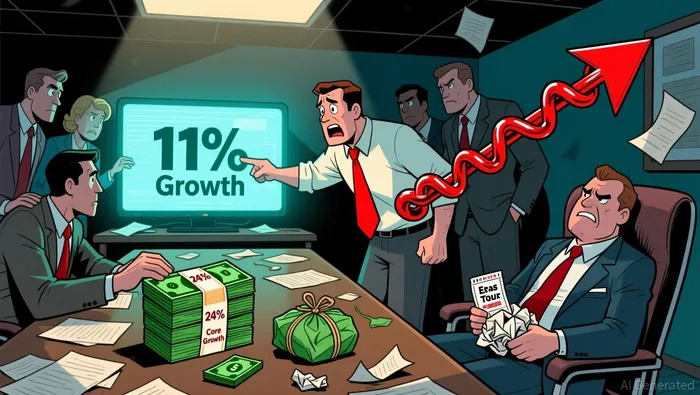
The real shock came with the bottom line. The company reported a net loss of $1.3 billion for the quarter, a figure that dominated the story. This massive loss was almost entirely a one-time accounting charge of $1.4 billion for stock-based compensation triggered by the IPO. While management framed it as a non-cash, GAAP requirement, the market heard a different message: the high cost of going public had created an immediate, negative earnings narrative. The stock's subsequent slide, trading well below its IPO price by early December, was the market's verdict on that reset expectation.
The bottom line is that the IPO pop was a "buy the rumor" move based on future potential. The Q3 results delivered the "sell the news" reality check, highlighting the gap between StubHub's current financials and the growth trajectory investors had been pricing in. The expectation gap had opened wide.
December's News: Closing the Expectation Gap
After the heavy disappointment of its Q3 report, StubHub's silence was deafening. The 15% pop in December was a classic "buy the rumor" move, triggered by a series of strategic announcements that the market had not been pricing in. These moves didn't represent a beat on near-term financial expectations-they were a reset of the company's strategic narrative, signaling a more aggressive push beyond its core music ticketing roots.
The first catalyst was the launch of Theatre Week with ATG Entertainment. This partnership, offering a $50 credit for Broadway tickets, was a clear attempt to diversify. For a skeptical market that had seen StubHub's growth stall, this was a tangible step toward becoming a broader live events platform. It wasn't a massive revenue driver, but it provided a fresh narrative thread that the stock had been missing.
The momentum continued with a partnership to become the official direct issuance partner for the World Sevens Football league. While niche, this move reinforced the theme of opportunistic expansion. Together, these initiatives suggested management was actively seeking new categories to drive growth, a proactive stance that contrasted with the previous quarter's defensive posture.
The most high-profile announcement, however, was the launch of its app on OpenAI's ChatGPT. This wasn't just a tech upgrade; it was a signal to modernize the user experience and capture demand at the point of discovery. In a crowded market, integrating with a dominant AI platform is a strategic play to stay relevant and capture a share of the conversation around event planning.
The bottom line is that these December announcements created a new set of expectations. They provided the catalysts the market needed to look past the Q3 loss and the IPO price decline. The stock's pop was less about beating numbers and more about closing the expectation gap with a more dynamic, diversified, and tech-forward story. It was the market saying, "We'll buy the rumor of a broader platform and a modern experience."
Financial Health vs. Market Sentiment
The December pop presents a classic tension between StubHub's improving fundamentals and a market still grappling with its post-IPO identity. On paper, the company is executing a solid operational turnaround. Its adjusted EBITDA grew 21% to $67 million in Q3, and its adjusted gross margin improved to 84%. This shows clear leverage from its core business. More importantly, the balance sheet has been materially strengthened. The IPO proceeds allowed StubHub to repay $750 million in debt, reducing its net leverage to 3.9x from 7.7x pre-IPO. This de-leveraging is a positive, long-term structural change that reduces financial risk and interest costs.
Yet the market's reaction was not a simple validation of these improvements. The stock's 15% climb in December occurred while it remained notably below its IPO price. This tells us sentiment was fragile and easily swayed. The pop was less about the market fully believing in the new financial trajectory and more about relief from the previous quarter's negative narrative. The strategic announcements provided a fresh catalyst, but they didn't fundamentally alter the near-term financial picture. The company still lacks specific guidance for 2026, leaving the path forward somewhat opaque.
The bottom line is that the December move was a sentiment reset, not a fundamental re-rating. The operational metrics show StubHub is building a healthier business, but the market's emotional reaction suggests it remains a speculative bet on management's expansion plans. The stock's ability to hold gains will depend on whether future results can close the gap between this improved financial health and the market's renewed, but still cautious, expectations.
Catalysts and Risks Ahead
The sustainability of StubHub's December rally hinges on a handful of forward-looking factors. The market has priced in a new narrative of expansion and modernization. Now it needs to see that story translate into tangible results. The key test will be the launch of its new MLB Direct Issuance partnership in 2026. This deal is the first major strategic initiative to move from announcement to execution. Its success will be a critical signal of management's ability to convert partnerships into real growth, moving beyond the buzz of new categories to measurable impact on gross merchandise sales.
The primary overhang, however, is a legal cloud. A securities lawsuit alleging IPO misrepresentations was filed just days ago, with a class action deadline set for January 23. This creates a persistent source of volatility and distraction. While the company maintains its financials are sound, the lawsuit casts a shadow over the stock, potentially keeping a lid on valuation until the legal uncertainty is resolved. The market will be watching for any material developments in this case, as it could lead to further downside pressure.
Finally, the market's renewed optimism depends on the durability of StubHub's underlying growth engine. The company's 11% year-over-year GMS growth in Q3 was a disappointment, but the 24% growth excluding the Taylor Swift "Eras" Tour impact was a more accurate read on the core business. The market needs to see that 24% figure become the new baseline, not a one-off. With no specific 2026 guidance provided, the path forward remains opaque. The stock's ability to hold its gains will depend on whether future results can close the gap between this improved financial health and the market's renewed, but still cautious, expectations. The setup is one of high potential, but also high risk, as the company navigates its first full year as a public company.





Comentarios
Aún no hay comentarios