
Stryker's (SYK) Strategic Valuation After Trauma Device Platform Expansion and Sustained Organic Growth
Financial Performance and Margin Resilience
Stryker's trauma device segment has been a cornerstone of its growth, driven by recurring revenue from robotic-assisted procedures and advanced implant systems. The Mako robotics platform, for instance, has become a critical differentiator, with system installations generating sustained demand for implants and consumables, according to CSIMarket data. In Q3 2025, , fueled by products like the Pangea plating system, as noted in a TradingView preview.
Despite challenges such as $175 million in annual tariff-related costs, , reflecting efficient cost management and operational leverage, the Monexa analysis noted. However, , highlighting the trade-offs inherent in its growth strategy, the Monexa piece also observed.
Competitive Positioning and Market Share
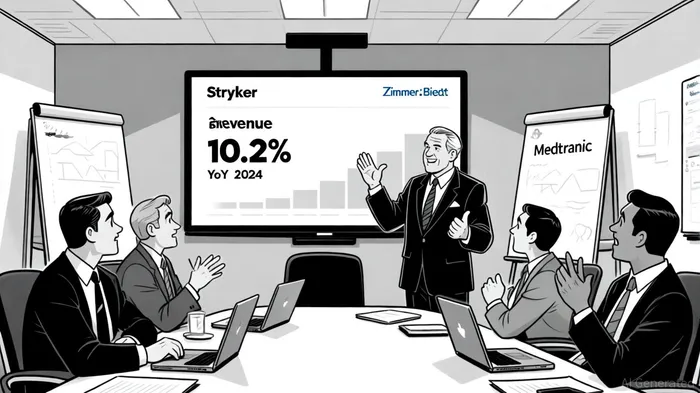
, , per CSIMarket data. ; Supplies industry further cements its leadership, according to CSIMarket market-share data. This dominance is attributed to a dual focus on innovation and strategic acquisitions, such as the 2025 acquisition of Inari Medical, which expanded its vascular market presence, as the Monexa analysis noted.
Key competitors like Zimmer Biomet and Johnson & Johnson have also made strides in robotics and AI-driven solutions. Zimmer Biomet's acquisition of Monogram Technologies, for example, aims to commercialize autonomous robotic platforms by 2027, as reported by Today's Medical Developments. Yet, , according to CSIMarket.
Technological Innovation and R&D Investments
Stryker's commitment to R&D has been pivotal in maintaining its competitive edge. Recent innovations, such as the Steri-Shield 8 personal protection system and the Sync Badge communication device, address operational inefficiencies in healthcare settings. In the tumor ablation market, Stryker's OptaBlate system-approved by the FDA in 2022-positions it at the forefront of minimally invasive cancer treatments, according to an OpenPR report.
That OpenPR report projects the global tumor ablation market to grow at a 13.3% CAGR through 2032, which aligns with Stryker's focus on high-margin, high-growth segments. By contrast, Zimmer Biomet's recent divestiture of its spinal implants division signals a strategic reallocation of resources, underscoring the divergent approaches taken by industry leaders, in an OpenPR analysis.
Market Trends and Long-Term Earnings Power
The orthopedic surgery market is shaped by demographic and technological tailwinds. An aging population and rising demand for joint replacements ensure sustained procedure volumes, while robotic-assisted surgeries-led by platforms like Mako-enhance procedural precision and patient outcomes, according to a Yahoo Finance report. Stryker's international revenue, , further buffers it against regional economic volatility, as noted in a GuruFocus note.
However, regulatory delays and supply chain disruptions remain risks. , the TradingView preview projects.
Investment Outlook
, the GuruFocus note observed. , driven by its leadership in robotics and recurring revenue streams, that same GuruFocus note estimates. While Zimmer Biomet's AI-driven robotics pipeline presents competitive pressure, Stryker's diversified portfolio and strong cash flow position it to outperform in the long term.
Conclusion
Stryker's strategic expansion of its trauma device platform, coupled with disciplined R&D investments and a resilient financial profile, positions it as a top-tier player in the orthopedic surgery market. While challenges persist, its ability to innovate and adapt to industry trends-such as the shift toward robotics and minimally invasive techniques-ensures a robust earnings trajectory. For investors, StrykerSYK-- represents a compelling blend of growth and stability in a sector poised for long-term expansion.





Comentarios
Aún no hay comentarios