
Three Struggling Stocks Facing Critical Crossroads in 2025
In a market increasingly dominated by tech titans and AI-driven disruptors, three once-promising companies now find themselves at a crossroads. Under ArmourUAA-- (UAA), Teledyne (TDY), and QuidelOrtho (QDEL) have slipped from growth trajectories to underperformance, their struggles emblematic of broader corporate challenges: misallocation of capital, stagnation, and the high cost of strategic missteps.
Under Armour: A Brand in Decline
Once synonymous with athletic innovation, Under Armour has become a cautionary tale of misplaced priorities. Despite its iconic logo and loyal fan base, the company’s revenue growth has flatlined, with constant currency sales barely keeping pace with inflation over the past two years. 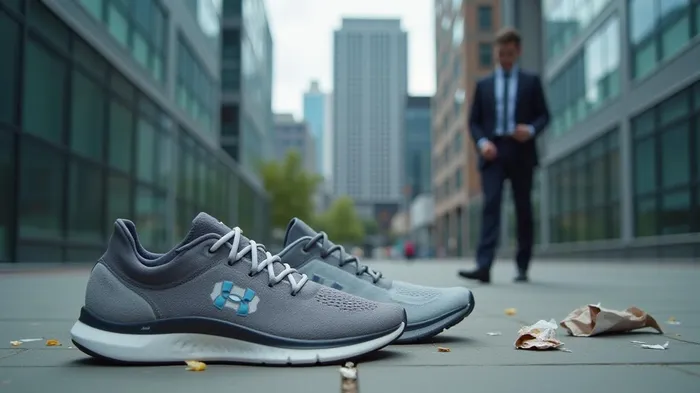 .
.
The data underscores the problem: while rivals like Nike have thrived by balancing premium pricing with agility, Under Armour’s attempts to compete on price have eroded margins. Compounding this, its returns on capital have dwindled, signaling poor reinvestment decisions. Forecasts for a 3.3% revenue decline in the next year suggest the rot is deepening. At a forward P/E of 17.8x, the stock’s valuation may be pricing in a turnaround—but the fundamentals tell a different story.
Teledyne: Acquiring Growth, Losing Momentum
Teledyne, a once-celebrated industrial conglomerate, has traded organic innovation for acquisition-led growth. Its reliance on deals to offset stagnation has left investors wary. Over the past five years, organic revenue growth has averaged just 1.5%, forcing the company to spend $8 billion on acquisitions to prop up top-line numbers.
The result? A stock trading at $458.10 (20.7x forward P/E) that no longer justifies its premium. Returns on capital have fallen to 12%, below industry averages, suggesting aging profit centers and managerial myopia. Without a clear path to organic renewal, Teledyne risks becoming a cautionary case of a company outbid by its own history.
QuidelOrtho: Post-Merger Purgatory
The 2022 merger of Quidel and Ortho Clinical Diagnostics aimed to create a diagnostics powerhouse. Instead, it has become a case study in integration failure. Constant currency revenue growth has averaged just 0.8% since the deal, while free cash flow margins have cratered by 20.5 percentage points over five years.
The merger’s promise—synergies in diagnostics and clinical tools—has gone unfulfilled. Management’s scramble to stem losses has led to aggressive reinvestment, but without a corresponding boost in profitability. At $28.63 per share (11.8x forward P/E), the stock is cheap for a reason: its valuation reflects skepticism about its ability to execute even the basics.
Common Threads in Decline
All three companies share a toxic trio of issues:
1. Management Inefficacy: Poor capital allocation has led to declining returns. Under Armour’s and Teledyne’s reliance on external factors (pricing, acquisitions) masks core weaknesses.
2. Valuation Disparity: QDEL’s low P/E reflects legitimate concerns, while UAA and TDY’s higher multiples may overstate their potential.
3. Structural Stagnation: None have a credible path to reigniting growth. Under Armour’s pricing wars, Teledyne’s deal dependency, and QuidelOrtho’s post-merger chaos all point to leadership failures.
Conclusion: A Cautionary Tale for Investors
These stocks are not just underperforming—they’re symptomatic of a broader truth: in today’s fast-moving markets, stagnation is the enemy of value. Under Armour’s 3.3% revenue decline forecast, Teledyne’s 12% return on capital (vs. peers at 18%), and QuidelOrtho’s 20.5% cash flow erosion all underscore a systemic lack of strategic clarity.
Investors should note the contrast with winners like NVIDIA, which leveraged AI’s rise to deliver a 2,183% return from 2019–2024. In a world where capital allocation and innovation are paramount, these three companies are lagging behind. Unless there’s a seismic shift in leadership and strategy, their valuations—and investor patience—are unlikely to recover. For now, they remain stocks to avoid, not buy.





Comentarios
Aún no hay comentarios