
The Structural Valuation Reset in Layer 1 Blockchains and Investment Implications for 2026
The post-2024 speculation cycle has left a lasting imprint on the crypto landscape, triggering a structural valuation reset in Layer 1 (L1) blockchains. As the market transitions from speculative fervor to infrastructure-led utility, capital reallocation patterns reveal a stark shift in investor priorities. By Q4 2025, L1 tokens broadly underperformed, with BitcoinBTC-- and EthereumETH-- declining amid regulatory and macroeconomic headwinds according to the report. Yet, privacy-focused assets like ZcashZEC-- (ZEC) and MoneroXMR-- (XMR) outperformed, signaling a defensive repositioning toward privacy and regulatory readiness as research shows. This recalibration sets the stage for 2026, where institutional-grade infrastructure, real-world adoption, and sectoral specialization will dominate investment narratives.
The 2025 Market Reset: From Speculation to Infrastructure
The 2025 market environment exposed the fragility of speculative narratives in the L1 space. While application-layer sectors-such as AI-driven crypto projects-underperformed, privacy coins gained traction as investors prioritized confidentiality amid growing regulatory scrutiny according to market analysis. Zcash, for instance, saw rising demand for its shielded transaction features, reflecting a broader recognition that privacy is no longer a niche concern but a foundational requirement for blockchain integration into traditional finance as data indicates.
Structural metrics further underscore this shift. Active users across top protocols declined by 22%, while stablecoin monthly active users grew 25% year-to-date, highlighting a pivot toward utility-driven adoption research suggests. Governments and institutions also began leveraging public blockchains for critical functions, such as the U.S. federal agencies using Ethereum for recordkeeping and the UAE launching a government-backed stablecoin according to industry reports. These developments signal a maturing market where infrastructure, rather than hype, drives value.
2026 Outlook: A Multi-Chain Ecosystem and Institutional Dominance
By 2026, the L1 landscape will be defined by specialization and regulatory alignment. Ethereum remains the settlement and liquidity anchor, with its modular architecture enabling scalability through rollups while preserving decentralization according to analysis. SolanaSOL--, meanwhile, solidifies its role as the performance layer for consumer applications, leveraging low fees and high throughput to dominate gaming, payments, and NFTs according to market insights. BNBBNB-- Chain continues to serve as a mass adoption engine, prioritizing accessibility for retail users and emerging markets as reports indicate.
Institutional capital will play a pivotal role in shaping 2026 dynamics. Regulatory frameworks like the EU's Markets in Crypto-Assets Regulation (MiCA) and the U.S. Digital Asset Market Clarity Act have created a predictable compliance environment, enabling ETFs, custody solutions, and derivatives to proliferate according to market analysis. Bitcoin is projected to trade between $100,000 and $140,000, consolidating its position as a store of value, while Ethereum's growth will hinge on its utility in on-chain activity and smart contract execution according to forecasts.
Capital Reallocation: Privacy, Stability, and Institutional Infrastructure
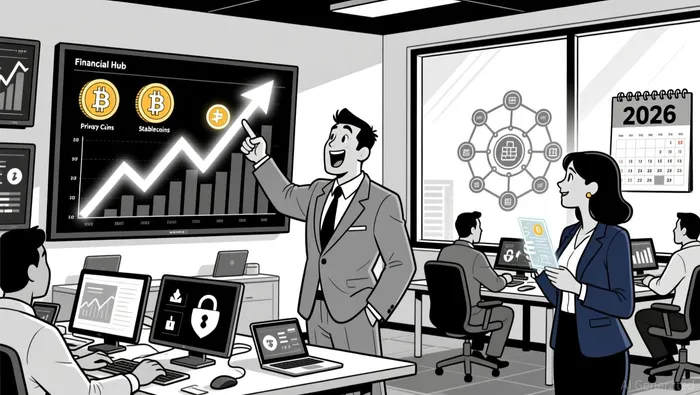
Capital flows in 2026 will prioritize privacy, stability, and institutional-grade infrastructure. Privacy coins like Zcash and Monero are expected to maintain their appeal as regulatory clarity heightens demand for confidential transactions as research shows. Meanwhile, stablecoins will expand their role as the monetary base layer for on-chain activity, with institutions increasingly using them for cross-border payments and treasury management according to industry analysis.
Decentralized exchanges (DEXs) are also gaining traction, with on-chain trading volumes rising as users seek to avoid the risks associated with centralized venues as data suggests. This shift aligns with broader industry maturation, where crypto functions as infrastructure rather than speculative assets.
Strategic Implications for Investors
For investors, the 2026 landscape demands a focus on protocols with real-world adoption and regulatory alignment. Ethereum's dominance in settlement, Solana's performance edge, and BNB Chain's accessibility will remain key drivers. Privacy-focused assets and institutional-grade blockchains like XRPXRP-- Ledger and Avalanche-positioned for RWA experimentation-offer asymmetric upside according to market analysis.
However, risks persist. Regulatory shifts, macroeconomic volatility, and technological bottlenecks could disrupt capital flows. Investors must balance exposure to high-utility L1s with defensive positions in privacy and stablecoin infrastructure.
Conclusion
The structural valuation reset in L1 blockchains marks the end of the speculative era and the dawn of a mature, utility-driven market. As institutions anchor capital to infrastructure and privacy becomes a non-negotiable feature, 2026 will reward investors who prioritize long-term utility over short-term hype. The winners will be those who recognize that the future of crypto lies not in narratives, but in the bedrock of decentralized infrastructure.







Comentarios
Aún no hay comentarios