
UN Structural Overhaul and Funding Crisis: Navigating Risks and Opportunities in Global Governance
The United Nations faces its most severe financial crisis since its founding, driven by U.S. funding cuts and systemic inefficiencies. An internal memo reveals sweeping reforms to address overlapping mandates, bureaucratic bloat, and a $2.7 billion debt from Washington. For investors, this crisis could reshape global aid chains, defense contracting, and international development—presenting both risks and opportunities.
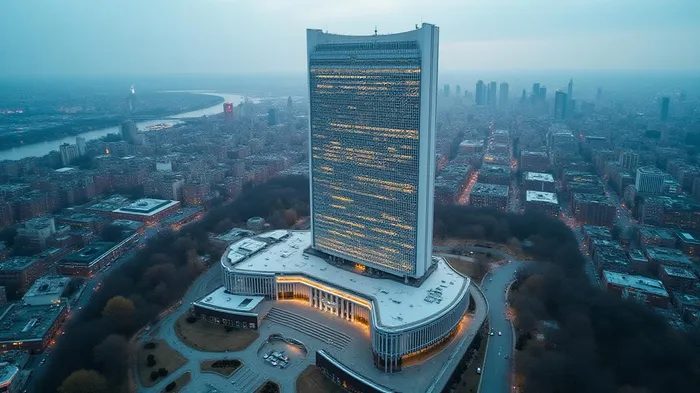
The Funding Crisis: A Catalyst for Change
The U.S., the UN’s largest funder, owes $1.5 billion in regular budget contributions and $1.2 billion for peacekeeping as of early 2025. President Trump’s “America First” policies, which slashed foreign aid, have left the UN scrambling to meet obligations. The consequences are stark:
- UNICEF faces a 20% budget cut, risking child welfare programs.
- WHO confronts a $600 million shortfall, threatening pandemic response efforts.
- OCHA has reduced staff by 20%, with 6,000 jobs at risk across agencies.
These cuts have sparked protests and warnings of “devastating impacts” on global aid.
Proposed Reforms: Streamlining or Strangling?
The internal memo outlines drastic structural changes to address inefficiencies:
1. Mergers & Consolidations:
- Humanitarian Affairs: Combining UNICEF, WHO, WFP, and UNHCR into a single entity to eliminate duplication.
- Peace & Security: Merging peacekeeping with political affairs.
- Health Sector: Dissolving UNAIDS and folding its functions into the WHO.
- Operational Overhauls:
- Reducing translators at meetings and relocating staff from high-cost cities like New York to lower-cost hubs.
Merging Rome-based agencies (FAO, WFP, IFAD) to cut costs.
UN80 Initiative:
A three-pillar plan to modernize the UN by 2025 includes efficiency reviews, mandate assessments, and structural overhauls like merging OCHA with the Development Coordination Office.
Political Hurdles and Geopolitical Risks
Despite the urgency, reforms face fierce resistance:
- Agency Autonomy: UN entities like UNICEF and WFP may resist mergers to protect their mandates and budgets.
- Regional Representation: Peacekeeping reforms could spark backlash from nations fearing diminished influence.
- U.S. Stance: Washington’s arrears and its 2025 Executive Order (withholding funds for UNRWA and UNHRC) signal ongoing geopolitical friction.
Investment Implications: Navigating the New Landscape
For investors, the UN’s crisis and reforms could impact sectors tied to global governance:
1. Defense & Security Contractors
Peacekeeping reforms may streamline UN operations, but reduced budgets could cut demand for military equipment and services.
Lockheed Martin (LMT), a major defense contractor, has seen modest growth (up 8% YTD 2025) amid mixed signals from UN spending. Investors should monitor UN peacekeeping budgets.
2. Healthcare & Pharmaceuticals
WHO’s budget gap and merger with UNAIDS could boost demand for pandemic response tools and global health infrastructure.
Pfizer (PFE), a key partner in WHO vaccine programs, has risen 12% YTD 2025. However, UN budget cuts may strain partnerships.
3. Agriculture & Logistics
Merging FAO and WFP could consolidate food security contracts, favoring large logistics firms over smaller NGOs.
John Deere (DE), a supplier to FAO programs, has seen a 5% dip YTD 2025 as UN funding uncertainty looms.
4. Climate Tech
The UN80 initiative’s push for a dedicated climate body or strengthened UNEP could boost green tech investments.
The S&P Global Clean Energy Index (CELS) has surged 20% in 2025, reflecting growing climate urgency even as UN budgets shrink.
Conclusion: A Crossroads for Global Governance
The UN’s reforms are a double-edged sword. While streamlining could improve efficiency and reduce costs, political resistance and funding shortfalls pose existential risks. Investors must weigh sector-specific impacts:
- Defense/Security: Monitor UN peacekeeping budgets and U.S.-UN relations.
- Healthcare: Track WHO partnerships and pandemic preparedness spending.
- Climate Tech: Capitalize on long-term climate priorities, even amid short-term UN budget cuts.
The memo’s reforms hinge on overcoming geopolitical divides and restoring funding. Without U.S. payments, the UN risks irrelevance—threatening not just its operations but the global systems investors rely on. As of May 2025, the U.S. remains in arrears exceeding $2.7 billion, and its February 2025 Executive Order has deepened uncertainty. Investors should brace for volatility in UN-linked sectors while seeking opportunities in climate tech and resilient global health infrastructure. The stakes have never been higher.







Comentarios
Aún no hay comentarios