
The Streaming Gold Rush's Hidden Costs: Evaluating Financial Risks of Overextended TV Franchises
The global streaming market has surged to a $97.6 billion valuation in 2025, driven by ad-supported tiers, price hikes, and aggressive content strategies according to IbisWorld. Yet beneath this growth lies a growing tension: the financial risks of overextended TV franchises. As platforms like NetflixNFLX--, Disney+, and AmazonAMZN-- Prime Video race to dominate subscriber counts, they face mounting challenges from audience fatigue, content dilution, and unsustainable spending. This analysis examines how these risks threaten long-term profitability and what investors should watch for in a saturated market.
The Profitability Playbook: Ad Tiers and Price Hikes
Streaming giants have pivoted to profitability by leveraging ad-supported models and price increases. Disney+ turned a profit in Q4 2024, with 60% of new signups opting for its ad-supported tier. Similarly, Netflix's 2025 operating margin is projected at 29%, bolstered by a shift from subscriber acquisition to cash flow generation. Amazon Prime Video, meanwhile, offset declining basic subscriptions by expanding ad-supported tiers. These strategies reflect a broader industry trend: monetizing existing user bases rather than chasing new ones.
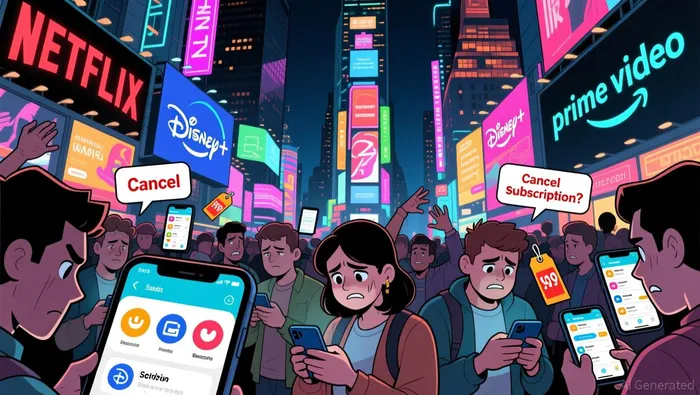
However, this approach has limits. A 2025 Comscore report notes that 45% of U.S. Netflix households now use the ad-supported tier, up from 34% in 2024. While this suggests cost-conscious consumers are adapting, it also signals a potential ceiling for revenue per user. As platforms raise prices-Disney+ increased its ad-free rate to $14, and Netflix's standard tier now costs $15.50-subscriber churn has risen. A Blue Label Labs survey found 65% of consumers canceled at least one streaming service in 2024 due to "streaming fatigue."
The Overextension Dilemma: Content Quality vs. Quantity
The financial risks of overextended franchises are stark. Netflix's $17 billion annual content budget, for instance, is increasingly strained by the need to retain subscribers in a crowded market according to Valens Research. Case studies highlight the pitfalls of overproduction:
- Dexter (Showtime): Rotten Tomatoes scores plummeted from 96% in Season 2 to 33% in its final season, with critics calling the ending "bitterly disappointing."
- The Walking Dead (AMC): Viewership dropped from 17 million in Season 5 to 2–3 million by its finale, as pacing and plot execution faltered.
- Paramount's Peacock: Incurred a $1.7 billion loss in 2021, and is projected to lose $2.5 billion by 2022, underscoring the financial toll of aggressive expansion.
These examples illustrate how excessive seasons, spin-offs, or poorly executed content erode brand value. faced declining demand in 2025, further highlighting the risks of overproduction.
Market Saturation and Churn: A Perfect Storm
The U.S. streaming market contracted in Q2 2025, with usage declining for the first time since tracking began. This contraction was driven by over-saturation and consumer cost sensitivity. Gray Television reported a 6.5% revenue drop in Q2 2025, while AMC NetworksAMCX-- saw a 4% net revenue decline. Meanwhile, 23% of U.S. streaming users became "serial churners", canceling three or more services within two years.
The financial strain extends beyond platforms. The UK's TV production sector faces a £400 million shortfall, as broadcasters reduce commissioning and smaller producers struggle to compete. This "perfect storm" of market pressures underscores the uneven distribution of resources in the streaming ecosystem.
Strategic Responses and Investor Implications
To combat these challenges, platforms are experimenting with bundling (e.g., Disney's trio of services) and live content. Netflix's focus on big boxing events and Warner Bros.WBD-- Discovery's sports streaming investments aim to justify subscription value. However, these strategies require careful execution. For example, long hiatuses between seasons-such as The Last of Us and Andor-have led to audience disengagement according to entertainment analysis.
Investors must weigh the industry's growth potential against its structural risks. While the global media and entertainment market is projected to reach $1.1 trillion in 2025, overextended franchises and rising content costs could undermine margins. Platforms that prioritize quality over quantity, innovate with ad models, and retain subscribers through bundled offerings may outperform peers.
Conclusion
The streaming wars have created a paradox: a booming market coexists with financial fragility. Overextended TV franchises, audience fatigue, and cost overruns pose significant risks to profitability. For investors, the key lies in identifying platforms that balance aggressive content strategies with sustainable financial practices. As the industry matures, those that adapt to consumer preferences-without sacrificing quality-will likely emerge as long-term winners.







Comentarios
Aún no hay comentarios