
Strategic Water Reservation Bolsters American Lithium's Tonopah Project: A Pathway to Sustainable Lithium Production?
The lithium industry's race to secure domestic supply chains has intensified under President Trump's Executive Order of March 20, 2025, which prioritizes accelerating mineral production to reduce reliance on foreign sources[2]. American Lithium's Tonopah Project, one of North America's largest lithium-bearing claystone deposits, has taken a pivotal step toward operationalization by securing a binding water reservation agreement with the Town of Tonopah and Tonopah Public Utilities (TPU). This move not only addresses a critical bottleneck for lithium extraction but also underscores the company's commitment to long-term viability and risk mitigation in a resource-intensive sector.
Water Security: A Cornerstone of Operational Resilience
Lithium extraction from claystone deposits, unlike brine or hard-rock methods, requires significant water for leaching and processing. American Lithium's agreement with TPU reserves a water supply of 900–1,250 gallons per minute (1,450–2,000 acre-feet annually), contingent on hydrology and engineering studies[1]. This reservation is not merely a procurement of resources but a strategic infrastructure investment. The company will fund upgrades to wells, pipelines, and storage tanks, with these facilities eventually transferred to TPU. Such infrastructure improvements mitigate the risk of supply disruptions and align with broader community needs, as evidenced by a $200,000 contribution to a restricted account for local infrastructure and scholarships[1].
The agreement's structure—initial 3-year term renewable for up to 7 additional years at $50,000 annually—provides flexibility while ensuring long-term access to water. This contrasts with the volatility of unregulated water markets, where competition from agriculture and energy sectors often drives up costs and creates regulatory uncertainty. By locking in a dedicated supply, American Lithium reduces operational risk, a critical factor for investors evaluating the project's scalability.
Strategic Positioning in a High-Demand Market
The Tonopah Project's projected output of 24,000 tonnes per year of lithium carbonate equivalent (LCE) in Phase 1, with a potential doubling in Phase 2[1], positions it as a key player in the U.S. critical mineral supply chain. Its proximity to battery manufacturing hubs in the Southwest further enhances its strategic value, reducing transportation costs and aligning with domestic manufacturing incentives.
The project's inclusion on the FAST-41 Permitting Dashboard[2]—a fast-track initiative for critical mineral projects—accelerates regulatory timelines and signals federal support. This is particularly significant given the Trump administration's emphasis on reducing bureaucratic hurdles for domestic mineral production. For American Lithium, the FAST-41 designation not only expedites permitting but also serves as a reputational endorsement, attracting investors wary of geopolitical supply chain risks.
Risk Mitigation and Environmental Considerations
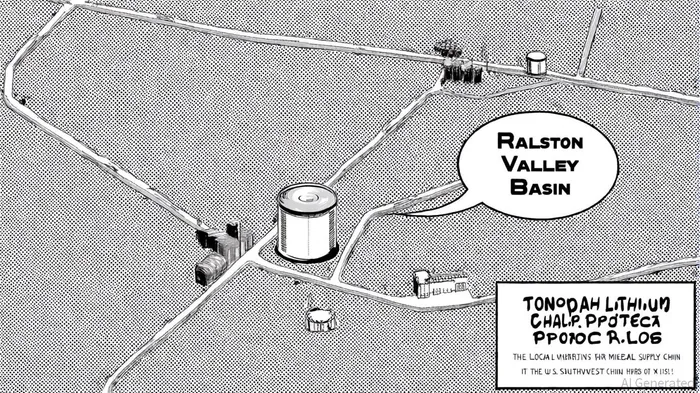
While the water reservation addresses a critical operational need, environmental scrutiny remains a potential hurdle. Claystone lithium extraction involves significant water consumption and chemical use, raising concerns about ecological impact. American Lithium's agreement includes hydrology studies to assess the Ralston Valley Basin's sustainability, a proactive step that could preempt regulatory pushback. Investors should monitor the results of these studies, as they will determine whether the project's environmental footprint aligns with evolving ESG (Environmental, Social, and Governance) standards.
Additionally, the company's financial contribution to the Community Foundation of Northern Nevada[1] mitigates social risks by fostering goodwill with local stakeholders. This is a strategic move in a region where community opposition can delay or derail projects.
Broader Implications for the Lithium Sector
American Lithium's Tonopah Project reflects a broader trend in the lithium industry: the prioritization of resource security and regulatory alignment. As global demand for lithium surges—driven by electric vehicles and energy storage—the ability to secure water and navigate permitting processes will become defining factors for success. The Tonopah Project's dual focus on infrastructure investment and federal support positions it as a model for sustainable lithium exploration.
However, investors must remain cautious. The project's success hinges on the outcomes of hydrology studies, the stability of water rights in a drought-prone region, and the pace of battery manufacturing adoption. While the FAST-41 designation provides a tailwind, it does not eliminate market risks, such as price volatility or oversupply from emerging competitors.
Conclusion
American Lithium's strategic water reservation for the Tonopah Project is a calculated move that addresses a critical vulnerability in lithium extraction while aligning with national priorities. By securing a dedicated water supply, investing in infrastructure, and leveraging federal fast-track permitting, the company has laid a foundation for long-term viability. For investors, the project represents a compelling but not risk-free opportunity in a sector poised for transformation. As the U.S. races to build a resilient critical mineral supply chain, American Lithium's Tonopah Project could emerge as a linchpin—if it navigates environmental and regulatory challenges with the same foresight it has demonstrated in securing water rights.







Comentarios
Aún no hay comentarios