
Strategic Warrant Extensions and Graphite's Role in the EV Supply Chain: Assessing Graphite One's Move Toward Enhanced Investor Access and Production Scaling
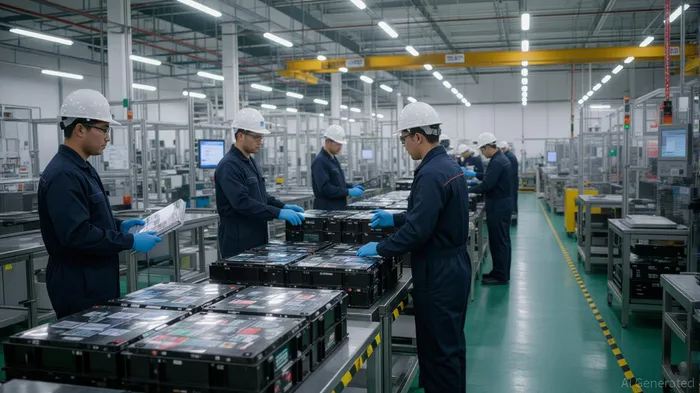
The global transition to electric vehicles (EVs) has intensified demand for advanced battery materials, with synthetic graphite emerging as a cornerstone of lithium-ion anode technology. As companies race to secure supply chains for this critical component, strategic financial instruments like warrant extensions are gaining prominence. While Graphite One's recent warrant extension lacks publicly disclosed terms, its implications for capital raising and production scaling can be contextualized within the broader industry landscape, particularly ExxonMobil's recent acquisition of Superior Graphite.
The Strategic Value of Warrant Extensions
Warrant extensions, such as those adopted by Graphite One, are increasingly used by resource companies to align investor timelines with long-term production goals. By deferring exercise periods, companies retain liquidity while allowing investors to reassess positions based on evolving market conditions. This flexibility is crucial in the EV battery materials sector, where capital-intensive scaling requires sustained investment. For Graphite One, such an extension could mitigate short-term financial pressures, enabling a focus on expanding synthetic graphite production—a material ExxonMobil has identified as pivotal for high-performance batteries.
Synthetic Graphite: A Linchpin for EV Battery Innovation
Synthetic graphite's role in battery anodes is underscored by its superior purity and consistency compared to natural graphite, making it ideal for next-generation lithium-ion cells. ExxonMobil's acquisition of Superior Graphite highlights this trend, leveraging the latter's expertise to establish a U.S.-based synthetic graphite supply chain. This move not only addresses energy security concerns but also aligns with the projected 10-fold increase in synthetic graphite demand by 2030, driven by EV adoption. For Graphite One, aligning its warrant structure with such industry priorities could position it to capitalize on similar growth trajectories.
Capital Raising and Production Scaling: A Symbiotic Relationship
The EV battery materials sector demands significant capital to scale production, particularly for synthetic graphite, which requires energy-efficient refining processes. Graphite One's warrant extension, while lacking specific terms, likely aims to preserve capital for such investments. By delaying warrant exercises, the company can allocate resources to infrastructure upgrades or partnerships, mirroring ExxonMobil's strategy to integrate synthetic graphite production with existing refining capabilities. This approach reduces reliance on volatile commodity markets and ensures a stable supply of materials for battery manufacturers.
Challenges and Opportunities
Despite the strategic advantages of warrant extensions, companies must balance investor expectations with operational timelines. Graphite One's success will hinge on its ability to communicate clear milestones for production scaling, particularly as competitors like ExxonMobil accelerate their synthetic graphite initiatives. Additionally, environmental and regulatory considerations—such as the carbon footprint of synthetic graphite production—will shape investor sentiment and market access.
Conclusion
Graphite One's warrant extension, while not explicitly detailed, reflects a broader industry trend of aligning financial flexibility with long-term production goals. In a sector where synthetic graphite is indispensable for EV battery innovation, such strategic moves can enhance investor confidence and secure a foothold in the evolving energy transition. As demand for high-performance battery materials surges, companies that effectively bridge capital constraints with scalable production will emerge as key players in the EV supply chain.





Comentarios
Aún no hay comentarios