
The Strategic Synergy of Payment Automation and Automotive Finance: A New Era for RPAY and Emotive Software
Operational Efficiency: A Foundation for Growth
The automotive finance sector has historically struggled with disjointed workflows, manual data entry, and delayed reconciliation. However, the integration of payment orchestration and embedded finance is streamlining operations. For instance, RPAY and Emotive Software's collaboration enables seamless automation of multi-channel payment flows-online, mobile, text, and IVR-while consolidating loan management and payment tracking into a single system, as described in a GuruFocus article. This eliminates the need for dealerships and lenders to toggle between platforms, reducing administrative overhead by up to 30%, according to a MarketChameleon release.
The broader market is also shifting toward real-time payments (RTP) and AI-driven fraud detection. According to an ABA article, the accounts payable/receivable automation sector is expected to grow from $2.24 billion in 2024 to $2.61 billion in 2025. This growth is fueled by AI's ability to predict payment trends and flag anomalies, a capability RPAY and Emotive have embedded into their platform. For example, real-time reconciliation and cross-border scalability-critical for global automakers-now allow lenders to manage cash flow with unprecedented precision, a point also covered by the Fabrick blog.
Borrower Satisfaction: Flexibility and Transparency
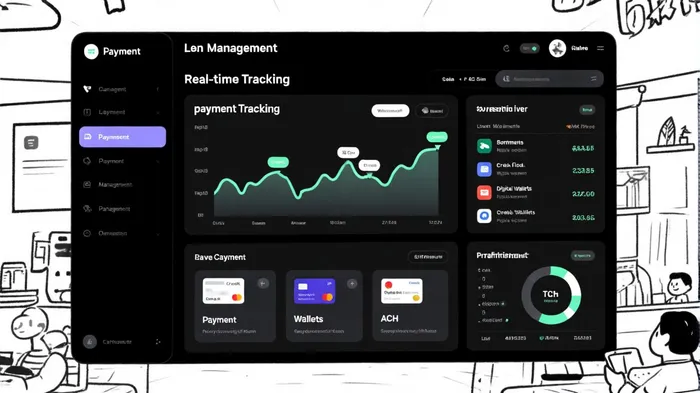
Borrower satisfaction has become a key differentiator in automotive finance. RPAY and Emotive's integration offers borrowers unparalleled flexibility, supporting debit and credit card payments, digital wallets, and ACHACH-- transactions across multiple channels, as noted in a REPAY press release. This convenience is critical in a market where 60% of smartphone users globally rely on mobile wallets, according to a PaySpace analysis.
Transparency further enhances trust. Real-time payment tracking allows borrowers to monitor their loan balances and payment histories instantly, reducing disputes and late fees, as reported by a GuruFocus article. For dealerships, this translates to a 20% increase in conversion rates, as streamlined processes minimize friction during the loan approval and payment stages, a benefit highlighted by the Fabrick blog. In an industry where customer retention is paramount, such features are not just competitive advantages-they are necessities.
Scalable Growth: Navigating Fragmented Markets
The automotive finance sector remains highly fragmented, with regional compliance requirements and legacy systems hindering scalability. RPAY and Emotive's platform addresses these challenges by offering modular, API-driven solutions that adapt to local regulations while maintaining global consistency, as noted in a MarketChameleon release. For example, payment orchestration ensures that cross-border transactions are processed seamlessly, a critical feature for automakers expanding into emerging markets, as outlined by the Fabrick blog.
However, scalability is not without risks. RPAY's stock has demonstrated a negative growth potential of -6.22% compared to peers in the technology and finance sectors, according to a FinancialModelingPrep overview, raising questions about its long-term viability. Yet, this must be contextualized: the company's partnership with Emotive Software is part of a broader industry shift toward embedded finance, a market projected to reach $94.8 billion in 2025 (PaySpace analysis). By aligning with this trend, RPAY is positioning itself as a key enabler of the next phase in automotive finance, even if its stock performance lags in the short term.
Conclusion: A Strategic Imperative
The integration of payment automation and automotive finance is not merely a technological upgrade-it is a strategic imperative for an industry in transition. RPAY and Emotive Software's collaboration exemplifies how operational efficiency, borrower satisfaction, and scalable growth can be harmonized through innovation. While challenges like RPAY's stock volatility persist, the broader market dynamics-driven by real-time payments, AI, and embedded finance-suggest that the partnership is well-positioned to thrive in the long term. For investors, this represents a compelling opportunity to capitalize on a sector poised for transformation.





Comentarios
Aún no hay comentarios