
The Strategic Synergy of AI-Driven Health Systems: A New Era in Health Care Innovation and ROI
The healthcare industry is undergoing a seismic shift, driven by the integration of artificial intelligence (AI) into clinical and operational workflows. At the forefront of this transformation is the partnership between Tampa General Hospital (TGH) and Palantir TechnologiesPLTR--, a collaboration that exemplifies how AI-driven health systems can redefine efficiency, patient outcomes, and financial sustainability. For investors, this synergy represents not just a technological leap but a strategic opportunity to capitalize on a sector poised for exponential growth.
Operational Efficiency: The AI-Driven Reengineering of Care Coordination
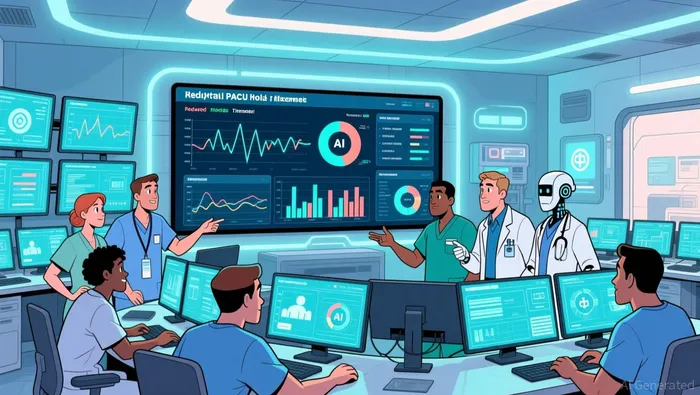
TGH's adoption of Palantir's Foundry software and Artificial Intelligence Platform (AIP) has redefined how hospitals manage complex care coordination. By deploying a Care Coordination Operating System, TGH integrated real-time data analytics, domain expertise, and large-language models into decision-support tools, streamlining workflows for frontline teams. The results are staggering: an 83% reduction in patient placement time and a 28% decrease in post-anesthesia care unit (PACU) holds according to TGH press release. These metrics underscore AI's ability to eliminate bottlenecks in hospital operations, a critical factor in an industry where delays can translate to both financial losses and compromised patient safety.
The Care Coordination Center (C3), powered by PalantirPLTR--, now serves as the operational backbone of TGH's seven hospitals and 150+ care locations according to Healthcare IT News. This centralized system enables seamless data sharing and real-time situational awareness, reducing redundancies and optimizing resource allocation. For investors, this represents a scalable model that can be replicated across health systems, offering long-term cost savings and operational resilience.
Patient Outcomes: From Sepsis Survival to MRI Turnaround Times
AI's impact on clinical outcomes is equally compelling. TGH's Sepsis Hub, built on Palantir's platform, has saved over 700 lives by identifying high-risk patients and enabling earlier interventions. Sepsis, a leading cause of preventable death, demands rapid response-AI's predictive capabilities here are not just innovative but life-saving. Similarly, the hospital reported a 30% improvement in MRI imaging turnaround time and a 30% reduction in sepsis patient length of stay according to TGH press release. These outcomes highlight AI's dual role in enhancing diagnostic accuracy and accelerating treatment, directly improving patient quality of life.
For investors, the correlation between AI adoption and improved health metrics is clear. Hospitals leveraging such technologies are likely to see reduced readmission rates, lower malpractice risks, and stronger reputational capital-all of which drive long-term value.
Financial ROI: Cost Savings and Market Positioning
The financial implications of AI integration are equally robust. TGH reported $40 million in cost savings through its partnership with Palantir, driven by reduced PACU holds, faster patient placements, and optimized resource use. These savings are not one-off gains but part of a broader trend: AI-driven systems enable hospitals to avoid costly delays, reduce unnecessary tests, and allocate staff more efficiently.
Moreover, the partnership has positioned TGH as a leader in AI-enabled healthcare. Recognized by Newsweek and Statista as one of the world's best "smart hospitals" for 2026 according to TGH press release, TGH's success story is attracting attention from both investors and competitors. For tech firms like Palantir, partnerships with high-profile health systems validate their platforms' scalability and efficacy, creating a flywheel effect that drives demand and revenue.
Investor Implications: A Dual-Track Opportunity
The TGH-Palantir collaboration illustrates a dual-track investment opportunity:
1. Healthcare Sector: Hospitals adopting AI platforms can unlock operational efficiencies, reduce costs, and improve patient retention, enhancing their competitive edge in a value-based care landscape.
2. Tech Sector: AI vendors with proven healthcare applications, like Palantir, stand to benefit from expanding partnerships and regulatory tailwinds as governments and insurers prioritize cost-effective care models.
For investors, the key is to identify companies that demonstrate both technological innovation and measurable ROI. TGH's 83% reduction in patient placement time and $40 million in savings according to TGH press release are not just operational wins-they are quantifiable proof of AI's transformative potential.
Conclusion: The Future of Healthcare is AI-Driven
As AI continues to permeate healthcare, partnerships like TGH and Palantir will set the benchmark for operational and financial success. For investors, the message is clear: the integration of AI into health systems is no longer a speculative trend but a strategic imperative. By prioritizing investments in AI-enabled healthcare platforms and forward-thinking institutions, investors can position themselves at the intersection of innovation and profitability-a space where patient outcomes and shareholder value align.







Comentarios
Aún no hay comentarios