
Strategic Synergies in Energy Transition: TotalEnergies and Veolia's Environmental Collaboration
The global energy transition is accelerating, driven by regulatory pressures, technological innovation, and investor demand for sustainable returns. In this evolving landscape, strategic partnerships between energy majors and environmental service providers are emerging as critical catalysts for decarbonization. TotalEnergiesTTE-- and Veolia, two industry leaders with complementary strengths, have forged a collaboration that exemplifies this trend. Their joint ventures in methane emission reduction, biomethane production, and water stewardship not only address urgent environmental challenges but also present compelling investment opportunities in sustainable infrastructure.
Methane Mitigation and Technological Innovation
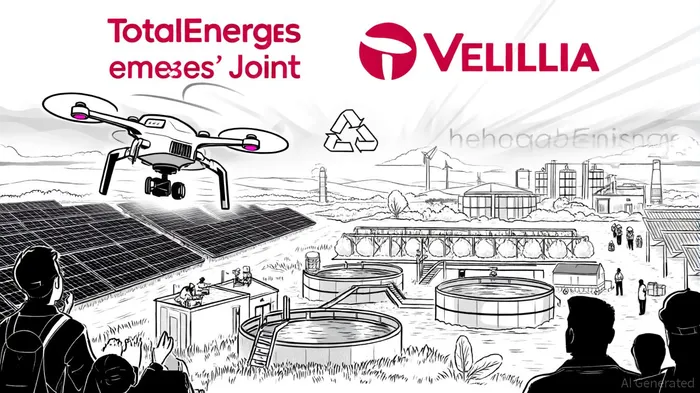
Methane remains a potent contributor to climate change, with landfills and industrial operations accounting for significant emissions. TotalEnergies and Veolia are tackling this issue through the deployment of TotalEnergies' AUSEA technology, a drone-based system that measures methane emissions with high precision. By identifying leaks and high-emission zones, AUSEA enables Veolia to optimize its landfill management, aiming to achieve 80% methane capture by 2032, according to a Veolia press release. This initiative aligns with TotalEnergies' own 2025 sustainability targets, as outlined in TotalEnergies' 2025 report, which include a 60% reduction in methane emissions from operated facilities compared to 2020 levels.
The scalability of this technology underscores its investment potential. According to a BloombergNEF report, methane capture projects could generate $150 billion in annual revenue by 2030, driven by carbon credit markets and regulatory compliance. For investors, the partnership's focus on innovation and measurable outcomes positions it as a leader in a sector poised for rapid growth.
Biomethane Production and Circular Economy
Another cornerstone of the collaboration is the production of biomethane from organic waste. By 2025, TotalEnergies and Veolia aim to co-invest in international renewable gas projects to generate up to 1.5 terawatt-hours (TWh) of biomethane annually. This output is equivalent to the natural gas consumption of 500,000 households and avoids approximately 200,000 tons of CO₂ emissions per year, according to a Veolia announcement. The partnership leverages Veolia's expertise in waste treatment and TotalEnergies' biomethane distribution networks, creating a circular economy model that transforms waste into a valuable energy resource.
Financially, this venture aligns with broader market trends. The global biomethane market is projected to grow at a compound annual rate of 12.3% through 2030, fueled by renewable energy mandates and corporate decarbonization goals, according to Grand View Research. For TotalEnergies, the initiative complements its $5 billion investment in low-carbon energy in 2024, which includes $4 billion allocated to electricity and renewable projects, as noted in TotalEnergies' 2025 report.
Water Stewardship and Desalination
Water scarcity is a growing crisis, particularly in arid regions like the Middle East. TotalEnergies and Veolia are addressing this through sustainable desalination projects, including the joint development of the largest solar-powered seawater desalination plant in Oman. By integrating low-carbon energy into Veolia's desalination plants, the partnership reduces both energy consumption and freshwater withdrawals, supporting TotalEnergies' goal to cut freshwater use by 20% in water-stressed areas by 2030, as described in the Veolia press release.
This collaboration taps into a $30 billion global desalination market, which is expected to expand as climate change exacerbates water shortages. Investors may find value in the companies' ability to combine infrastructure development with environmental impact, a dual benefit that aligns with ESG-focused portfolios.
Financial Performance and Risk Considerations
While the partnership's environmental goals are ambitious, its financial viability is a key concern for investors. TotalEnergies has demonstrated strong revenue growth (9.4% over three years) but faces a 35.8% decline in earnings over the past year, raising questions about its profitability, according to a GuruFocus analysis. That same analysis notes the stock currently trades at a P/E ratio of 10.1 and a P/B ratio of 1.11, suggesting undervaluation relative to historical metrics. However, the company's Altman Z-Score of 1.41 indicates moderate financial distress, a risk factor that investors must weigh against its long-term sustainability strategy.
Veolia, in contrast, has shown resilience, with 3.8% revenue growth and 5.5% EBITDA growth in the first half of 2025, as reported in Veolia's announcement. Its climate targets have been validated by the Science Based Targets initiative (SBTi), reinforcing its credibility in the sustainability space. The partnership's financial health is thus a mixed picture, with Veolia's stability potentially offsetting some of TotalEnergies' volatility.
Market Outlook and Investment Potential
The energy transition is reshaping infrastructure investment, with 72% of investors accelerating their allocations to sustainable assets in 2025, according to a KPMG outlook. Collaborative projects like those of TotalEnergies and Veolia are particularly attractive, as 94% of investors prioritize partnerships that share risks and expertise, the KPMG outlook also found. Green finance mechanisms, including green bonds, are also facilitating capital flows, with the global green bond market reaching $500 billion in issuance in 2024, per the Climate Bonds report.
For TotalEnergies and Veolia, the partnership's alignment with these trends positions it to attract both institutional and retail investors seeking exposure to decarbonization. However, risks such as regulatory shifts, energy price volatility, and project execution delays must be carefully managed.
Conclusion
TotalEnergies and Veolia's collaboration represents a strategic convergence of energy transition and circular economy principles. By leveraging cutting-edge technology, circular resource management, and scalable infrastructure, the partnership addresses critical environmental challenges while creating value for stakeholders. For investors, the venture offers exposure to high-growth sectors like biomethane and desalination, albeit with a need for caution regarding TotalEnergies' financial metrics. As the energy transition accelerates, such synergistic partnerships are likely to define the next phase of sustainable infrastructure investment.





Comentarios
Aún no hay comentarios