
Strategic Supply Chain Development in Indonesia: JINGDONG Industrials and Kawan Lama Group's Partnership as a Catalyst for Growth
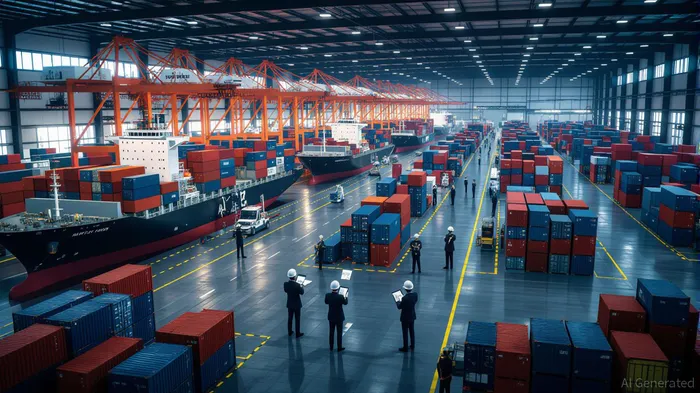
Southeast Asia's manufacturing sector is undergoing a transformative phase, driven by global supply chain diversification and regional economic integration. Indonesia, the region's largest economy, has emerged as a critical player in this landscape, with its strategic location, abundant natural resources, and government-led industrialization initiatives. A recent partnership between JINGDONG Industrials (a subsidiary of JDJD--.com) and Kawan Lama Group—a major Indonesian industrial and retail conglomerate—has further amplified the country's potential to reshape its supply chain infrastructure. This collaboration, centered on digital and intelligent solutions, offers a compelling case study for assessing the investment potential of Southeast Asia's evolving supply chain ecosystems.
The JINGDONG-Kawan Lama Partnership: A Strategic Alignment
JINGDONG Industrials and Kawan Lama Group announced in September 2025 a strategic alliance to develop a “one-stop industrial product supply and digital platform” for Indonesia and Southeast Asia[1]. By combining JINGDONG's expertise in digital supply chain technology with Kawan Lama's extensive local distribution network, the partnership aims to modernize Indonesia's industrial logisticsILPT--, reduce operational costs, and enhance compliance across sectors. JINGDONG's portfolio of 57.1 million SKUs across nearly 100 core categories[1] positions it to address fragmented supply chains, while Kawan Lama's 80-year legacy in Indonesia ensures localized market penetration.
This collaboration aligns with broader trends in Chinese investment in Indonesia, which reached USD 8.1 billion in 2024, predominantly in secondary industries[1]. The partnership's focus on digital solutions—such as AI-driven inventory management and blockchain-enabled traceability—addresses critical inefficiencies in Indonesia's supply chain, where port bottlenecks and infrastructure gaps have historically constrained growth[2].
Indonesia's Supply Chain Challenges and Opportunities
Despite its strategic advantages, Indonesia's supply chain infrastructure faces significant hurdles. The government's push to decentralize economic activity by relocating import entry points to eastern Indonesia has exposed underdeveloped port facilities, with limited dock capacity and inadequate logistics infrastructure creating bottlenecks[2]. Additionally, global geopolitical tensions, including the U.S.-China trade war and Middle East conflicts, have disrupted supply chain stability, increasing costs for projects reliant on imported materials[4].
To mitigate these challenges, Indonesia is prioritizing public-private partnerships (PPPs) and ESG-driven investments to attract foreign capital while ensuring fiscal discipline[1]. The JINGDONG-Kawan Lama partnership exemplifies this approach, leveraging private-sector innovation to complement public infrastructure projects such as the Jakarta-Surabaya High-Speed Rail and the Nusantara Capital City (IKN) development[3].
Southeast Asia's Manufacturing Boom: A Regional Perspective
Indonesia's initiatives are part of a broader regional trend. Southeast Asia's manufacturing sector is diversifying rapidly, with Vietnam leading in electronics and high-value manufacturing, Thailand dominating automotive production, and Malaysia strengthening its semiconductor industry[2]. Indonesia's focus on automotive and EV sectors, supported by policies like “Making Indonesia 4.0,” positions it to capitalize on the global shift toward green energy and sustainable production[2].
The region is also witnessing a surge in investments in renewable energy and sustainable textiles, with Vietnam and Indonesia adopting eco-friendly practices to meet global standards[5]. Singapore's emergence as an R&D hub further underscores the region's appeal for innovation-driven manufacturing[6]. These trends highlight Southeast Asia's potential to become a cornerstone of global supply chains, with Indonesia's digital supply chain modernization efforts playing a pivotal role.
Investment Potential and Risks
The JINGDONG-Kawan Lama partnership offers several investment advantages. By digitizing supply chain operations, the collaboration could reduce costs by up to 20% for industrial clients, according to industry benchmarks[1]. Moreover, the integration of AI and blockchain technologies aligns with global trends in supply chain transparency and efficiency, making the platform attractive to multinational corporations seeking regional diversification.
However, risks persist. Geopolitical uncertainties, such as U.S.-China trade tensions, could disrupt cross-border investments. Additionally, Indonesia's regulatory environment remains complex, requiring consistent policy frameworks to sustain investor confidence[1]. For the partnership to succeed, it must also address regional infrastructure gaps, particularly in eastern Indonesia, where port limitations hinder the scalability of digital logistics solutions[2].
Conclusion: A Catalyst for Regional Growth
The JINGDONG-Kawan Lama partnership represents a strategic convergence of Chinese technological expertise and Indonesian market access, offering a blueprint for supply chain modernization in Southeast Asia. While challenges such as infrastructure gaps and geopolitical volatility remain, the collaboration's focus on digital innovation and ESG-aligned investments positions it to drive long-term growth. For investors, this initiative underscores the importance of aligning with regional industrialization trends while addressing systemic bottlenecks. As Southeast Asia's manufacturing boom accelerates, Indonesia's ability to integrate digital solutions into its supply chain ecosystems will be a key determinant of its global competitiveness.





Comentarios
Aún no hay comentarios