
Strategic Sourcing as a Catalyst for Long-Term Growth in Energy Storage: Livium Ltd's Extended Partnership with LG Energy Solution
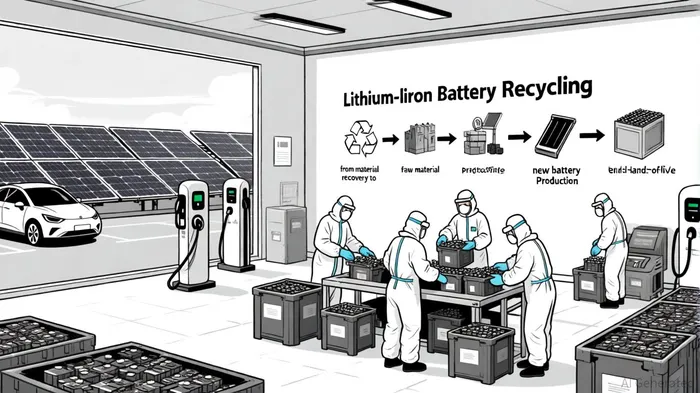
The recent extension of Livium Ltd's (ASX: LIT) partnership with LG Energy Solution until March 2029 marks a pivotal moment in the energy storage sector, underscoring the strategic value of battery recycling as a growth driver. This three-year agreement, announced on 24 September 2025, not only solidifies Livium's position in the high-margin battery recycling market but also aligns with broader industry shifts toward energy storage amid slowing demand for electric vehicle (EV) batteries [2]. For investors, the deal highlights how strategic sourcing and long-term partnerships can catalyze growth in a sector poised for exponential expansion.
The Terms of the Extended Agreement
Livium's wholly owned subsidiary, Envirostream Australia Pty Ltd, has expanded its collaboration with LG Energy Solution to include the recycling of end-of-life residential lithium-ion batteries. This move broadens the scope of the partnership beyond industrial and commercial batteries, tapping into a growing segment of the market as household EV adoption and energy storage systems (ESS) proliferate [2]. Crucially, LG Energy Solution retains the right to purchase black mass (mixed metal dust) at market prices from the batteries processed by Envirostream. This arrangement ensures a steady supply of critical materials for LG, while providing Livium with a predictable revenue stream and margin protection in a volatile commodities market [2].
Strategic Implications for Livium and LG Energy Solution
For Livium, the partnership represents a strategic pivot toward high-margin recycling services. As global EV and ESS adoption accelerates, the demand for battery recycling is expected to surge, driven by both environmental regulations and the need for sustainable raw material sourcing. By securing a long-term agreement with a major player like LG Energy Solution, Livium positions itself to capitalize on this trend without the capital-intensive burden of scaling production independently [2].
Meanwhile, LG Energy Solution's decision to extend the partnership reflects its own strategic recalibration. The company has announced a shift away from EV battery production, scaling back expansion plans and focusing instead on energy storage as a core growth area . This pivot is partly driven by the Inflation Reduction Act (IRA) in the U.S., which offers tax incentives for energy storage projects, and by weaker-than-expected EV demand in key markets [3]. By securing a reliable supply of recycled materials through Livium, LG can optimize its energy storage business while reducing reliance on volatile primary lithium and cobalt markets [2].
Market Trends and Growth Projections
The energy storage sector is entering a critical phase of growth. According to a report by Morgan Lewis, global energy storage installations are projected to exceed the terawatt-hour mark before 2030, driven by decarbonization mandates and falling battery costs . This trajectory creates a dual opportunity: first, for companies like Livium to monetize the recycling of aging batteries, and second, for energy storage providers like LG to deploy recycled materials in next-generation systems.
The extended partnership also aligns with Australia's emerging role in the battery recycling value chain. As the world's largest lithium producer, Australia is uniquely positioned to become a hub for sustainable battery material recovery [2]. Livium's focus on residential battery recycling further taps into this domestic advantage, leveraging Australia's robust EV adoption rates and supportive regulatory environment.
Investment Outlook: Risks and Opportunities
While the partnership is a clear win for Livium, investors should remain cognizant of risks. The energy storage market remains subject to regulatory shifts, particularly in the U.S., where IRA incentives could evolve. Additionally, the success of Livium's recycling operations hinges on the volume of end-of-life batteries reaching the market—a factor that may lag behind current EV adoption rates.
However, the long-term outlook is compelling. By locking in a partnership with LG Energy Solution, Livium gains access to a stable, high-margin revenue stream while avoiding the capital expenditures required to scale independently. For LG, the agreement provides a strategic hedge against supply chain disruptions and aligns with its pivot to energy storage. Together, the collaboration exemplifies how strategic sourcing can drive sustainable growth in a sector transitioning from linear production to circular economy models.
Conclusion
Livium Ltd's extended partnership with LG Energy Solution is more than a contractual renewal—it is a strategic masterstroke in the evolving energy storage landscape. By securing a long-term supply of recycled materials and expanding into residential battery recycling, Livium is positioning itself at the intersection of sustainability and profitability. For investors, the deal underscores the importance of aligning with companies that can navigate the dual challenges of resource scarcity and market volatility through innovation and collaboration. As the energy storage sector accelerates toward its terawatt-hour milestone, Livium's partnership with LG Energy Solution may well prove to be a defining catalyst for long-term growth.







Comentarios
Aún no hay comentarios