
The Strategic Significance of High-Profile Deliveries in Faraday Future's Market Reentry
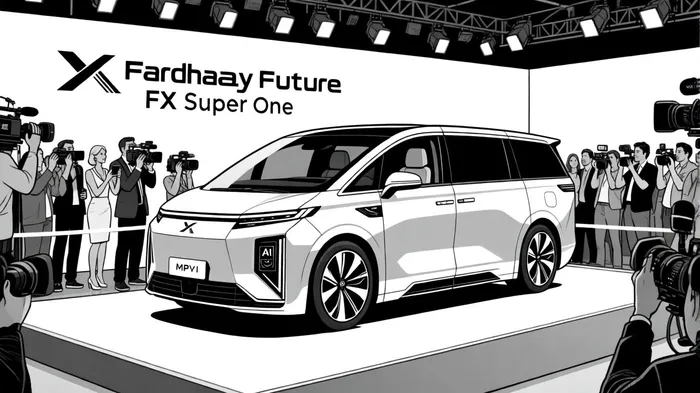
The electric vehicle (EV) market remains a high-stakes arena where brand credibility and investor confidence are as critical as technological innovation. For startups like Faraday FutureFFAI--, reentering the competitive landscape requires more than just a compelling product—it demands strategic visibility, financial resilience, and the ability to convert hype into tangible value. In 2025, Faraday Future's high-profile deliveries and product launches, particularly of the FX Super One MPV, have positioned the company as a case study in how EV startups can leverage brand-building to navigate financial turbulence and attract institutional capital.
High-Profile Deliveries and Brand Credibility
Faraday Future's 2025 reentry strategy centered on the FX Super One MPV, a vehicle designed to bridge the gap between luxury and affordability. The launch event in Los Angeles generated substantial media attention, with over 10,000 paid pre-orders reported within weeks of its July 17 debut[1]. This figure not only validates the company's B2B2C co-creation sales model but also signals a shift in consumer perception. By emphasizing AI-powered features like the Super EAI F.A.C.E. and partnerships with high-profile figures such as Mariah Carey, Faraday Future has rebranded itself as a luxury AI tech company rather than a struggling EV manufacturer[1].
The company's inclusion in the Russell 3,000 index further amplified its credibility among institutional investors, a move that often correlates with increased market visibility and liquidity[1]. Such milestones are critical for EV startups, which frequently face skepticism due to their capital-intensive nature and unproven scalability. Faraday Future's ability to secure $105 million in new financing and initiate trial production of the FX Super One at its Hanford, CA facility underscores its progress toward operationalizing its vision[1].
Investor Confidence and Financial Realities
While brand credibility is a powerful tool, investor confidence in EV startups ultimately hinges on financial metrics. Faraday Future's Q2 2025 earnings report revealed a net loss of $48.1 million and a 50% year-over-year increase in operating cash outflows[1]. These figures highlight the company's ongoing challenges in achieving profitability. However, the $55.1 million in net cash inflows during the first half of 2025[1] and the 10,000 pre-orders for the FX Super One demonstrate a growing alignment between market enthusiasm and strategic execution.
Historical backtesting of FFAI's earnings events from 2022 to 2025 reveals a pattern of negative performance post-announcement, with a median 30-day return of approximately -30% compared to the NASDAQ's ~15% gain over the same period. This suggests that while recent financial metrics show some positive momentum, past market reactions to earnings have been predominantly bearish, highlighting the need for caution in interpreting short-term earnings data as a reliable indicator of future performance.
Investor sentiment is further bolstered by the company's engagement with U.S. Congress members to advocate for industry policies and reshaping efforts[1]. Such proactive stakeholder management signals a commitment to navigating regulatory landscapes—a critical factor for EV startups operating in a sector shaped by government incentives and trade policies.
Strategic Resilience in a Competitive Market
Faraday Future's 2025 strategy exemplifies the delicate balance EV startups must strike between innovation and financial prudence. While the company's net losses and liquidity constraints remain concerns, its focus on high-profile product launches, celebrity endorsements, and AI-driven differentiation has created a narrative of resilience. The FX Super One's trial production phase and the company's inclusion in major indices suggest that Faraday Future is leveraging its brand to attract both retail and institutional capital—a strategy that could prove pivotal in the long term[1].
For investors, the key takeaway is that brand credibility in the EV sector is not merely about marketing—it is a strategic asset that can mitigate financial risks and open doors to new markets. Faraday Future's 2025 reentry demonstrates that even in a capital-intensive industry, a well-executed brand strategy can serve as a lifeline for startups navigating the path to profitability.





Comentarios
Aún no hay comentarios