
Strategic Shift in Renewable Energy Ownership: Analyzing Global Infrastructure Management's Acquisition of Aliança Geração de Energia
A Strategic Realignment in Brazil's Renewable Energy Sector
The recent $1 billion acquisition of 70% of Aliança Geração de Energia by Global Infrastructure Partners (GIP) marks a pivotal shift in Brazil's renewable energy landscape. This transaction, finalized on September 25, 2025, sees ValeVALE-- S.A. retaining a 30% stake in the joint venture while securing a stable, dollar-denominated energy supply at competitive prices[1]. For GIP, the deal expands its footprint in Latin America's fastest-growing renewable energy market, while Vale's strategic divestiture aligns with its decarbonization goals and core mining operations.
Vale's Strategic Rationale: Capital Efficiency and Renewable Commitment
Vale's decision to offload 70% of Aliança Geração de Energia reflects a calculated move to optimize capital allocation. By securing $1 billion in cash, Vale can redirect resources to its core mining activities while maintaining a 100% renewable energy matrix in Brazil—a milestone achieved in 2023[4]. The joint venture locks in energy prices fixed in U.S. dollars without inflation adjustments, shielding Vale from Brazil's volatile currency and cost-of-living pressures[3]. This stability is critical for Vale's long-term operational planning, particularly as it aims to reduce emissions by 33% by 2030 and achieve net-zero by 2050[4].
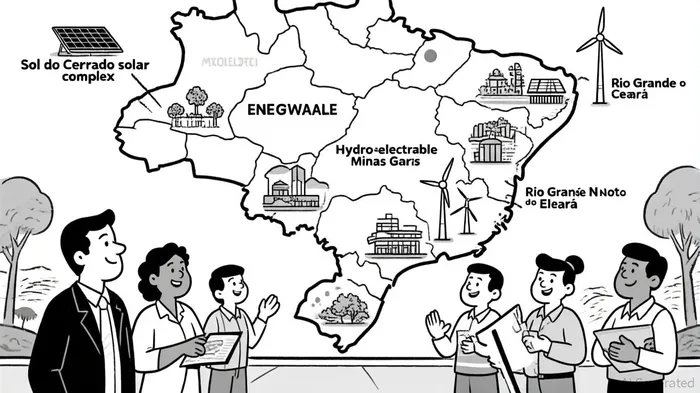
The transaction also consolidates Vale's renewable assets, including the 766 MW Sol do Cerrado solar complex, six hydroelectric plants in Minas Gerais, and three wind farms in Rio Grande do Norte and Ceará[1]. These assets, totaling 2,189 MW of installed capacity, ensure Vale's energy security while aligning with Brazil's national push for renewable energy expansion[5].
GIP's Strategic Positioning: Scaling Renewable Expertise in Brazil
For GIP, the acquisition strengthens its position as a major player in Brazil's renewable energy sector. Managed by BlackRock, GIP brings deep infrastructure expertise and a $1 billion investment to scale Aliança Geração de Energia's operations[2]. The partnership with Vale complements GIP's existing collaborations, such as its alliance with Atlas Renewable Energy, which has positioned the firm as a leader in Latin America's solar and wind markets[6].
GIP's entry into Brazil also aligns with the country's favorable policy environment. The government's target of 90% renewable electricity by 2030, supported by declining technology costs and tax incentives, creates a fertile ground for long-term value creation[3]. By leveraging GIP's operational experience, Aliança Geração de Energia is poised to enhance efficiency and expand its renewable portfolio, including potential forays into battery storage and hybrid systems[6].
Brazil's Renewable Energy Landscape: Growth and Challenges
Brazil's renewable energy market is projected to grow at a compound annual rate of 6.40% from 2025 to 2030, reaching 321.31 GW of installed capacity[1]. This growth is driven by government initiatives such as the Future Fuel Law, which promotes sustainable aviation fuel and green diesel, and the electrification of transportation and heating sectors[3]. Key players like CPFL Energias Renovaveis SA and ENGIE Brazil are also investing heavily in onshore and offshore wind projects, intensifying competition[1].
However, challenges persist. A supply glut and curtailment issues—where the National Electric System Operator (ONS) mandates reductions in generation—have complicated asset valuations and delayed deals[2]. Despite these hurdles, the sector's resilience is evident in record investments, including Scatec ASA's 10-year power purchase agreement for a 142-MW solar plant in Minas Gerais[1].
Long-Term Value Creation: Synergies and Market Dynamics
The GIP-Vale joint venture exemplifies a win-win scenario. For Vale, the partnership ensures energy cost stability and frees capital for mining projects, while GIP gains access to a diversified renewable portfolio in a high-growth market. The deal also underscores the role of strategic partnerships in overcoming Brazil's energy transition challenges.
From a market perspective, the transaction signals confidence in Brazil's renewable sector. With GIP's expertise and Vale's operational scale, Aliança Geração de Energia is well-positioned to capitalize on Brazil's decarbonization momentum. Moreover, the joint venture's focus on hybrid systems and energy storage aligns with global trends, enhancing its competitive edge[6].
Conclusion: A Blueprint for Sustainable Growth
The acquisition of Aliança Geração de Energia by GIP represents more than a financial transaction—it is a strategic alignment with Brazil's energy transition goals. For investors, the deal highlights the potential of renewable energy partnerships to drive long-term value in a market poised for growth. As Brazil's renewable sector evolves, stakeholders must navigate regulatory shifts and technological advancements to sustain momentum. The GIP-Vale model offers a compelling blueprint for balancing profitability with sustainability in an increasingly competitive landscape.





Comentarios
Aún no hay comentarios