
The Strategic Shift in Global Data Center Infrastructure and Energy Solutions
A $7 Trillion Compute Arms Race
The scale of investment required to meet AI-driven demand is staggering. By 2030, global data centers will need $6.7 trillion in capital expenditures, with AI-specific facilities consuming $5.2 trillion of that total, according to McKinsey. Morgan StanleyMS-- estimates that cumulative AI-related data center spending could reach $3 trillion between 2025 and 2029, peaking at $900 billion annually, as noted in AICERTS. This surge is fueled by hyperscalers such as AWS, MicrosoftMSFT--, and GoogleGOOGL--, which are racing to secure low-latency infrastructure for enterprise AI workloads.
The construction pipeline reflects this urgency. In 2025 alone, $170 billion in data center assets will require development or permanent financing, as detailed in JLL. Northern Virginia, Atlanta, and Phoenix in the U.S., along with Paris and Singapore in Europe and Asia-Pacific, are witnessing record leasing activity. For instance, Northern Virginia absorbed 521.9 MW of capacity between Q1 2024 and Q1 2025, according to CBRE, underscoring the imbalance between demand and supply.
Energy Solutions: The Grid's New Frontier
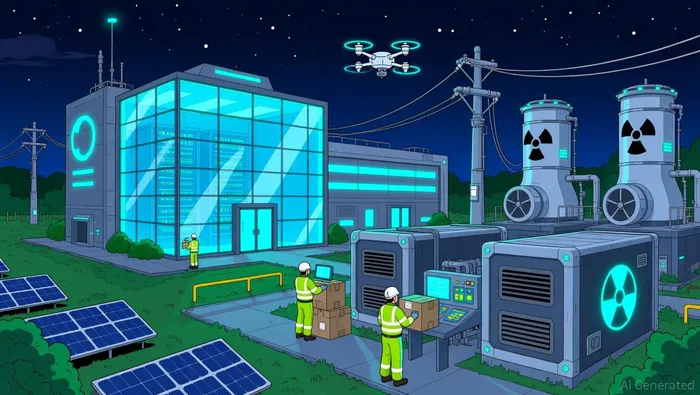
The energy demands of AI-driven data centers are straining global grids, prompting a pivot toward alternative solutions. Small modular reactors (SMRs) have emerged as a promising option, offering scalable, low-carbon power. While commercial deployment is not expected before 2030, as noted in JLL, their potential to decouple data center expansion from grid limitations is reshaping site selection and design.
However, SMRs are not without risks. A recent analysis warns that the AI sector's speculative boom-marked by $200 billion in venture capital inflows in 2025-could collapse if demand fails to materialize, as noted in Deloitte. This would leave SMR developers with stranded assets, as many contracts with data centers remain nonbinding, as noted in Deloitte. Additionally, regulatory delays and supply chain bottlenecks could push SMR deployment further into the 2030s, according to Aon.
Navigating Risks for Long-Term Value
Investors must balance the urgency of AI infrastructure expansion with the need for prudent risk management. Key strategies include:
1. Technological Efficiency: Innovations such as optical data transmission and advanced chip designs could reduce energy consumption by up to 90%, as noted in Deloitte, mitigating grid strain.
2. Regulatory Collaboration: Streamlined interconnection processes and public-private partnerships, like co-developed clean energy tariffs, can accelerate infrastructure deployment, as noted in Deloitte.
3. Diversified Energy Portfolios: Combining SMRs with on-site solar-battery systems or geothermal energy offers resilience against grid volatility, as noted in Aon.
Yet, the speculative nature of the AI sector remains a wildcard. Deloitte's 2025 AI Infrastructure Survey found that 72% of respondents view grid capacity as a critical challenge, as noted in Deloitte, while McKinsey cautions that geopolitical tensions and supply chain disruptions could derail progress, as noted in McKinsey.
Conclusion: A Calculated Bet on the Future
The AI-driven data center boom presents unparalleled opportunities for capital allocation, but success hinges on aligning investment with sustainable, scalable solutions. While SMRs and other innovations hold promise, their integration must be tempered by realistic demand forecasts and regulatory foresight. For investors, the key lies in balancing aggressive expansion with strategic caution-a delicate dance that will define the next decade of digital infrastructure.





Comentarios
Aún no hay comentarios