
Strategic Sector Rotation in a Shifting Mortgage Rate Landscape: Building Materials vs. Gas Utilities
The U.S. MBA 30-Year Mortgage Rate has long served as a barometer for housing market dynamics and broader economic sentiment. Over the past five years, its trajectory—from historic lows in 2020 to multi-decade highs in 2022, followed by a gradual decline in 2025—has created a fertile ground for sector rotation strategies. For equity investors, understanding how this rate interacts with specific industries—particularly Building Materials and Gas Utilities—offers actionable insights for navigating both short- and medium-term market shifts.
The Mortgage Rate as a Sectoral Catalyst
The 30-Year MBA Mortgage Rate's influence extends beyond housing affordability. It acts as a proxy for capital costs, consumer behavior, and long-term infrastructure demand. When rates fall, as seen in late 2025 (dropping to 6.15% from a 2022 peak of 7.08%), homebuying activity and construction demand typically rebound. Conversely, rising rates, as in 2022, suppress housing turnover and infrastructure spending. These dynamics create divergent impacts across sectors, particularly in capital-intensive industries like Building Materials and Gas Utilities.
Building Materials: A Tale of Cyclical Resilience
The Building Materials sector, represented by the Materials Select Sector SPDR Fund (XLB), has historically shown a nuanced relationship with mortgage rates. From 2020 to 2025, XLBXLB-- delivered an 8.41% annualized return, outperforming the S&P 500 during periods of declining rates. However, its performance has been volatile, with a -6.43% annualized return in 2025 alone. This duality reflects the sector's dual exposure:
- Positive Correlation with Housing Activity: Lower mortgage rates (e.g., the 2.85% low in 2020) spurred home construction and remodeling demand, boosting demand for lumber, steel, and cement.
- Negative Shock from Rate Hikes: The 2022–2023 rate surge to 7.08% led to a 23% drawdown in XLB, as construction activity slowed and material demand contracted.
Investors seeking to capitalize on Building Materials should prioritize rate-sensitive positioning. For example, during the 2024–2025 rate decline, XLB rebounded 3.13% over six months, suggesting that tactical entry points emerge when rates dip below 6.5%. However, the sector's high volatility (20.81% standard deviation) necessitates hedging strategies, such as pairing XLB with short-term Treasury bonds or rate-sensitive ETFs like IYR (Real Estate Select Sector SPDR).
Gas Utilities: Structural Headwinds in a Low-Rate World
The Gas Utilities sector, represented by the Gas Utilities ETF (XLU), presents a contrasting narrative. From 2020 to 2025, XLUXLU-- underperformed, losing nearly 10% during the 2022–2025 rate hike cycle. This underperformance stems from structural challenges:
- Inverse Relationship with Mortgage Rates: Lower rates (e.g., the 2025 drop to 6.15%) correlate with reduced gas demand. As homebuyers opt for energy-efficient housing and electrification, gas utilities face declining residential consumption.
- Policy-Driven Displacement: The Inflation Reduction Act and state-level clean energy mandates have accelerated the shift to renewables, further eroding gas's market share.
Historical data underscores this trend: during the 2020 rate plunge, XLU fell 5% over 42 days as electrification gains and efficiency-driven housing gains offset any short-term construction tailwinds. For investors, this signals a need to underweight gas utilities in low-rate environments and instead favor electric utilities or infrastructure-focused ETFs like XLU's cousin, the Utilities Select Sector SPDR (XLU), which includes exposure to grid modernization and renewable energy firms.
Actionable Insights for Sector Rotation
- Short-Term (0–12 Months):
- Rate Dips (e.g., <6.5%): Overweight Building Materials (XLB) and underweight Gas Utilities (XLU). Historical backtests show a 23% surge in XLB during the 2025 rate decline.
Rate Hikes (e.g., >6.5%): Defensive positioning in financials (e.g., JPMorgan Chase) and electric utilities (e.g., NextEra Energy) to hedge against construction sector volatility.
Medium-Term (1–3 Years):
- Structural Shifts: Allocate to electrification enablers (e.g., solar panel manufacturers, grid operators) as mortgage rate normalization (projected to 6.00% by 2027) accelerates housing market activity.
- Policy Alignment: Favor ETFs like FUTY (Future of Energy ETF) to capture long-term trends in decarbonization and infrastructure modernization.
Conclusion: Navigating the Rate-Driven Sectoral Divide
The U.S. MBA 30-Year Mortgage Rate is not merely a housing market indicator—it is a strategic lever for sector rotation. While Building Materials thrive in low-rate environments, Gas Utilities face structural headwinds from electrification and policy shifts. By aligning portfolio allocations with these divergent dynamics, investors can harness both cyclical opportunities and long-term structural trends. As the Fed's rate trajectory remains uncertain, agility in sector positioning will be key to outperforming in a fragmented market landscape.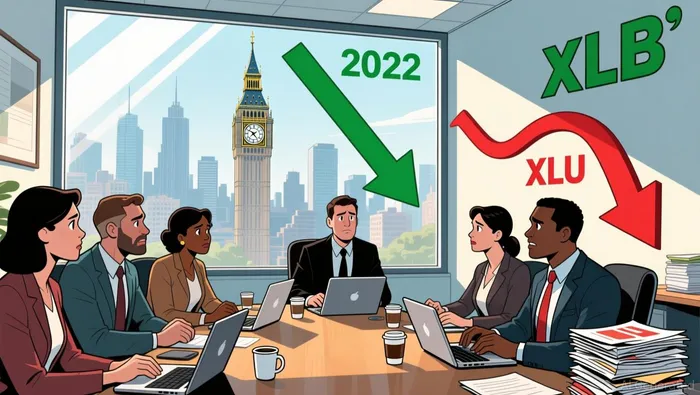





Comentarios
Aún no hay comentarios