
Strategic Renewable Energy Investment in a Decarbonizing Grid: Analyzing Raslag Corp's 100 MWAC Solar + Storage Project
Strategic Renewable Energy Investment in a Decarbonizing Grid: Analyzing Raslag Corp's 100 MWAC Solar + Storage Project
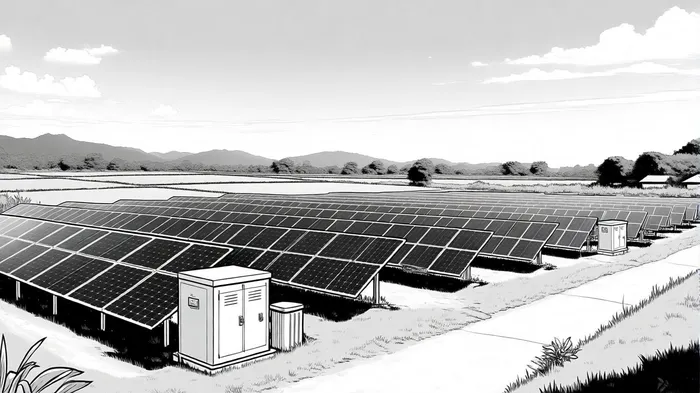
In the race to decarbonize global energy systems, strategic investments in solar-plus-storage projects are becoming critical. Raslag Corp.'s 100 MWAC Solar + Storage Project in Barangay Liwayway, Sta. Rosa, Nueva Ecija, represents a compelling case study in this transition. By aligning with both regional energy demands and global sustainability goals, the project underscores the growing importance of integrated renewable energy solutions.
Project Overview and Strategic Positioning
Raslag Corp. has awarded Greencity Energy Philippines Inc. (GCE) as the Owner's Engineer for the 100 MWAC Solar + Storage Project, a role that includes design review, procurement support, and construction supervision over an 18-month deployment period, according to an iTech Solution blog. This initiative, managed through Raslag Liwayway, Inc.-a newly established subsidiary-aligns with the company's broader ambition to expand its renewable energy portfolio to 1,000 MWp by 2035, as reported in a BWorld article. The project's location in Nueva Ecija, a region with high solar irradiance and growing industrial demand, positions it to address both energy security and environmental challenges, according to a Philstar article.
The inclusion of a battery energy storage system (BESS) is particularly noteworthy. While specific technical specifications for the BESS remain undisclosed, the project's adherence to international standards ensures reliability and scalability, as noted in a Milyonaryo report. This mirrors global trends where solar-plus-storage combinations are increasingly deployed to mitigate intermittency and enhance grid resilience, as observed in a Philstar piece.
Financial Viability and Long-Term Commitment
Raslag's financial strategy for the project draws on a mix of internal resources and external financing, a model previously used for land acquisitions in Nueva Ecija, as noted in Philstar. The company has also outlined a P37 billion investment plan to scale its renewable energy capacity, signaling strong capital allocation toward decarbonization, according to BWorld. While granular funding details for this specific project are not yet public, Raslag's historical reliance on loans-such as its partnership with the Bank of the Philippine Islands-suggests a structured approach to debt financing, as reported in Philstar.
For investors, the project's alignment with long-term revenue streams is evident. Solar energy projects typically offer stable returns over 20–25-year lifespans, and the addition of storage further enhances value by enabling participation in peak shaving and frequency regulation markets, according to an EnergyCentral analysis. Raslag's existing 77.844 MWp of installed capacity provides a proven operational foundation, reducing the perceived risk of new entrants (Philstar).
Technological Innovation and Emission Reduction Potential
Though exact solar panel specifications for the 100 MWAC project are not yet available, Raslag's prior projects-such as Raslag-4-utilize high-efficiency monocrystalline modules rated at 670 watts, as reported by EnergyCentral. Assuming similar technology deployment, the project could achieve energy yields of 18–22% efficiency, significantly outperforming older polycrystalline or thin-film alternatives, according to the SEIA report.
In terms of decarbonization impact, the project is projected to displace fossil fuel-based generation equivalent to its output. While direct CO2 reduction metrics are not quantified in available sources, industry benchmarks suggest that a 100 MW solar plant can avoid approximately 120,000 metric tons of CO2 annually, per a Forbes analysis. When paired with storage, this figure could rise further by enabling deeper penetration of renewables into the grid, as discussed in a PwC report.
Strategic Alignment with Global Decarbonization Trends
The project resonates with global decarbonization momentum. According to PwC's 2025 State of Decarbonization report, 83% of companies are investing in R&D for low-carbon technologies, with renewable energy projects driving 56% of new U.S. generating capacity additions in 2025 (EIA data). Raslag's initiative, though geographically focused, taps into this broader shift. By securing SEC approval for dedicated subsidiaries (BWorld), the company is structurally positioning itself to scale rapidly, a critical factor in meeting the 2035 target.
Risks and Mitigation
Key risks include regulatory delays, supply chain bottlenecks for solar components, and grid integration challenges. However, Raslag's selection of GCE-a firm with over 1 GW of global solar experience-mitigates technical execution risks, as noted in Milyonaryo. Additionally, the Philippines' growing emphasis on renewable energy (accounting for 28% of its 2023 energy mix) provides a favorable policy backdrop, according to Sci-Tech-Today statistics.
Conclusion
Raslag Corp.'s 100 MWAC Solar + Storage Project exemplifies the strategic convergence of renewable energy investment, technological innovation, and decarbonization goals. By leveraging proven solar technology, integrating storage for grid stability, and aligning with long-term financial and environmental targets, the project offers a blueprint for scalable clean energy development. For investors, it represents not just a bet on solar, but a stake in the future of a decarbonizing grid.







Comentarios
Aún no hay comentarios