
Strategic Reallocation in Hyperscale Infrastructure: Assessing the Shift from Peripheral to Core Markets
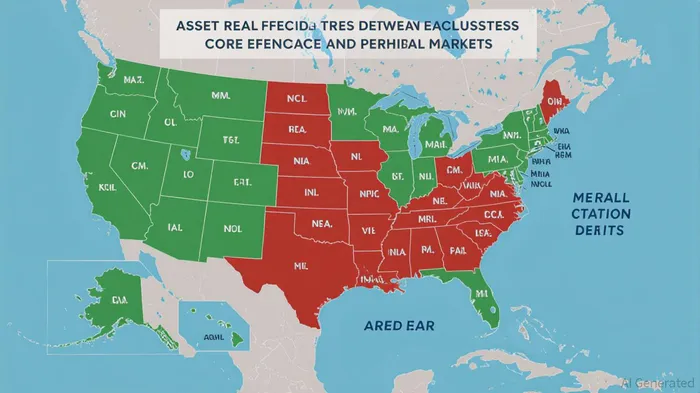
The hyperscale data center861289-- industry is undergoing a quiet but significant transformation. As cloud computing and artificial intelligence (AI) demands surge, hyperscale operators like AmazonAMZN--, Google, and MicrosoftMSFT-- are recalibrating their infrastructure strategies to prioritize capital efficiency and geographic proximity to high-growth markets. While specific examples of asset divestitures—such as the hypothetical reallocation of underperforming facilities in peripheral locations like Montana toward core markets like Michigan—remain undocumented in recent public records[1], broader industry trends suggest a strategic shift toward optimizing returns through geographic refocusing.
Capital Efficiency: The New Imperative
Hyperscale data centers are engineered for scalability, modularity, and energy efficiency, enabling operators to dynamically allocate resources to meet fluctuating demand. These facilities, which often house thousands of servers, leverage automation and advanced cooling systems to minimize operational costs while maximizing processing power. For instance, Microsoft's recent investments in AI-driven infrastructure highlight how hyperscale operators are prioritizing high-density, low-latency environments to support next-generation workloads.
The emphasis on capital efficiency is further amplified by the need to balance long-term infrastructure costs with short-term profitability. Hyperscale companies are increasingly adopting a "right-sizing" approach, where underutilized or geographically disadvantaged assets are either upgraded or divested to free up capital for core markets. While no concrete examples of Montana-to-Michigan reallocations exist in the current dataset, the logic underpinning such moves aligns with industry priorities: core markets offer better access to skilled labor, robust fiber networks, and proximity to enterprise clients, all of which enhance return on investment (ROI).
Geographic Refocusing: Core Markets as Strategic Anchors
The shift toward core markets reflects a broader industry recognition that proximity to demand centers—such as tech hubs, financial districts, and AI research clusters—can significantly reduce latency and improve service reliability. For example, Michigan's growing role as a hub for automotive innovation and AI development has spurred increased data center activity, with hyperscale operators investing in facilities that support real-time analytics and autonomous vehicle research.
Peripheral markets, by contrast, often face challenges such as limited infrastructure, regulatory uncertainty, and higher per-unit energy costs. While these locations may still serve niche purposes (e.g., disaster recovery or edge computing), their strategic value diminishes as hyperscale operators prioritize cost-effective, high-impact deployments. This dynamic creates opportunities for data center REITs to acquire underperforming assets at discounted rates, potentially repurposing them for edge computing or colocation services.
Investor Implications: Navigating the Refocusing Trend
For investors, the geographic reallocation of hyperscale assets presents both risks and opportunities. Data center REITs that secure discounted peripheral assets could benefit from long-term appreciation as edge computing and regional cloud demand grow. However, the success of such investments hinges on the ability to retrofit older facilities with modern infrastructure, a process that requires significant capital outlays.
Conversely, hyperscale tech operators stand to gain from their refocused investments in core markets. By consolidating operations in high-demand regions, they can reduce operational complexity and enhance margins through economies of scale. For instance, Amazon's recent expansion of its AWS infrastructure in the Midwest underscores how hyperscale players are aligning with regional economic trends to secure a competitive edge.
Conclusion
While the absence of specific divestiture examples limits a granular analysis of the Montana-to-Michigan hypothetical, the strategic logic of geographic refocusing is evident in the hyperscale industry's broader priorities. As capital efficiency and proximity to demand become increasingly critical, investors in data center REITs and hyperscale operators must remain attuned to the evolving interplay between infrastructure optimization and market dynamics. The future of hyperscale infrastructure lies not in geographic sprawl, but in the precision of strategic placement.







Comentarios
Aún no hay comentarios