
Strategic Realignments in High-Growth Therapeutics: Analyzing Novo Nordisk's Downgrade and Roche's Obesity Ambitions
The healthcare sector's 2025 landscape is marked by divergent strategic trajectories, as HSBC's recent ratings for Novo NordiskNVO-- and Roche underscore contrasting approaches to high-growth therapeutic areas. While Novo Nordisk faces a "Hold" downgrade amid GLP-1 market turbulence, Roche's upgraded positioning reflects its aggressive expansion into obesity and oncology. This analysis dissects the implications of these shifts for investors, drawing on recent corporate strategies and market dynamics.
Novo Nordisk: Restructuring Amid GLP-1 Market Challenges
HSBC's downgrade of Novo Nordisk to "Hold" stems from revised 2025 growth expectations and structural headwinds in the GLP-1 drug market (HSBC downgrade). The company's decision to cut 9,000 global roles-a DKK 8 billion annualized savings initiative-signals a pivot toward operational efficiency (cut 9,000 global roles). This restructuring, however, comes at a cost: one-off expenses will dampen 2025 operating profit growth, while internal management changes and U.S. compounded drug competition have delayed execution timelines, as noted in the European Financial Times.
Novo Nordisk's core focus remains diabetes and obesity, with R&D investments targeting cardiovascular disease and rare endocrine disorders (R&D pipeline). Yet, its dominance in the GLP-1 space is under threat. Eli Lilly's Zepbound and the proliferation of compounded Wegovy alternatives have eroded market share, prompting HSBC to cut its 2025–2026 earnings forecasts by 5% and 16%, respectively, according to that analysis. The downgrade also reflects skepticism about Novo's ability to sustain its previous growth rates in a fragmented market.
Roche: Aggressive Expansion into Obesity and Beyond
In contrast, HSBC has upgraded Roche's strategic positioning, particularly in obesity, where the company aims to secure a top-three global market position by 2030 (coverage from Roche Pharma Day). Roche's pipeline includes dual GLP-1/GIP agonists like CT-388, long-acting amylin analogs (petrelintide), and oral GLP-1 candidate CT-996. These assets address unmet needs such as weight regain and tolerability, positioning Roche to compete with Novo Nordisk and Eli Lilly.
Roche's strategy extends beyond obesity. Its 2025 Pharma Day emphasized disciplined dealmaking in oncology, neurology, and immunology, supported by blockbuster drugs like Vabysmo and Ocrevus. Strategic acquisitions-most notably Carmot Therapeutics-illustrate the company's M&A approach, with reporting on the Carmot deal highlighting the scale of the investment (Carmot Therapeutics). HSBC highlights Roche's global commercial infrastructure as a key differentiator, enabling rapid scaling of new therapies.
Strategic Divergence and Investment Implications
The contrasting HSBC ratings reflect fundamental differences in corporate strategy. Novo Nordisk's cost-cutting approach prioritizes operational efficiency in a saturated GLP-1 market, while Roche's diversified pipeline and acquisition-driven model aim to capture multiple high-growth segments. For investors, Roche's upgraded positioning suggests stronger resilience to market volatility, particularly in obesity-a sector projected to grow at 12% annually through 2030.
However, Novo Nordisk's streamlined operations and reinvestment in R&D could yield long-term gains if it navigates GLP-1 challenges successfully. The company's focus on rare diseases and cardiovascular care also presents niche opportunities, though these may lack the blockbuster potential of obesity or oncology.
Conclusion
HSBC's ratings highlight a pivotal moment for both firms. Novo Nordisk's restructuring is a defensive move to preserve margins in a competitive GLP-1 landscape, while Roche's obesity ambitions and strategic acquisitions position it as a multi-sector innovator. Investors must weigh Novo's operational discipline against Roche's growth-oriented pipeline, with the latter's diversified approach offering higher upside potential in an evolving healthcare ecosystem.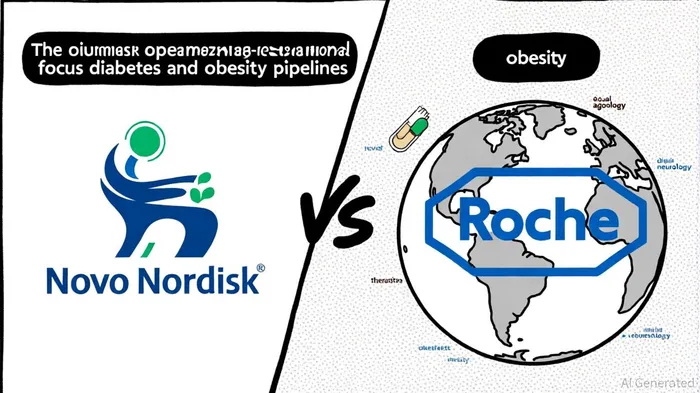







Comentarios
Aún no hay comentarios