
Strategic Real Estate and Economic Development Opportunities in Webster, NY: Leveraging 2025 Infrastructure Grants and Tech Campus Redevelopment
Infrastructure Grants and Their Economic Impact
Webster's strategic investments in infrastructure are anchored by two major grants: a $9.8 million FAST NY Shovel-Ready Grant and a $4.5 million NY Forward Program allocation. The FAST NY grant is earmarked for the revitalization of the 300-acre Xerox brownfield site and the NEAT (North East Advanced Technology) site. Key projects include road realignment, sewer system expansion, and electrical grid modernization, all designed to prepare the area for industrial use by 2026. These improvements have already reduced industrial vacancy rates to 2%, far below the national average, and attracted major investments such as the $650 million fairlife® dairy plant, which is expected to create 250 jobs and become operational by year-end.
The NY Forward Program's $4.5 million allocation further supports community revitalization, with funded projects including upgrades to Veterans Memorial Park and the creation of a multipurpose conservatory at Kittelberger Florist & Gifts. These initiatives, finalized in Spring 2025, aim to enhance the village's appeal for both residents and businesses. Collectively, these grants are positioning Webster as a logistics and distribution center, particularly for energy-intensive industries like semiconductor production and clean technology.
Tech Campus Redevelopment and Tax Incentives
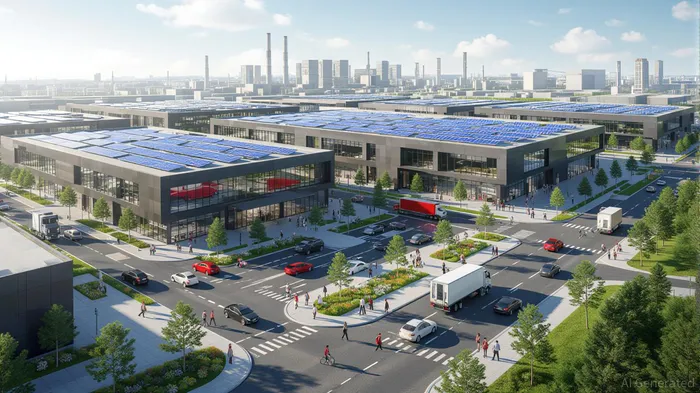 The redevelopment of the Xerox campus into a high-tech industrial hub is a cornerstone of Webster's economic strategy. This project leverages tax incentives such as the Brownfield Opportunity Area (BOA) initiative and public-private partnerships (PPPs) to mitigate financial risks for developers and attract private investment. The campus's strategic location near I-390 and Rochester International Airport enhances its connectivity to regional and national markets, making it an attractive site for advanced manufacturing and logistics firms.
Environmental remediation efforts, aligned with EPA standards and ESG criteria, ensure the site is sustainable and ready for future development. Additionally, the village has secured $500,000 in federal funding to improve bicycle and pedestrian infrastructure around key redevelopment sites, further boosting the area's livability and appeal.
Real Estate Incentives and Market Trends
Webster's real estate market is experiencing robust growth, driven by infrastructure improvements and economic revitalization. Residential property values have risen by 10.1% annually since 2020, reflecting increased demand for housing in proximity to the developing industrial zones. For commercial real estate, the low vacancy rates and strategic location near major transportation corridors make Webster a prime destination for industrial tenants.
Tax abatements and PPPs are critical tools for attracting private investment. For instance, the fairlife® dairy plant's development was facilitated by a combination of state and federal incentives, reducing the financial burden on the developer while ensuring job creation and long-term economic benefits for the community. These incentives are likely to continue driving industrial and commercial real estate demand, with nearly one million square feet of industrial space expected to become available by 2026.
Investment Opportunities and Risks
For investors, Webster's 2025 developments present a unique opportunity to capitalize on a rapidly evolving market. The combination of infrastructure grants, tax incentives, and strategic location advantages creates a favorable environment for both residential and commercial real estate investments. However, potential risks include market saturation if demand for industrial space outpaces supply or if economic conditions shift post-2025. Investors should also consider the long-term sustainability of the projects, particularly in light of ESG criteria and environmental remediation requirements.
Conclusion
Webster, NY, is emerging as a model for how strategic infrastructure investments and tech campus redevelopment can drive economic growth and real estate value. With a clear roadmap of funded projects, supportive tax policies, and a focus on sustainability, the village offers compelling opportunities for investors seeking to align with high-growth industrial and commercial markets in 2025 and beyond.







Comentarios
Aún no hay comentarios