
Strategic Rationale Behind Georgia-Pacific’s Acquisition of Anchor Packaging and Its Implications for Long-Term Shareholder Value
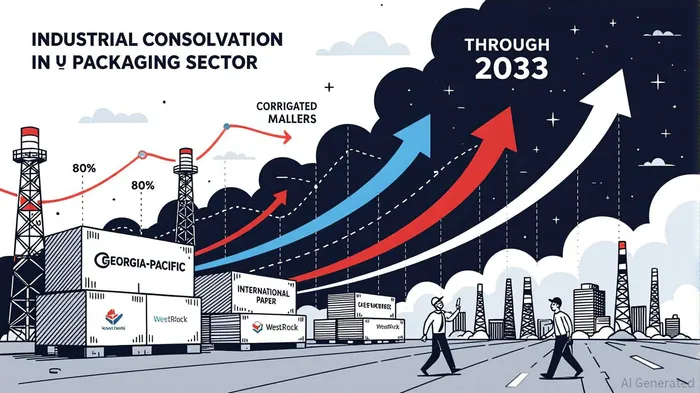
The U.S. packaging industry has long been a battleground for industrial consolidation, driven by the need to scale operations, optimize supply chains, and meet evolving consumer demands for sustainability. Georgia-Pacific’s acquisition of Anchor Packaging, though shrouded in limited public financial detail, aligns with this broader trend and underscores the company’s strategic intent to strengthen its competitive positioning in a sector marked by oligopolistic dynamics. By analyzing the acquisition through the lens of industry consolidation and operational efficiency, we can infer its potential to enhance long-term shareholder value.
Industrial Consolidation: A Sector-Wide Imperative
The packaging sector has seen a surge in mergers and acquisitions over the past decade, as firms seek to consolidate capacity and counteract fragmented market competition. For instance, International Paper’s $11.6 billion acquisition of Temple-Inland in 2016 sparked antitrust scrutiny due to its impact on industry concentration, illustrating the high stakes of such moves [1]. Georgia-Pacific’s acquisition of Anchor Packaging, while smaller in scale, reflects a similar logic: capturing market share in niche segments to fortify competitive advantages.
Anchor Packaging, a key player in the U.S. foodservice packaging market, specializes in disposable products and takeaway solutions, areas where demand has surged due to the rise of e-commerce and on-the-go consumption [3]. By integrating Anchor’s capabilities, Georgia-Pacific likely aims to expand its footprint in high-growth categories while leveraging synergies in distribution and production. This aligns with broader industry trends, as companies like WestRock and Smurfit Kappa have similarly pursued targeted acquisitions to diversify their product portfolios and reduce reliance on cyclical markets [1].
Strategic Rationale: Operational Efficiency and Sustainability
The acquisition’s strategic rationale appears rooted in two pillars: operational efficiency and sustainability. Georgia-Pacific has historically emphasized cost optimization and capacity utilization, critical factors in an industry where margins are often squeezed by raw material volatility. By acquiring Anchor, Georgia-Pacific may have sought to streamline its supply chain, reduce logistics costs, and enhance economies of scale. For example, Anchor’s expertise in lightweight, recyclable packaging solutions complements Georgia-Pacific’s existing sustainability initiatives, a growing priority for both regulators and consumers [2].
Moreover, the move positions Georgia-Pacific to capitalize on the corrugated mailer market’s projected growth. This segment, driven by e-commerce demand, is expected to expand from $17.8 billion in 2024 to $29.4 billion by 2033 [1]. With a current market share of 4–5%, Georgia-Pacific’s acquisition of Anchor could bolster its ability to secure long-term contracts with e-commerce shippers, a strategy that has proven lucrative for industry peers like Packaging Corp. of America [2].
Implications for Shareholder Value
While specific financial terms of the acquisition remain undisclosed, the strategic alignment with industry trends suggests a focus on long-term value creation. Georgia-Pacific’s management has emphasized maintaining a strong balance sheet and selective investment approach, differentiating it from larger peers who have pursued aggressive M&A [2]. By acquiring Anchor, the company likely aims to enhance returns on invested capital without overextending its financial resources—a critical consideration in a sector prone to cyclical downturns.
Additionally, the acquisition may help Georgia-Pacific mitigate risks associated with industrial overcapacity. As larger players like International PaperIP-- adjust production during economic slowdowns, smaller firms with diversified capabilities—such as Anchor’s foodservice packaging expertise—can fill gaps in demand, ensuring stable revenue streams [1]. This strategic flexibility is a key driver of shareholder value in a consolidating industry.
Conclusion
Georgia-Pacific’s acquisition of Anchor Packaging, while not accompanied by detailed public disclosures, is emblematic of the packaging sector’s ongoing consolidation. By expanding into high-growth foodservice packaging and corrugated mailer markets, Georgia-Pacific strengthens its competitive positioning while aligning with sustainability and e-commerce trends. These moves, coupled with a disciplined capital allocation strategy, position the company to deliver durable shareholder value in an increasingly concentrated industry.
Source:
[1] Flyover Stock: Packaging Corp. of America (PKG), [https://www.flyoverstocks.com/p/flyover-stock-packaging-corp-of-america]
[2] Corrugated Mailer Market Size, Trends, and Forecast - 2033, [https://www.strategicpackaginginsights.com/report/corrugated-mailer-market]
[3] Unites States Foodservice Packaging Market Outlook, [https://www.linkedin.com/pulse/unites-states-foodservice-packaging-market-outlook-key-etojf/]





Comentarios
Aún no hay comentarios