
Strategic Price Adjustments in Food Retail and Manufacturing: Profitability Amid Consumer Pushback
The food retail and manufacturing sectors are navigating a complex landscape defined by inflationary pressures, shifting consumer preferences, and supply chain volatility. To maintain profitability, major companies are deploying strategic price adjustments, product optimization, and cost-efficiency measures. These strategies aim to balance affordability for consumers with margin preservation, while also addressing the challenges of tariffs and geopolitical disruptions. This analysis evaluates how firms are adapting-and the investment potential of those leveraging agile, consumer-centric approaches.
Strategic Pricing and Product Optimization: A Dual-Pronged Approach
Food companies are increasingly adopting -reducing product sizes or quality while maintaining prices-to mitigate cost pressures without triggering significant consumer backlash. For example, Keurig Dr Pepper's restructuring into Global Coffee Co. and Beverage Co. following its $18.4 billion acquisition of JDE Peet's exemplifies a broader industry trend of streamlining operations to enhance portfolio coherence amid rising coffee commodity prices and supply chain bottlenecks. Similarly, the introduction of mini product variants allows brands to offer lower-cost alternatives, preserving customer loyalty while managing input costs according to industry analysis.
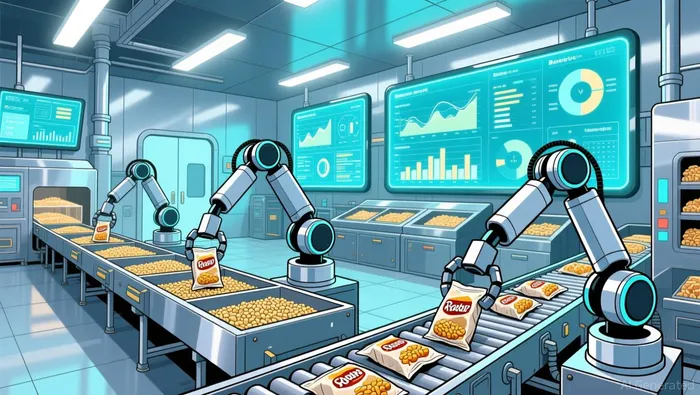
Automation and AI-driven diagnostics are also reshaping food processing. By reducing labor costs and minimizing waste, these technologies enable real-time consumer insights and agile supply chain adjustments according to industry experts. For instance, Keurig Dr Pepper's U.S. Refreshment Beverages segment reported a 10.7% net sales increase in Q3 2025, driven by productivity savings and net price realization, despite inflationary headwinds.
Financial Performance and Investment Metrics
The financial outcomes of these strategies vary across firms. Keurig Dr Pepper has consistently raised its 2025 full-year guidance, . Refreshment Beverages segment according to Q3 results. In contrast, the U.S. according to Q1 results.
Other firms demonstrate similar resilience. CAVA Group reported a 20.0% year-over-year revenue growth , driven by new openings and same-store sales growth despite rising food and labor costs. Performance Food Group Company (PFGC) saw Foodservice Adjusted EBITDA surge 26.3% to $386.9 million in Q4 2025, reflecting procurement productivity and pricing discipline according to Q4 results.
However, not all companies are thriving. Nomad Foods projects flat to -2% organic revenue growth in 2025, . according to company announcements.
Navigating Challenges: Tariffs, Localization, and Digital Procurement
Tariffs on imported plant-based ingredients and sustainable technologies remain a significant challenge. For example, a 2025 report highlights how tariffs on plant-based proteins have increased operational costs for food manufacturers. To mitigate this, companies are investing in and to anticipate price fluctuations and optimize purchasing decisions according to industry experts. Domino's Pizza, for instance, improved its supply chain gross margin by 0.5 percentage points in Q2 2025 through optimized pricing and procurement productivity.
Investment Potential: Agility and Consumer-Centricity as Key Drivers
Firms that combine strategic pricing with operational agility are emerging as strong investment candidates. Keurig Dr Pepper's disciplined approach to cost efficiency and portfolio optimization has enabled it to outperform inflationary pressures, with full-year 2025 net sales growth now projected in the high-single-digit range according to Q3 results. Similarly, CAVA Group's focus on scalable, high-margin formats and PFGC's robust EBITDA growth underscore the value of consumer-centric strategies.
Conversely, companies like Nomad Foods highlight the risks of delayed adaptation. While its efficiency program may yield long-term savings, the near-term revenue and EBITDA declines suggest caution for investors seeking immediate returns.
Conclusion
The food industry's response to inflation and shifting consumer behavior underscores the importance of strategic pricing, product innovation, and cost efficiency. Companies that prioritize agility-whether through automation, localized sourcing, or shrinkflation-are better positioned to sustain margins and drive growth. For investors, firms like Keurig Dr PepperKDP--, CAVA Group, and PFGC exemplify the potential of consumer-centric strategies in a challenging macroeconomic environment. However, the sector's diversity means that due diligence remains critical, as not all firms can navigate these pressures with equal success.





Comentarios
Aún no hay comentarios