
Strategic Positioning in Refining and Downstream Assets Amid Global Oil Oversupply
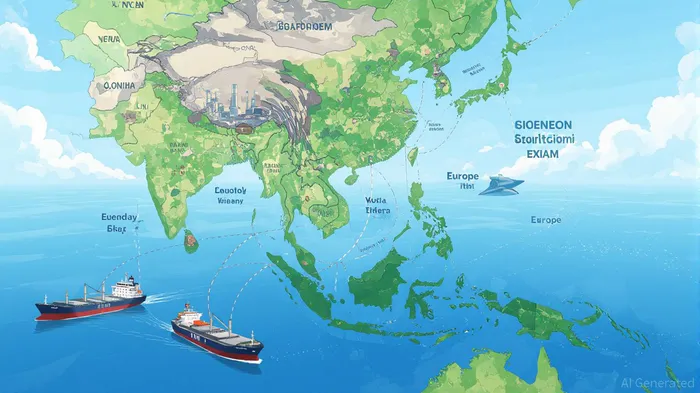
The global oil market in 2025 is grappling with a growing surplus, driven by robust supply growth and uneven demand dynamics. With global supply projected to outpace demand by 2.7 million barrels per day (bpd), the industry faces a critical juncture where strategic positioning in refining and downstream energy assets could determine long-term resilience and profitability[1]. This analysis explores how integrated oil companies and regional markets are adapting to these challenges, emphasizing the role of downstream investments in navigating volatility and aligning with energy transition goals.
U.S. Refining Sector: Stability Amid Shifting Dynamics
The U.S. refining sector remains a cornerstone of global downstream operations, with refining capacity holding steady at 18.4 million barrels per calendar day (b/cd) as of January 2025[3]. However, utilization rates have shown volatility, dropping to 86.9% in Q1 2025—a decline from 91.6% in Q4 2024 but an increase from 85.8% in the same period in 2023[3]. Regional disparities are evident: California's refineries, for instance, faced utilization rates below 75% in late March 2025 due to outages at key facilities like PBF Energy's Torrance and Martinez refineries[6]. These fluctuations underscore the sector's sensitivity to operational disruptions and the need for robust contingency planning.
Southeast Asia: A Hub for Downstream Growth
Southeast Asia is emerging as a critical player in the global refining landscape, driven by industrialization, population growth, and strategic investments. Indonesia, for example, aims to increase refining capacity to 2.2 million bpd by 2025[3], while Malaysia and Thailand currently operate at 955,000 and 1.245 million bpd, respectively[3]. The region is also pivoting toward sustainable production, with projects like Petronas's joint-venture biorefinery in Malaysia—set to produce 650,000 tons of biofuels annually by 2028[2]. By 2025, Southeast Asia is projected to become a net exporter of biofuels to Europe, leveraging its access to feedstocks and surplus production capacity[2].
Europe: Navigating Decline and Decarbonization
In contrast, Europe's refining sector faces a more subdued outlook. The global refinery catalysts market in Europe is projected to grow by only 2% in 2025, while North America and Europe may see declines of 2% due to lower margins and stringent environmental regulations[5]. Demand for refined petroleum products in Europe is expected to lag behind Asia, driven by stricter emissions policies and a shift toward cleaner energy alternatives[4]. However, investments in petrochemical complexes and circular economy initiatives—such as chemical recycling and green hydrogen—are gaining traction[2]. Companies like ShellSHEL-- and TotalEnergiesTTE-- are prioritizing carbon capture and hydrogen projects to align with decarbonization goals[5].
Strategic Investments: Integrated Players Lead the Way
Integrated oil companies are increasingly focusing on downstream assets to hedge against upstream volatility. For instance, mergers and acquisitions in the upstream sector grew by 25% in 2024, with gas-weighted deals and LNG infrastructure investments rising by 40%[4]. These moves reflect a broader industry trend toward capital discipline and sustainability. ESG-linked financing has surged by 70%, supporting methane reduction and carbon capture projects[4], while renewables integration through acquisitions has grown by 90%[4]. Despite these shifts, fossil fuels are expected to dominate the energy mix of major oil companies through 2030, highlighting the sector's gradual transition[5].
Investment Implications and Risks
For investors, the key lies in balancing exposure to resilient downstream assets with hedging against geopolitical and market risks. The Red Sea conflict and Eastern European supply disruptions have already increased transportation costs and inventory management complexities[4]. Meanwhile, the energy transition poses structural risks to traditional refining margins, particularly in markets with high electric vehicle adoption. Strategic partnerships, such as PTT and Saudi Aramco's joint venture, are enhancing supply chain resilience and optimizing refining processes[6]. Investors should prioritize companies with strong logistical capabilities, regional diversification, and a clear roadmap for decarbonization[1].
Conclusion
The looming oil oversupply in 2025 is reshaping the energy landscape, with refining and downstream assets emerging as critical battlegrounds for competitive advantage. While the U.S. and Southeast Asia demonstrate growth potential, Europe's challenges highlight the need for innovation and regulatory agility. Integrated players that align their strategies with sustainability goals and regional demand shifts are best positioned to thrive in this volatile environment. For investors, a nuanced approach—combining sectoral diversification, ESG alignment, and geopolitical awareness—will be essential to unlocking value in the evolving oil market.





Comentarios
Aún no hay comentarios