
Strategic Positioning in Cross-Border Financial Sector Consolidation: Navigating AI, Regulation, and Global Markets
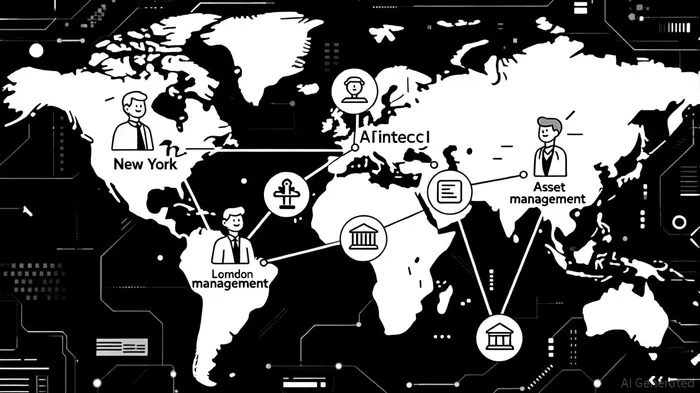
The cross-border financial sector consolidation landscape in 2024–2025 is defined by a delicate balance between macroeconomic uncertainty and technological optimism. As global dealmakers navigate shifting regulatory environments and geopolitical risks, strategic positioning has become critical for firms seeking to capitalize on AI-driven innovation and market expansion. This analysis examines the interplay of macroeconomic forces, technological disruption, and regulatory dynamics shaping cross-border M&A in financial services, drawing on recent trends and case studies to outline actionable insights for investors.
Trends in Cross-Border M&A: Volume vs. Value
While global M&A deal volume declined by 9% in the first half of 2025 compared to 2024, deal values surged by 15%, reflecting a shift toward megadeals exceeding $5 billion [1]. This trend underscores a strategic pivot toward larger, capability-driven transactions rather than fragmented, low-value acquisitions. For instance, Global Payments' proposed $24.25 billion acquisition of Worldpay and Monte dei Paschi di Siena's $13.9 billion takeover of Mediobanca highlight the sector's focus on scale and digital transformation [2]. Such deals are often motivated by the need to integrate advanced technologies, such as AI, into core operations to remain competitive in a rapidly evolving market.
Drivers of Strategic Positioning: AI and Regulatory Shifts
Artificial intelligence (AI) has emerged as a cornerstone of cross-border financial sector consolidation. According to McKinsey, AI integration could impact 25–40% of an average asset management firm's cost base, driving efficiencies in areas like compliance, investment processes, and software development [3]. Firms are increasingly acquiring AI-focused startups or acquiring firms with existing AI infrastructure to fast-track digital transformation. For example, Fiserv's acquisition of Netherlands-based CCV—a payments platform—was explicitly aimed at enhancing its AI-driven capabilities in Europe [4].
Regulatory shifts further complicate strategic positioning. The previous U.S. administration's stringent bank regulations dampened M&A activity, but expectations of deregulation under new leadership have reignited interest in bank consolidations [2]. Similarly, European policymakers are pushing for banking sector consolidation to bolster global competitiveness, with cross-border deals expected to accelerate in 2025 [5].
Case Studies: Strategic Integration Challenges and Opportunities
Microsoft's acquisition of Nuance Communications and Tesla's purchase of Maxwell Technologies offer instructive parallels for cross-border financial sector deals. Both companies faced challenges in aligning financial systems, managing cost structures, and complying with international regulations [6]. For financial institutionsFISI--, these lessons highlight the importance of robust financial integration frameworks to realize synergies.
In the fintech space, Sygnum's $58 million funding round to expand into EU/EEA markets and Hong Kong exemplifies how cross-border consolidation can unlock access to emerging technologies like BitcoinBTC-- infrastructure [7]. Similarly, Nigerian fintech LemFi's $53 million raise to enter European markets underscores the strategic value of geographic diversification and cross-border payment capabilities [7].
Regional Dynamics: Europe, the U.S., and Emerging Markets
Europe remains a focal point for cross-border consolidation, driven by the need to create globally competitive banks and fintechs. The European Union's push for interstate banking consolidation aims to remove regulatory barriers and enhance market efficiency [8]. In the U.S., regional banks are consolidating to achieve economies of scale, with 71 transactions announced through June 2025—up from 59 in 2024 [9]. Emerging markets, particularly in Asia-Pacific and Latin America, are also seeing increased M&A activity, fueled by strong local market fundamentals and sponsorship pipelines [10].
Future Outlook: Balancing AI Investment and Regulatory Uncertainty
Looking ahead, the tension between M&A and AI investment will define strategic positioning. While 30% of U.S. companies paused or revised deals due to tariff and geopolitical risks [10], others are prioritizing AI infrastructure to future-proof their operations. For instance, private equity firms are increasingly targeting capital-light, technology-enabled financial services, such as private credit platforms, to align with AI-driven efficiency gains [2].
Investors must also consider the regulatory tailwinds shaping the sector. A potential return to deregulation in the U.S. could catalyze further bank M&A, while Europe's focus on digital transformation may spur fintech consolidation. However, geopolitical uncertainties—such as tariff disputes and shifting political leadership—will require agile strategies to mitigate risk.
Conclusion
Cross-border financial sector consolidation in 2024–2025 is a high-stakes arena where strategic positioning hinges on three pillars: AI integration, regulatory adaptability, and geographic diversification. Firms that successfully navigate these dynamics—while learning from past integration challenges—will be well-positioned to capitalize on the sector's evolving opportunities. For investors, the key lies in identifying deals that align with long-term technological and regulatory trends, ensuring resilience in an uncertain global landscape.





Comentarios
Aún no hay comentarios