
Strategic Positioning for Cloud-Native AI Adoption in 2026: Unlocking Enterprise Efficiency in the AI-Driven Cloud Era
The Rise of AI-Driven Cloud Operations: Key Trends and Challenges
According to Gartner, the AI Super Computing Platform is a defining trend for 2026, with hybrid computing paradigms (combining CPUs, GPUs, and specialized hardware) enabling enterprises to handle complex AI workloads more efficiently. By 2028, over 40% of leading enterprises are expected to integrate these platforms into critical workflows, driven by the need for real-time analytics and high-performance computing as research shows.
However, adoption is not without hurdles. Deloitte emphasizes that sovereign AI-the practice of maintaining data and infrastructure within national or organizational boundaries-is becoming a non-negotiable requirement due to regulatory and geopolitical risks. This creates a tension between innovation and compliance, particularly for global enterprises. Additionally, Multiagent Systems (MAS), which allow AI agents to collaborate on shared goals, face integration challenges with legacy systems and workforce readiness.
A telling case study is Italgas Group, a European gas distributor that aligned AI initiatives with its infrastructure modernization goals. By involving executives in rapid, four-month sprints to deliver AI minimum viable products (MVPs), Italgas demonstrated how strategic alignment and cross-functional collaboration can overcome organizational inertia. Conversely, C3.ai's struggles-marked by a 54% stock price drop and leadership turmoil-highlight the risks of poor execution and misaligned expectations.
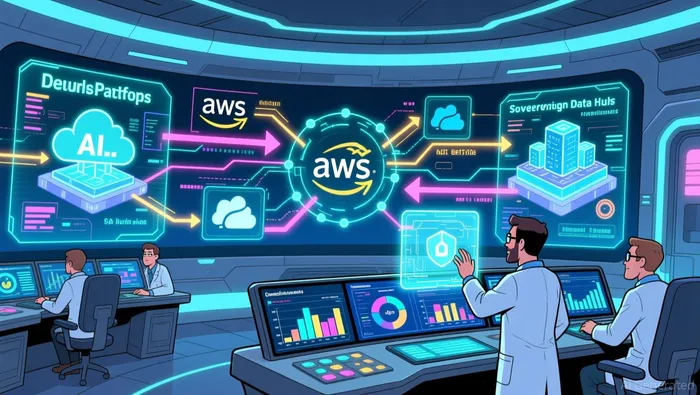
Strategic Frameworks for Cloud-Native AI Adoption
To navigate these challenges, enterprises must adopt structured methodologies. The Cloud Adoption Framework (CAF) provides a repeatable roadmap, emphasizing alignment with business goals, governance, and innovation. Key principles include:
1. Holistic Governance: Establishing policies for security, compliance, and cost optimization through tools like policy-as-code and drift detection.
2. Infrastructure Scalability: Leveraging cloud-native patterns such as serverless computing and microservices to avoid vendor lock-in as research shows.
3. Continuous Improvement: Iteratively refining strategies based on pilot outcomes and feedback loops as frameworks recommend.
For example, Starbucks invested in robust cloud-based AI infrastructure to power its recommendation engine, processing vast customer datasets to personalize experiences and boost revenue. Similarly, Unilever's FLEX Experiences platform upskilled employees on AI-driven workflows, resulting in a 41% productivity increase. These examples underscore the importance of data infrastructure and cultural transformation in AI adoption.
Investment Implications and Future Outlook
The AI-driven cloud market is poised for explosive growth, with NVIDIA and cloud giants like Microsoft and Amazon benefiting from surging demand for AI hardware and infrastructure. Palantir TechnologiesPLTR--, whose AI platform (AIP) saw a 121% year-over-year revenue increase in 2025, exemplifies how strategic partnerships and domain-specific AI solutions can drive value.
However, investors must remain cautious. The C3.ai case illustrates that even with AI hype, poor execution and governance can lead to catastrophic outcomes. Enterprises must prioritize domain-specific language models (DSLMs), which are projected to dominate 50% of enterprise GenAI models by 2028 due to their accuracy and compliance advantages.
Conclusion
The path to cloud-native AI adoption in 2026 is fraught with technical, organizational, and regulatory challenges. Yet, for enterprises that align AI strategies with governance frameworks, invest in scalable infrastructure, and foster a culture of innovation, the rewards are substantial. As AI spending accelerates, the winners will be those who treat cloud-native AI not as a buzzword but as a strategic imperative.







Comentarios
Aún no hay comentarios