
Strategic Positioning in the Biopharma Sector: Decoding Institutional Investor Signals and Ownership Thresholds in 2025
The biopharma sector in 2025 is at a pivotal juncture, shaped by a confluence of macroeconomic shifts, regulatory uncertainty, and evolving investor behavior. For institutional investors, strategic positioning requires a nuanced understanding of ownership thresholds and capital allocation patterns that signal both risk and opportunity. This analysis unpacks the key dynamics driving institutional decision-making in the sector, drawing on recent trends in M&A, IPOs, and regulatory developments.
Institutional Ownership Thresholds: A Shifting Landscape
While explicit percentage thresholds for institutional ownership in biopharma remain undefined, the sector's strategic focus has pivoted toward de-risked assets and capital efficiency. Data from Q1 2025 reveals that 95% of M&A deal value was concentrated in Phase 2 or later-stage companies, reflecting a preference for assets with clearer commercialization pathways, according to Locust Walk Q1 2025 report. This trend intensified in Q3 2025, where late-stage and approved assets accounted for ~73% of deal value, despite a 25% decline in U.S. M&A aggregate value, according to Locust Walk Q3 2025 report.
The shift underscores a recalibration of institutional ownership priorities. As interest rates ease and capital becomes more accessible, investors are gravitating toward companies with robust clinical validation and operational agility. For instance, the median buyer premium in Q2 2025 surged from 56% to 112%, signaling renewed confidence in high-conviction targets, according to Locust Walk Q2 2025 report. However, this optimism is tempered by macroeconomic headwinds, including geopolitical tensions and Section 232 tariff investigations, which continue to constrain capital deployment, according to a Pharmaphorum analysis.
Investor Behavior Patterns: Risk Mitigation and Strategic Exit Hurdles
Institutional investors are adopting a dual strategy: defensive positioning in established therapies and selective forays into high-potential innovation. The sector's patent cliffs-projected to erode $200 billion in revenue by 2030-have intensified M&A activity, with large pharma firms amassing over $1.5 trillion in potential deal capacity, according to an IQVIA outlook. This has led to a surge in clinical-stage acquisitions, particularly in oncology and cardio-metabolic therapies, where pipeline gaps are most acute, as noted in a Barclays note.
Notably, the IPO market remains subdued, with only 24 biotech listings in 2024 compared to 104 in 2021, according to a Morgan Stanley analysis. Public investors are demanding robust clinical proof of concept before supporting new listings, a trend that has pushed private companies to explore M&A as a primary exit route. Meanwhile, licensing activity has seen a geographic shift, with Chinese firms dominating 42% of licensing deal value in Q2 2025, while U.S. activity hit a three-year low, the Q2 report showed.
Regulatory and Macroeconomic Catalysts
The regulatory environment is a critical determinant of institutional positioning. The Inflation Reduction Act (IRA) and Medicare's Most Favored Nation (MFN) pricing reforms have reshaped valuation dynamics, compelling companies to prioritize cost optimization and portfolio diversification, according to a CFRA report. Additionally, potential changes in FDA approval timelines and FTC antitrust enforcement could further influence deal-making strategies, as outlined in a McKinsey pulse check.
Macroeconomic factors, particularly interest rate expectations, are equally transformative. Anticipated Fed rate cuts are expected to reduce borrowing costs, incentivizing R&D investment and consolidation. Historically, biotech stocks have outperformed during rate-cut cycles, a trend that could reemerge in 2025, the Morgan Stanley analysis suggests.
Strategic Implications for Investors
For institutional investors, the path forward hinges on three key principles:
1. Focus on De-Risked Innovation: Prioritize companies with Phase 2+ assets or approved therapies, particularly in high-growth areas like oncology and rare diseases.
2. Monitor Regulatory Shifts: Stay attuned to changes in FDA guidance, pricing policies, and antitrust enforcement, which could unlock or constrain deal activity.
3. Leverage Macroeconomic Catalysts: Position portfolios to benefit from rate cuts and improved public market sentiment, which may drive a rebound in IPOs and M&A.
Conclusion
The biopharma sector in 2025 is a study in contrasts: optimism about innovation coexists with caution over regulatory and macroeconomic risks. Institutional investors must navigate this duality by aligning their strategies with the sector's evolving ownership thresholds and capital allocation priorities. As the industry braces for patent expirations, pricing pressures, and AI-driven R&D advancements, strategic positioning will hinge on agility, selectivity, and a deep understanding of the forces reshaping this dynamic market.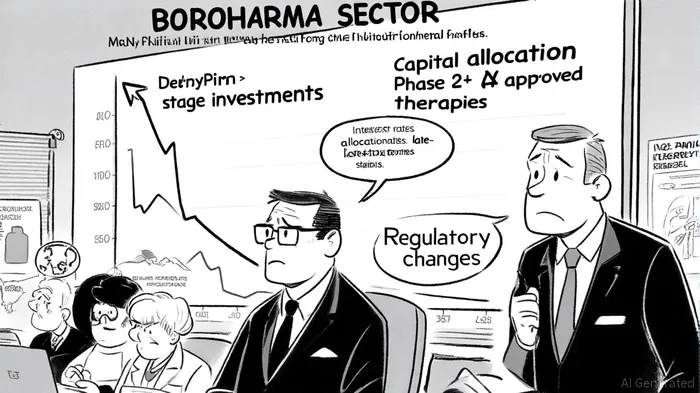





Comentarios
Aún no hay comentarios