
Strategic Partnerships in Urban Real Estate and Sports Development: A Catalyst for Value Creation in Emerging Cities
The convergence of sports, real estate, and local business partnerships has emerged as a powerful engine for urban revitalization in emerging cities. By leveraging the gravitational pull of sports facilities, developers and municipalities are transforming underutilized spaces into thriving, mixed-use ecosystems that drive property appreciation, job creation, and long-term economic resilience. This trend is particularly pronounced in cities where strategic alliances between stakeholders have enabled the creation of 24/7 neighborhoods that extend the value of sports beyond game days.
The Value Proposition of Sports-Anchored Developments
Sports facilities are no longer isolated venues for events; they are anchors for broader urban regeneration. In Columbus, Ohio, the 1998 construction of Nationwide Arena catalyzed the transformation of over 100 acres into a pedestrian-friendly district with public spaces, residential units, and commercial hubs, demonstrating how a single facility can redefine a city's economic and social fabric, according to a ULI article. Similarly, Edmonton's ICE District, anchored by a hockey arena, has evolved into a $4.5 billion mixed-use zone with residential towers, office spaces, and cultural amenities, proving that sports can serve as a catalyst for large-scale urban renewal, as ULI notes.
Quantitative evidence reinforces these qualitative successes. A spatial hedonic analysis of Columbus's housing market revealed that proximity to sports facilities increases property values by 1.75% for every 10% reduction in distance, with the most significant gains observed within a 1-mile radius, according to a spatial hedonic study. This pattern is echoed globally: Dubai Sports City, a 50+ million sqm development integrating elite sports academies and residential amenities, reported a 25% surge in asset valuations by 2025, while Quinta do Lago in Portugal saw property prices rise by 30% after embedding golf, wellness, and training facilities into its urban design, as highlighted in a Benchmark 2025 profile.
Strategic Alliances: Beyond Real Estate and Sports
The success of these projects hinges on partnerships that transcend traditional real estate development. In Pittsburgh, the Urban Redevelopment Authority (URA) has acted as a critical intermediary, connecting developers with underused sites, streamlining permitting, and offering financing tools to create sustainable communities, according to a Metrovitalization brief. Meanwhile, unconventional collaborations-such as a European real estate firm partnering with a clean-energy producer to boost solar capacity-highlight how innovation and sustainability can be integrated into urban planning, as described in a McKinsey report. These alliances not only mitigate financial risks but also align with investor demands for ESG-compliant projects.
Local businesses further amplify the value of these developments. The Battery Atlanta, a mixed-use district adjacent to the Braves' Truist Park, has become a hub for retail, dining, and residential leasing, generating foot traffic that benefits small businesses and creating a feedback loop of economic activity, as shown in NAIOP's analysis. Smaller-scale initiatives, such as rooftop padel courts or fitness centers, also contribute by repurposing underused spaces and fostering community engagement, as ULI notes.
Economic Impact and Job Creation
The economic ripple effects of sports-anchored developments are substantial. The Tampa Bay Rays' new stadium in St. Petersburg, Florida, is projected to create 30,000 construction jobs and 7,000 permanent roles, with targeted efforts to include historically disadvantaged communities, according to Deloitte's analysis. In Birmingham, England, the £2–3 billion Sports Quarter project-encompassing a new stadium, training facilities, and commercial hubs-is expected to deliver long-term socioeconomic gains for the West Midlands, Deloitte projects. These projects underscore how sports infrastructure can serve as a vehicle for inclusive growth.
Challenges and the Path Forward
Despite these successes, challenges such as gentrification and displacement remain. Developers and policymakers must balance economic gains with affordability measures to ensure that existing communities benefit from these transformations. For example, the Washington Commanders' $3.8 billion stadium district in D.C. includes provisions for 6,000 housing units, blending market-rate and affordable options to mitigate displacement risks, as outlined in a CRE Daily report.
Looking ahead, the integration of technology and adaptive reuse will be critical. As Deloitte notes, the 2025 global stadium construction boom-spanning 300+ projects-reflects a shift toward fan-centric, multipurpose venues that prioritize sustainability and community engagement. Cities that embrace these trends, while fostering cross-sector partnerships, will position themselves as leaders in the next era of urban development.
Conclusion
Strategic partnerships between local businesses, real estate developers, and sports entities are redefining urban landscapes in emerging cities. By anchoring mixed-use developments, these collaborations drive real estate appreciation, foster economic diversification, and create inclusive communities. As cities navigate the complexities of growth, the lessons from Columbus, Edmonton, and other success stories offer a blueprint for sustainable, value-driven urban development.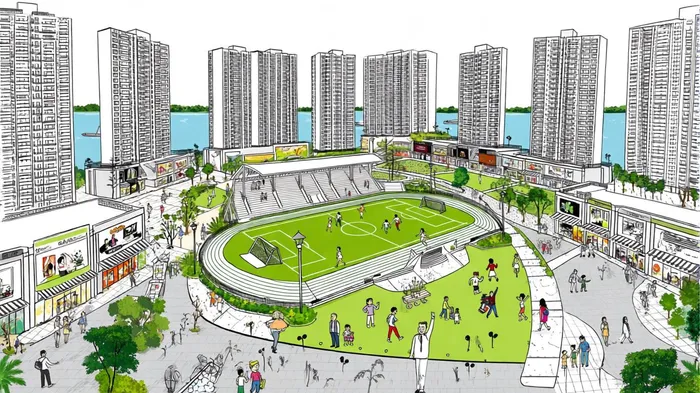







Comentarios
Aún no hay comentarios