
Strategic Partnerships and Technological Synergy: The New Frontier of Freight Rail Modernization
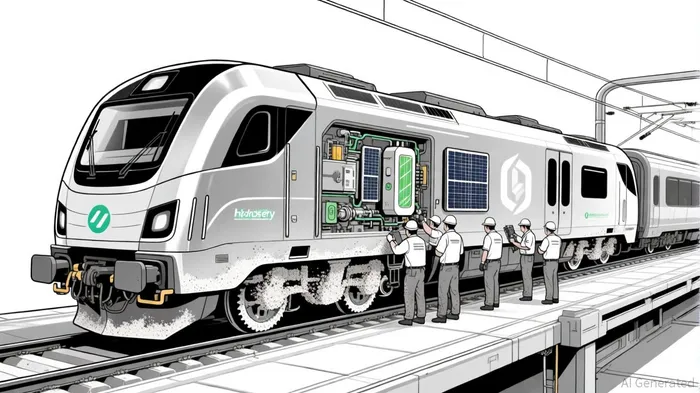
The freight rail industry is undergoing a transformative phase, driven by strategic partnerships that merge cutting-edge technology with operational efficiency. As global supply chains demand greater resilience and sustainability, North American Class I railroads are leveraging collaborations to modernize infrastructure, reduce environmental footprints, and unlock new revenue streams. This analysis examines how partnerships in automation, alternative fuels, and AI-driven maintenance are reshaping the sector, supported by financial performance data and ROI projections.
Automation and Predictive Maintenance: Norfolk Southern and BNSF's Efficiency Gains
Norfolk Southern's Automated Track Geometry Measurement System (ATGMS) has emerged as a cornerstone of its “Better Way” strategy. By deploying laser and sensor technology to monitor track conditions in real time, the system enables proactive maintenance, reducing service disruptions and extending infrastructure lifespan. In 2024, these innovations contributed to $300 million in cost savings, driven by a 10% increase in train speeds and a 15% reduction in terminal dwell time[1]. The railroad's adjusted operating ratio improved to 65.8% for the year, with management projecting a 1.5-point improvement in 2025[2].
BNSF's wheel health monitoring systems, including Wheel Tread Inspection Detectors (WTID) and Wheel Impact Load Detectors (WILD), similarly leverage AI and thermal imaging to detect defects early. These systems reduced unplanned maintenance costs by an estimated $417 million in 2024, primarily through fuel savings and improved workforce productivity[3]. BNSF's operating ratio for Q4 2024 dropped to 64.6%, a 4.1% improvement year-over-year[3].
Sustainability and Alternative Fuels: CN, Union Pacific, and CSX/CPKC's Green Leaps
Canadian National's (CN) partnership with Progressive Rail and Renewable Energy Group (REG) to integrate renewable diesel and biodiesel into its locomotive fleet has positioned the railroad as a leader in decarbonization. By 2024, CN achieved nearly 10% renewable fuel usage, reducing greenhouse gas (GHG) emissions by an estimated 1.2 million metric tons annually[4]. The initiative aligns with CN's $3.7 billion 2024 capital program, which prioritizes infrastructure upgrades to support sustainable operations[4].
Union Pacific's collaboration with ZTR to pilot hybrid battery-electric locomotives represents another milestone. These locomotives are projected to cut fuel consumption by 80%, with initial trials in 2025 demonstrating a 25% reduction in maintenance costs due to fewer moving parts[5]. Meanwhile, CSXCSX-- and Canadian Pacific Kansas City (CPKC) have pioneered hydrogen-powered locomotives, converting existing diesel units to zero-emission models. The project, which reuses 70% of original components, is expected to save $120 million in waste disposal and material costs over the next decade[6].
Financial Metrics and ROI: A Data-Driven Perspective
Strategic partnerships in freight rail are not only operational but also financial imperatives. Norfolk Southern's PSR 2.0 operating model, which integrates automation and workforce optimization, delivered $55 million in 2025 savings from labor productivity gains, offsetting winter storm repair costs[7]. BNSF's $3.8 billion 2025 investment plan, including $535 million for expansion projects, is projected to yield a 12–15% ROI by 2027, based on improved customer service and capacity utilization[3].
For investors, the ROI of these partnerships is further amplified by regulatory tailwinds. The proposed $85 billion Union Pacific-Norfolk Southern merger, if approved, could streamline coast-to-coast freight delivery, reducing interchange delays by 30% and unlocking $2.3 billion in annual cost synergies[8]. The largest U.S. rail union, SMART, has endorsed the merger after securing job protection guarantees, mitigating labor-related risks[8].
Challenges and the Path Forward
While the financial and operational benefits are clear, challenges remain. Regulatory scrutiny of mergers, such as the UP-NS deal, could delay anticipated synergies. Additionally, the upfront costs of transitioning to hydrogen and hybrid technologies require sustained capital allocation. However, the industry's focus on predictive maintenance, renewable fuels, and AI-driven analytics suggests a long-term shift toward profitability and sustainability.
Conclusion
Freight rail's modernization is no longer a question of if but how. Strategic partnerships are accelerating the adoption of technologies that enhance efficiency, reduce emissions, and create shareholder value. For investors, the sector offers a compelling blend of tangible infrastructure growth and innovation-driven ROI. As railroads like Norfolk SouthernNSC--, BNSF, and CN demonstrate, the future of freight lies in collaboration—where technology and partnership converge to redefine industrial logistics.





Comentarios
Aún no hay comentarios