
Strategic Partnerships Pioneering the Future of Biotech Toxicity Testing: A New Era for Cell-Based Therapies
Strategic Partnerships Pioneering the Future of Biotech Toxicity Testing: A New Era for Cell-Based Therapies
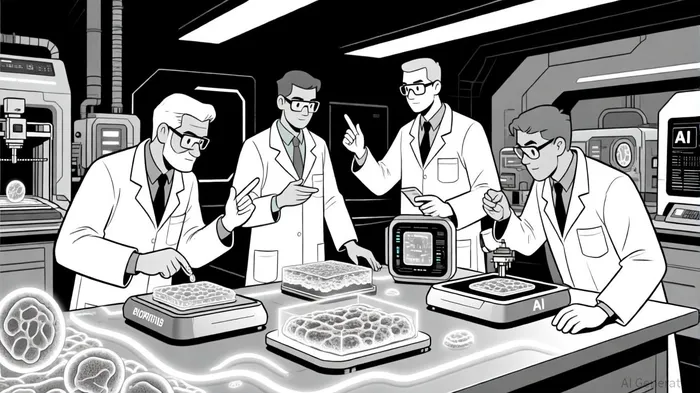
The biotech industry is undergoing a seismic shift in how it approaches toxicity testing for cell-based therapies, driven by a confluence of regulatory reforms, technological breakthroughs, and strategic partnerships. As the U.S. Food and Drug Administration (FDA) moves to phase out animal testing requirements for monoclonal antibody therapies and other drugs, the sector is pivoting toward human-relevant methods such as organoids, organ-on-a-chip systems, and AI-powered computational models, according to the FDA phase-out announcement. This transition is not just a regulatory imperative but a commercial opportunity, with the global market for cell-based assays projected to grow from $35.3 billion in 2024 to $56.3 billion by 2029, as reported in a human cell-based phenotypic profiling review. Investors are now watching closely as companies forge alliances to de-risk therapies and accelerate timelines in a landscape where clinical failures due to unanticipated toxicities have historically been costly.
The Shift from Animal Models to Human-Relevant Methods
The FDA's recent announcement to eliminate animal testing for monoclonal antibodies marks a watershed moment. Traditional animal models have long been criticized for their inability to predict human-specific toxicity, particularly in complex areas like immune responses and vascular interactions; the human cell-based phenotypic profiling review highlights these limitations. For instance, cytokine release syndrome-a common side effect in CAR-T therapies-often manifests differently in animals than in humans, leading to late-stage clinical surprises.
Enter organoids and bioprinted tissues. These 3D human cell cultures replicate organ-level functions and provide a more accurate readout of drug safety. A 2024 study highlighted how in vitro phenotypic profiling using co-cultures and organoids can identify toxicity mechanisms missed by animal studies. This shift is not just scientific but economic: reducing reliance on animal testing cuts costs and timelines, a critical factor in an industry where a single clinical trial failure can cost hundreds of millions.
Key Partnerships Driving Innovation
Strategic collaborations are accelerating the adoption of these advanced methods. One standout example is Acepodia's partnership with Pfizer's Ignite program. Acepodia's antibody-cell conjugate (ACC) platform, built on Nobel Prize–winning click chemistry, creates CAR T cells without gene editing-a scalable, safer alternative to traditional methods. By leveraging Pfizer's resources, Acepodia is advancing its lead candidate, ACE1831, into phase 1 trials for non-Hodgkin lymphoma while expanding into autoimmune diseases, according to an Acepodia collaboration announcement. The ACC platform's ability to avoid cytokine storms and neurotoxicity-common pitfalls of current CAR-T therapies-positions it as a transformative approach, the press release notes.
Meanwhile, Minaris Advanced Therapies, formed in May 2025 through the merger of Minaris Regenerative Medicine and WuXi Advanced Therapies, is emerging as a key CDMO, per the Minaris launch announcement. The company offers end-to-end testing services for cell therapies, including biosafety and product characterization, enabling developers to fast-track commercialization. Its scalable manufacturing solutions and focus on reducing costs align with the industry's push for efficiency, as the Minaris announcement describes.
De-Risking Through Advanced Strategies
Beyond partnerships, companies like EvotecEVO-- are embedding risk mitigation into the DNA of cell therapy development. By integrating Quality by Design (QbD) principles, Evotec ensures that safety, scalability, and compliance are prioritized from the earliest stages. This approach involves systematic process characterization and robust analytical methods to assess critical product attributes such as identity, purity, and potency. Such strategies are critical in an industry where even minor manufacturing inconsistencies can lead to batch failures or patient harm.
The synergy between advanced in vitro models and structured development frameworks is reshaping the risk profile of cell-based therapies. For example, human cell-based phenotypic profiling allows researchers to identify off-target effects early, reducing the likelihood of late-stage attrition. This is particularly vital in cell therapies, where the complexity of living drugs introduces unique challenges compared to small molecules.
Conclusion: A New Paradigm for Biotech Investment
The convergence of regulatory shifts, technological innovation, and strategic partnerships is creating a fertile ground for investment in biotech toxicity testing. Companies that can bridge the gap between cutting-edge science and scalable solutions-like Acepodia, Minaris, and Evotec-are well-positioned to lead this transformation. For investors, the key takeaway is clear: the future of cell-based therapies hinges on de-risking through human-relevant models and collaborative ecosystems. As the FDA's mandate gains momentum, the winners will be those who adapt to a landscape where innovation is no longer optional but essential.





Comentarios
Aún no hay comentarios